A Palatable Messiah
I have a dirty secret. I don't like The Chosen.The hit TV series has become a viral phenomenon among Christians. Billing itself as "the first ever multi-season show about the life of Christ," the project explores the Gospel story from the point of view of the people closest to Jesus: his mother, Mary Magdalen, and the apostles. The show claims to be the highest crowd-funded media project of all time and has been viewed by over 160 million people. Director and creator Dallas Jenkins has plans for seven seasons in total. So far, two have been released, with a third fully funded and in the works.
Clearly, the series resonates with audiences. The show's website features positive reviews by influential Christian and pop-culture figures, including Kirk Cousins and Dr. Alveda King. My own Catholic circles are abuzz with positive reviews. Recommendations have flooded my Facebook feed. Countless friends have heartily endorsed the show, saying it has brought Jesus alive for them in a wholly new way. The consensus seems to be that this show avoids the issues that typically plague "Christian" television and movies, especially the dreaded accusation of "cheesiness."
I'm not convinced.
Modernized Middle East
To be fair, there is much good to be said of The Chosen. The series creatively reimagines the lives of Jesus' disciples and creates realistic relationships between the characters, who often argue with and tease each other. Many of the miracle scenes are moving. I found myself touched by the scene in which Jesus heals a paralytic, searchingly asking him, "Do you want to be healed?" and encouraging him to reclaim hope before freeing him from his paralysis.
But the show oversteps in its attempts to be "relatable" to modern viewers. I first noticed this in the superficial details: flowing, uncovered hair; generic costumes; makeup. Social customs are similarly modernized. There are "bars" and bartenders. Jesus preaches from a crudely erected curtained "stage."
And—even more unbelievably—several women share campsites with the male disciples. Besides the incompatibility with first-century norms, this seems blatantly unwise on Jesus' part, particularly when several apostles develop tension-inducing crushes. This is a sanitized and democratized version of the ancient Middle East, one that is palatable to modern sensibilities.
Softer than the Baptist
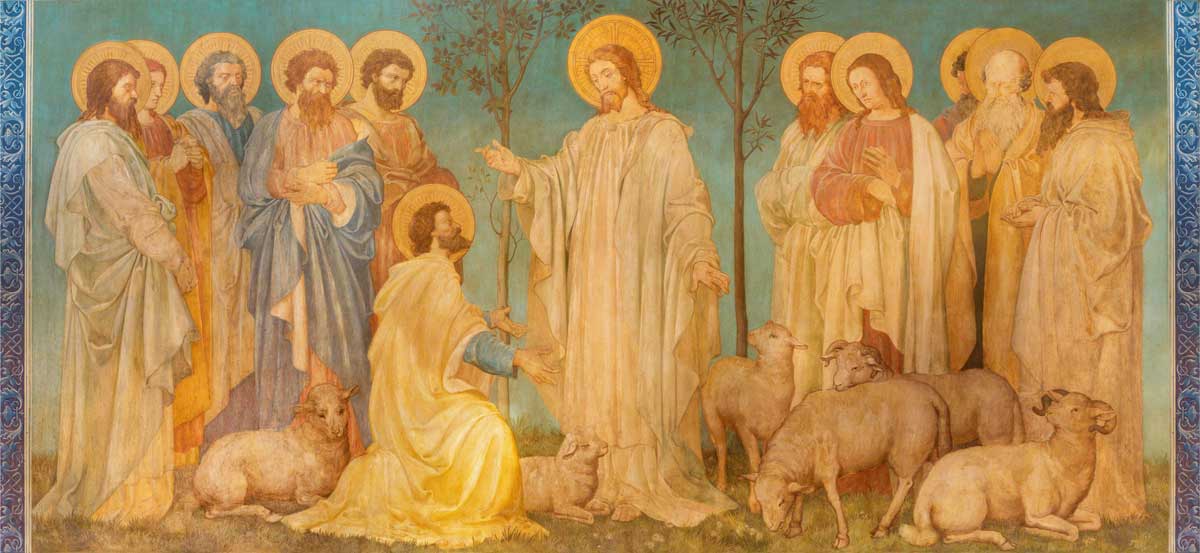
But all this could be overlooked had not the writers extended this push for relatability to Jesus himself. The Chosen has been praised for making the Son of God feel like a real person. He jokes with his disciples. He experiences nervousness. He doesn't immediately have all the answers. Jenkins speaks in several interviews of his desire to honor Jesus' dual nature as God and man, but time and again, his divinity is overshadowed in favor of accessibility.
The hallmark of this Jesus is his empathy. He comes across as a loving spiritual leader, an exceptionally good pastor, or a caring therapist. His interactions with individual characters are moving—he shows palpable love for each of them: he touches their souls and makes them feel seen. But there is nothing particularly awe-inspiring about him. Nothing to justify the massive following that he accrues. No startling sense of authority. For all his kindness and compassion, it is hard to grasp why people drop everything to follow him.
In the Season 2 episode "Spirit," Jesus has a conversation with John the Baptist wherein John suggests that Jesus' approach is too soft. Throughout the series, John is presented as the radical one of the two—Simon Peter repeatedly refers to him as "creepy John." His sometimes off-putting directness makes him authoritative, magnetic.
Jesus, meanwhile, is perennially gentle, even when reprimanding the scribes and Pharisees. His reproaches seem like gentle jabs rather than startling rebukes. It is as if the writers are afraid to risk making him unappealing or unnerving. When John accuses him of beating around the bush, Jesus demurs, "I'm not ready to get into specifics." When John announces his plan to confront Herod for marrying his brother's wife, Jesus offers a gentle warning: "You do know how that's going to end, don't you?" The camera lingers on his face, which looks concerned and uncertain. He advises John that "no one wants to be accused" of being a brood of vipers. He seems hesitant to take such a bold stand himself.
A Staged Sermon
The Jesus of The Chosen is one that we meet all too often in today's churches. His primary attribute is kindness. He makes you feel warm and fuzzy inside. Nothing he says could possibly offend any good-hearted person. He is never terrifying, never truly incendiary (for all his talk of "stirring up the water"). The Jesus of Scripture was driven by the Holy Spirit, alive with the power of God, and acting as the voice of the Father. Jenkins's Jesus lacks any sense of divine knowledge or authority; his words carry no inflammatory power. Nothing about him marks him as utterly unique in history. The writers have created him in their own image.
Kateri Kuplic is a graduate student at the University of St. Thomas in St. Paul, Minnesota.
A Journal of Mere Christianity—Delivered to Your Door
- Essays on theology, culture, and the Church
- Contributors from across the Christian traditions

Six print issues (one year) of Touchstone, plus full online access and PDF downloads for only $39.95.

Get a one-year full-access subscription to the Touchstone online archives for only $19.95.
bulk subscriptions
Order Touchstone subscriptions in bulk and save $10 per sub! Each subscription includes 6 issues of Touchstone plus full online access to touchstonemag.com—including archives, videos, and pdf downloads of recent issues for only $29.95 each! Great for churches or study groups.
Transactions will be processed on a secure server.
more on culture from the online archives

more from the online archives
calling all readers
Please Donate
"There are magazines worth reading but few worth saving . . . Touchstone is just such a magazine."
—Alice von Hildebrand
"Here we do not concede one square millimeter of territory to falsehood, folly, contemporary sentimentality, or fashion. We speak the truth, and let God be our judge. . . . Touchstone is the one committedly Christian conservative journal."
—Anthony Esolen, Touchstone senior editor