





Feature
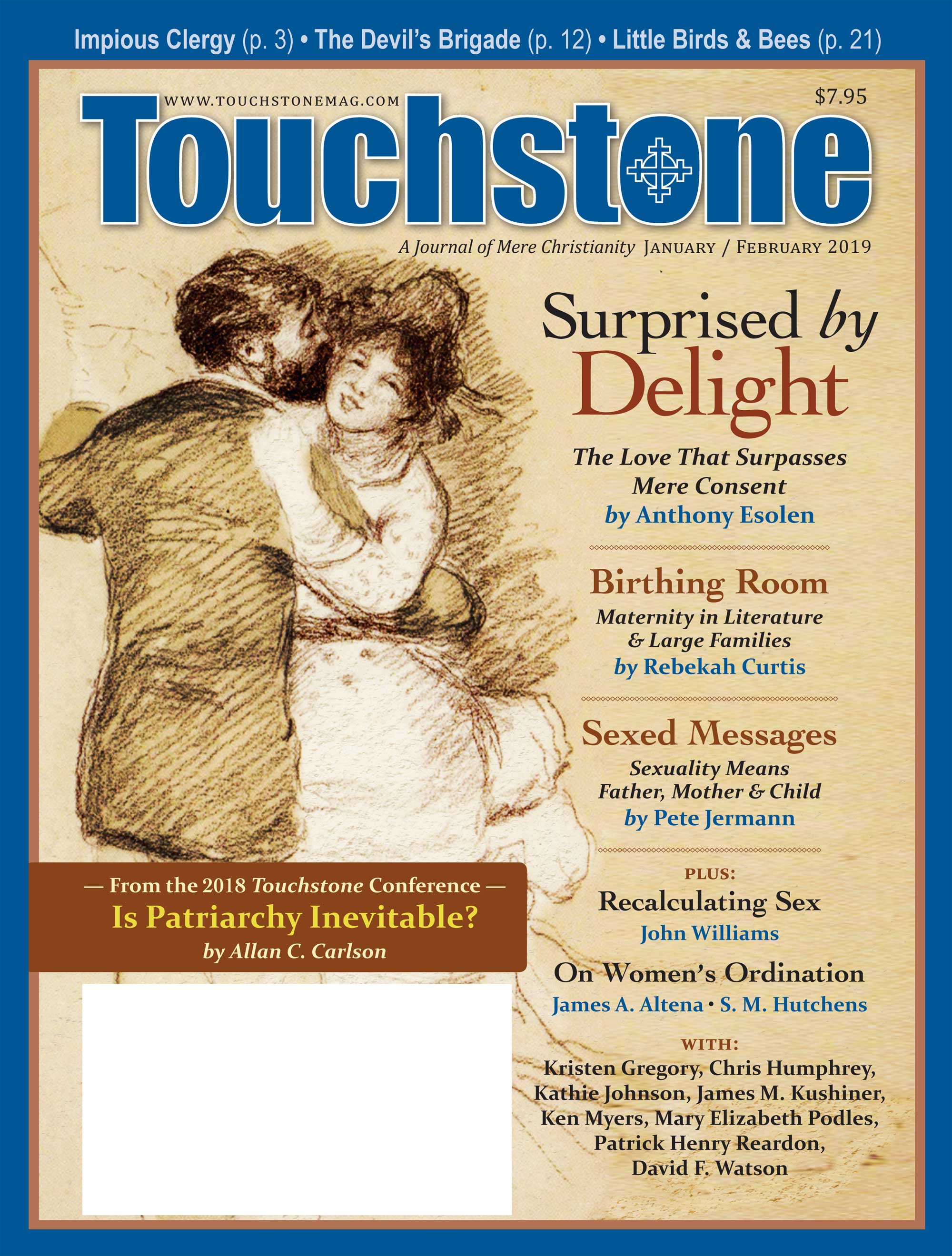
Surprised by Delight
Divine Love & the Love of Man & Woman Surpass Mere Consent
by Anthony Esolen
When in Milton's Paradise Lost Adam beholds Eve for the first time—and "behold" is the correct word, since he is in the presence of a consummate work of divine art—he is already delighted even before he says a word. God had put his taste, intelligence, and boldness to a bit of a friendly test, asking Adam why the beasts were not sufficient company for him, or why solitariness was not a great blessing. When Adam held his ground, God cast a sleep over him, formed Eve from his rib, and brought her to him. The first Man, the man who is the root both of all human persons and of all males specifically, acknowledges that he is caught, that the beauty of the woman will make the man do what otherwise he would not do:
This turn hath made amends; thou hast fulfilled
Thy words, Creator bounteous and benign,
Giver of all things fair, but fairest this
Of all thy gifts, nor enviest. I now see
Bone of my bone, flesh of my flesh, myself
Before me; woman is her name, of man
Extracted; for this cause he shall forgo
Father and mother, and to his wife adhere,
And they shall be one flesh, one heart, one soul.
Yet the woman does not merely pass into the man's power, like property. Adam must win Eve, lest she be misprized, and that is exactly as he would have it:
She heard me thus, and though divinely brought,
Yet innocence and virgin modesty,
Her virtue and the conscience of her worth,
That would be wooed, and not unsought be won,
Not obvious, nor obtrusive, but retired,
The more desirable, or, to say all,
Nature herself, though pure of sinful thought,
Wrought in her so, that seeing me, she turned:
I followed her, she what was honor knew,
And with obsequious majesty approved
My pleaded reason.
Trans-consensual Delight
It is clear that he and she "catch" each other. He seizes her by the hand because he has already been seized by her beauty, and this is not male aggression and female manipulation, but mutual delight, in the etymological sense of the word, as we will see. "To the nuptial bower / I brought her blushing like the morn," says Adam. The blush suggests awe, a mental and spiritual reticence before something tremendous; it transcends mere consent.
As is only just. For if consent is supposed to be a sufficient condition for moral action in a couple or a group, we have no way to disapprove of consensual evil, nor will we be any closer to understanding the movement of Adam and Eve toward one another in their trans-consensual delight. Duelists fighting for honor consent—they consent to murder or suicide or both, while the tradition they uphold establishes an evil precedent for everyone else. Fornicators consent—they consent implicitly to participate in the general evil of putting the unwanted child out of the way or sentencing him to grow up without a married mother and father; and their evil precedent robs good young women and good young men of the guidance and the guards they deserve, as they suffer those years of passion and uncertainty. Anyone who speaks of a "structure of evil," supposing such a thing to exist, implies that consent can be beside the point, since no anthropological structure is ever built without innumerable and interrelated acts of consent.
Nor is consent adequate to describe what Adam and Eve do, or what happens to them. Eve is not Adam's decision or creation. More especially does fallen man need what comes to him from without, what leaves consent gasping and halting behind. As John Donne puts it in the famous sonnet:
Yet dearly I love you and would be loved fain,
But am betrothed unto your enemy.
Divorce me, untie, or break that knot again;
Take me to you, imprison me, for I,
Except you enthrall me, never shall be free,
Nor ever chaste, except you ravish me.
The ambiguity is intended, because man's state is ambiguous. We want, and we do not want. We love, but we are betrothed to the enemy, whom we are powerless to resist. So Donne prays to have his will overcome by the will of God. He must be ravished: by violence it seems, because unless his hard and bolted heart is battered in, there will be no ravishment, no being swept off in the joy of love. We do not choose between "freedom" and "commitment." We choose between enslavement to the will and enslavement to God: to enthrall ourselves, or to be enthralled, taken by storm, overcome by awe and splendor. Thus we should pray, "Lord, break my will, for not my will but thy will be done."
Anthony Esolen is Distinguished Professor of Humanities at Thales College and the author of over 30 books, including Real Music: A Guide to the Timeless Hymns of the Church (Tan, with a CD), Out of the Ashes: Rebuilding American Culture (Regnery), and The Hundredfold: Songs for the Lord (Ignatius). He has also translated Dante’s Divine Comedy (Random House) and, with his wife Debra, publishes the web magazine Word and Song (anthonyesolen.substack.com). He is a senior editor of Touchstone.
A Journal of Mere Christianity—Delivered to Your Door
- Essays on theology, culture, and the Church
- Contributors from across the Christian traditions

Six print issues (one year) of Touchstone, plus full online access and PDF downloads for only $39.95.

Get a one-year full-access subscription to the Touchstone online archives for only $19.95.
bulk subscriptions
Order Touchstone subscriptions in bulk and save $10 per sub! Each subscription includes 6 issues of Touchstone plus full online access to touchstonemag.com—including archives, videos, and pdf downloads of recent issues for only $29.95 each! Great for churches or study groups.
Transactions will be processed on a secure server.
more on marriage from the online archives
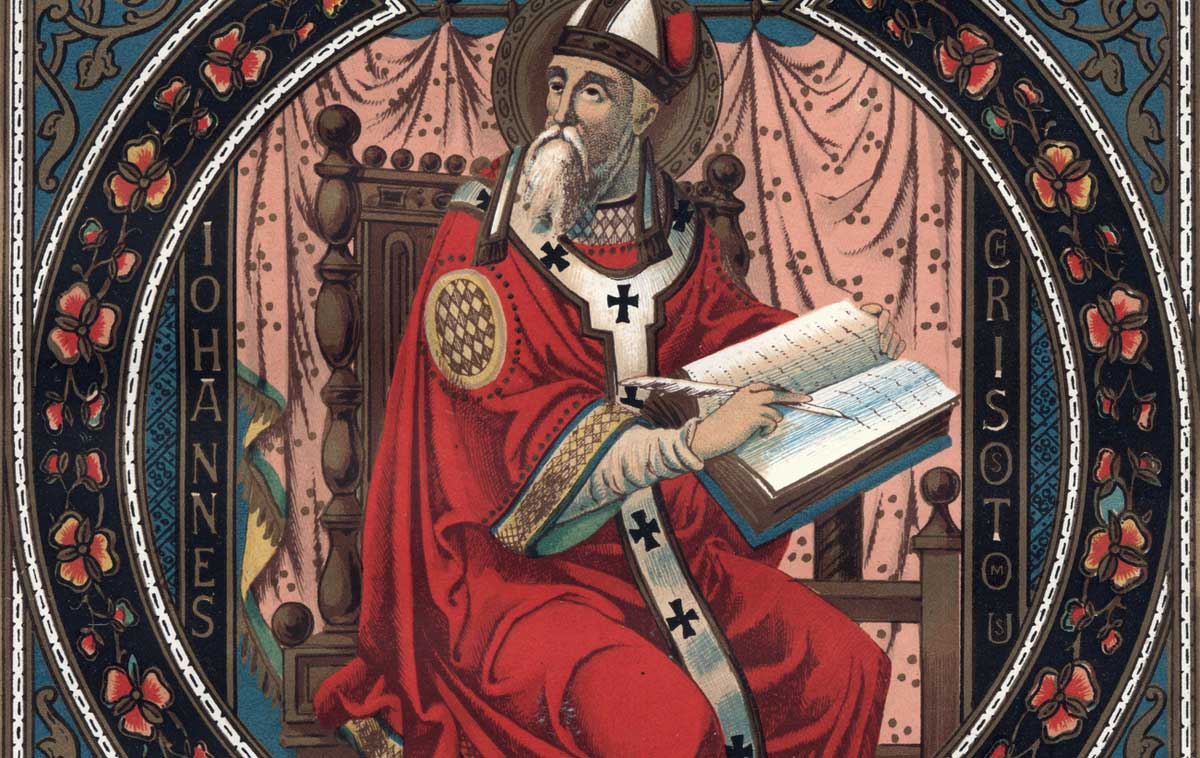
21.1—January/February 2008
John Chrysostom’s Discovery of the Blessings & Mysteries of Marriage by Mike Aquilina
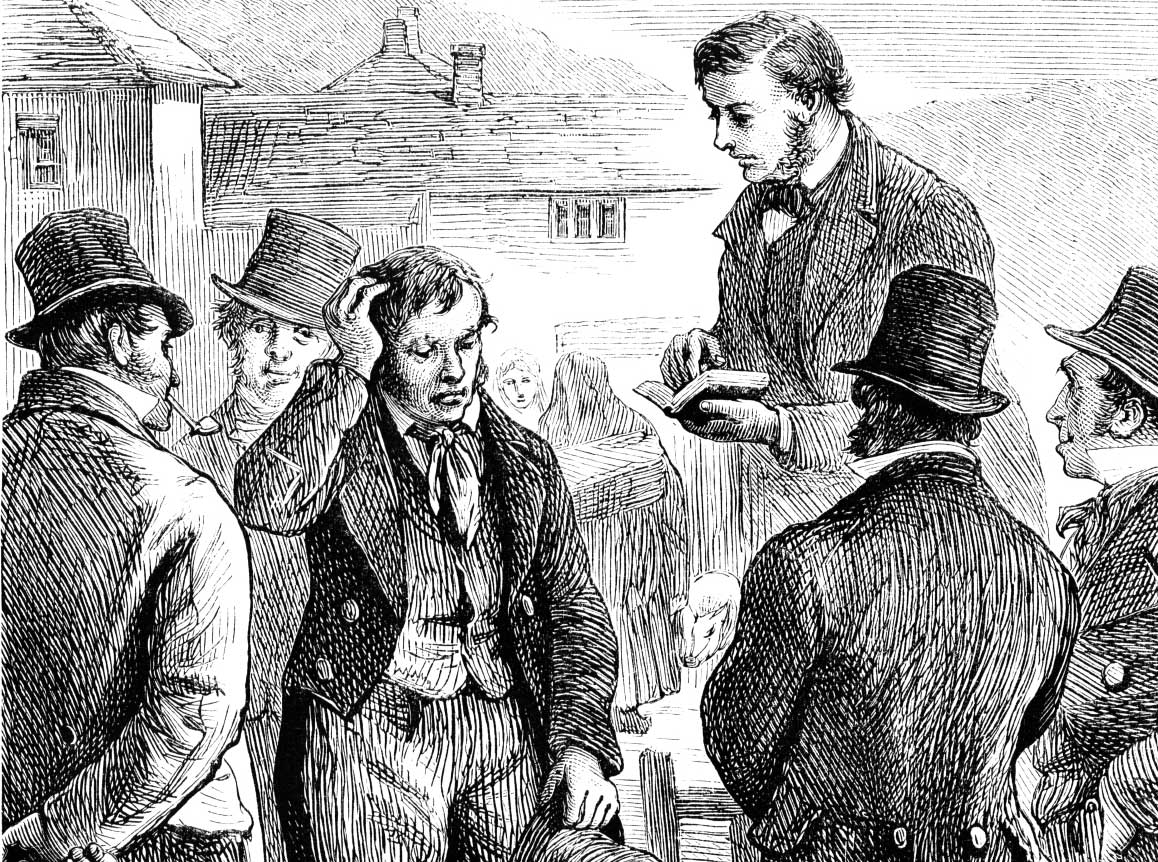
29.1—Jan/Feb 2016
on Marriage, Moral Corruption & the Christian Duty of Witness by Regis Nicoll
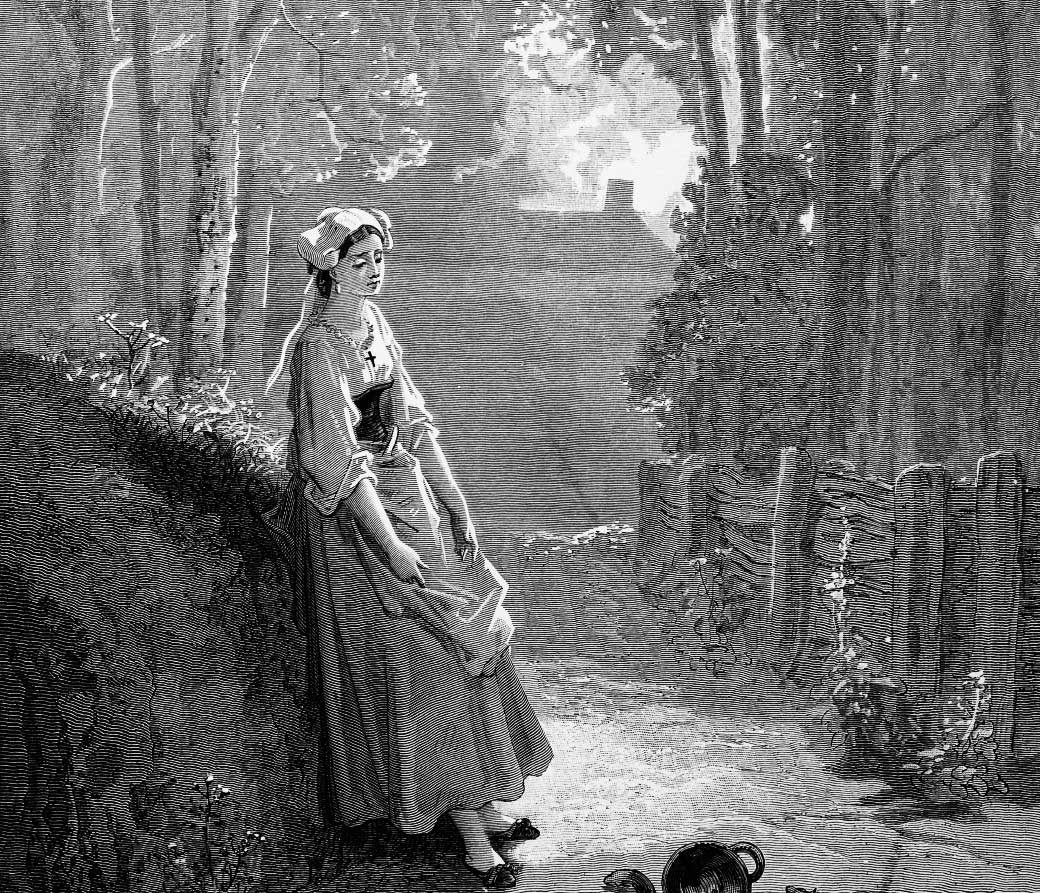
24.1—January/February 2011
Marriage Thrives in Reality, Not in Our Dreams by Nathan Schlueter
more from the online archives
19.1—January/February 2006
on Death & Seven of the Last Words of Socrates by Graeme Hunter

31.2—March/April 2018
How Best to Face the Total War of the Anti-Culture by R. J. Snell

27.5—Sept/Oct 2014
on Growing Vegetables as a Primer in Moral Philosophy by Rachel Lu
calling all readers
Please Donate
"There are magazines worth reading but few worth saving . . . Touchstone is just such a magazine."
—Alice von Hildebrand
"Here we do not concede one square millimeter of territory to falsehood, folly, contemporary sentimentality, or fashion. We speak the truth, and let God be our judge. . . . Touchstone is the one committedly Christian conservative journal."
—Anthony Esolen, Touchstone senior editor
