





A Thousand Words
Rachel Ruysch's Still Life with Flowers in a Glass Vase
At first glance, Rachel Ruysch's small panel depicts a handful of flowers gathered at random from a cottage garden and thrust artlessly into a vase, a thing of charm and beauty but no more than an aspect of everyday life and a decoration for an urban Dutch house. However, art of this caliber is seldom so simple. It is designed to make the viewer stop and think.
A Masterpiece of Artifice
Ruysch has composed her bouquet with care to create a feeling of movement from the rose at the lower left to the triad of roses and poppies at the center and upward to the right to the iris at the top. A subtle range of pinks, blues, and purple is enlivened by splashes of orange. The dark background and energetic curving forms are like traditional seventeenth-century flower paintings, but here on the cusp of the eighteenth (1716), its playfulness and asymmetry look forward to the burgeoning Rococo. Overall, the composition seems natural and unstrained, but flower arrangers who try to reproduce Ruysch's floral nosegays have to prop them up with hidden wires and supports; they are masterpieces of artifice.
There are several clues to tell us that this was composed in the studio and not taken from life. Prosperous Holland was the world's largest importer of newly discovered and exotic plants; Ruysch's father Frederik was a professor of botany, a collector of rare plants, and head of Amsterdam's Botanical Gardens. He invented a process of preserving botanical specimens so that they could be drawn and painted in detail before they faded. As a teenager, his daughter helped to illustrate and catalogue his collection and thus jumpstarted her painting career.
This painting, while it does contain common European roses, carnations, and forget-me-nots, also boasts exotics like orange blossoms, Transvaal daisies from Africa, and opium and Oriental poppies from the East. Similarly, in this age of artificial light and hydroponics, we forget the natural cycle of bloom times; the European flowers shown here represent a full spring and summer's worth of blossom all blooming simultaneously, another artifice. Many of them seem to have been chosen for their sweet smell as well, as if to create a medley of perfumes existing out of natural time.
Meticulous Observation
That said, there is nothing artificial about the individual flowers, which are a miracle of meticulous observation. Here she follows both in the footsteps of earlier Netherlandish painters, and of the new scientists of her day. Having shown extraordinary talent at a young age, Ruysch was apprenticed at fifteen to the flower painter Willem van Aelst, a craftsman of consummate skill. With him, she learned how to arrange her canvases and portray her flowers in perfect detail.
In this panel, for instance, she paints the individual hairs on the poppy stems and we can count the panes of her studio window reflected in the glass vase. It is small wonder that she often spent several months on a single painting. (Perhaps she had further reason: in 1693 she married the portraitist Juriaen Pool and had ten children over the next eighteen years. Still, she could afford to take her time, as her paintings commanded higher prices than Rembrandt's.)
Detailed as these flowers might be, there is still more in Ruysch's still life. Insects—beetles, a wasp, and flies—are invading her flowers. They, too, might have been drawn from her father's collection of naturalia, which had become something of a tourist attraction in Amsterdam. Here, the insects suggest an element of decay. They gnaw at her flowers, some of which have begun to droop. Within all the beauty lies an element of destruction and death.
A Freight of Meaning
It is hard to know how an eighteenth-century viewer would have read this painting. Are we to look for a deeper, moralizing meaning? There was a long-standing Netherlandish tradition of flower symbolism. For instance, a fifteenth-century Nativity might include a vase of symbolic flowers that foreshadow Christ's passion, death, and resurrection, even at the first manifestation of his Incarnation. But by about 1600, with the loss of royal and church patronage, religious paintings were less in demand, and paintings of flowers and the other stuff of everyday life took on a life of their own.
However, one suspects that in a deeply Protestant Holland even paintings acquired as status symbols or investments still carried a freight of moralizing meaning. The Christian view of the world, to which every object might carry a meaning beyond itself, had probably not been entirely abandoned by painters of even the most worldly subjects. The elements of beauty, death, and decay in Ruysch's painting, then, give us reason to suspect that the old flower symbolism still resonated.
Mary Elizabeth Podles is the retired curator of Renaissance and Baroque art at the Walters Art Museum in Baltimore, Maryland. She is the author of A Thousand Words: Reflections on Art and Christianity (St. James Press, 2023). She and her husband Leon, a Touchstone senior editor, have six children and live in Baltimore, Maryland. She is a contributing editor for Touchstone.
A Journal of Mere Christianity—Delivered to Your Door
- Essays on theology, culture, and the Church
- Contributors from across the Christian traditions

Six print issues (one year) of Touchstone, plus full online access and PDF downloads for only $39.95.

Get a one-year full-access subscription to the Touchstone online archives for only $19.95.
bulk subscriptions
Order Touchstone subscriptions in bulk and save $10 per sub! Each subscription includes 6 issues of Touchstone plus full online access to touchstonemag.com—including archives, videos, and pdf downloads of recent issues for only $29.95 each! Great for churches or study groups.
Transactions will be processed on a secure server.
more on art from the online archives
32.4—July/August 2019
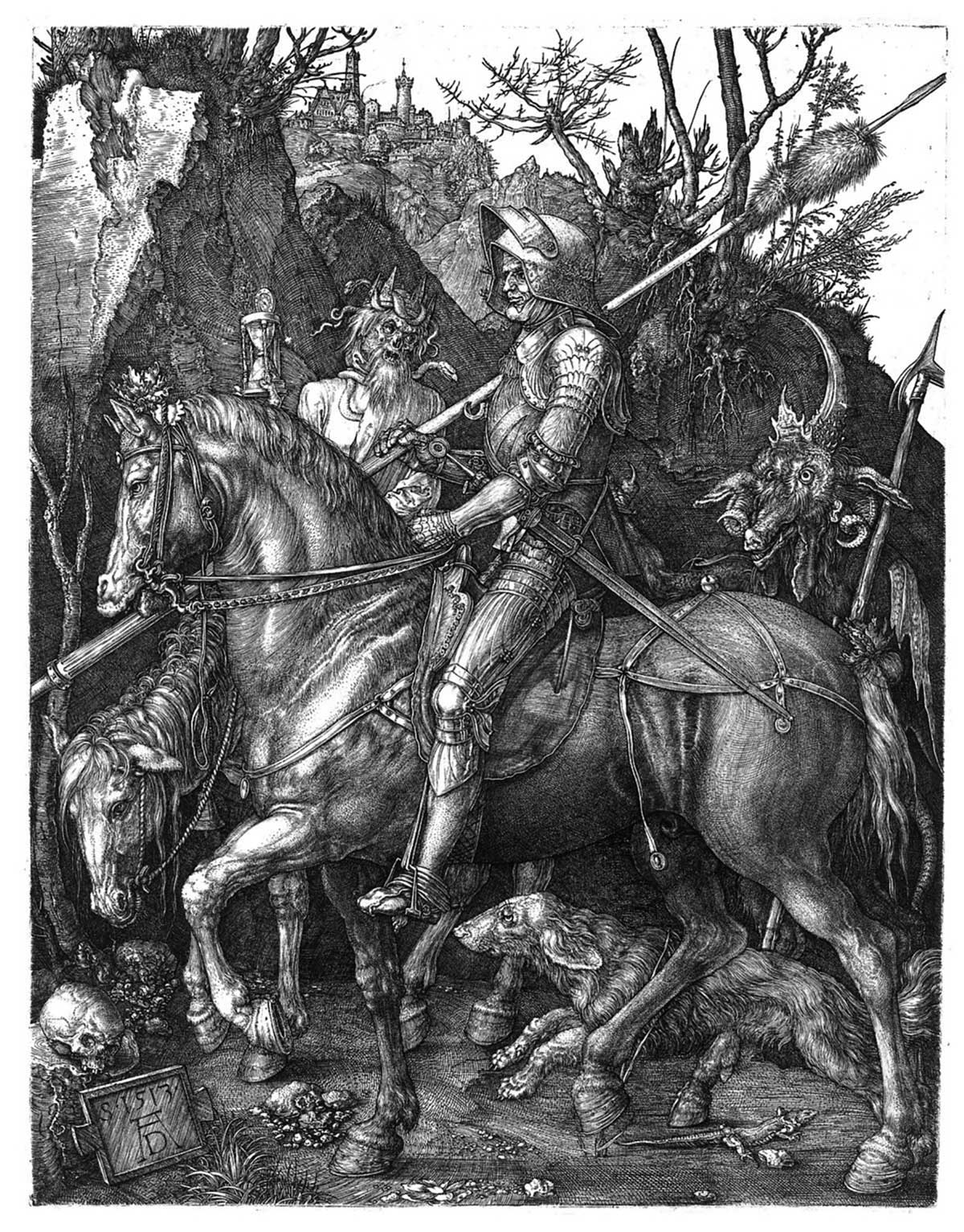
on Single-Mindedness in Durer's Ritter, Tod, und Teufel by Anthony Costello
33.2—March/April 2020
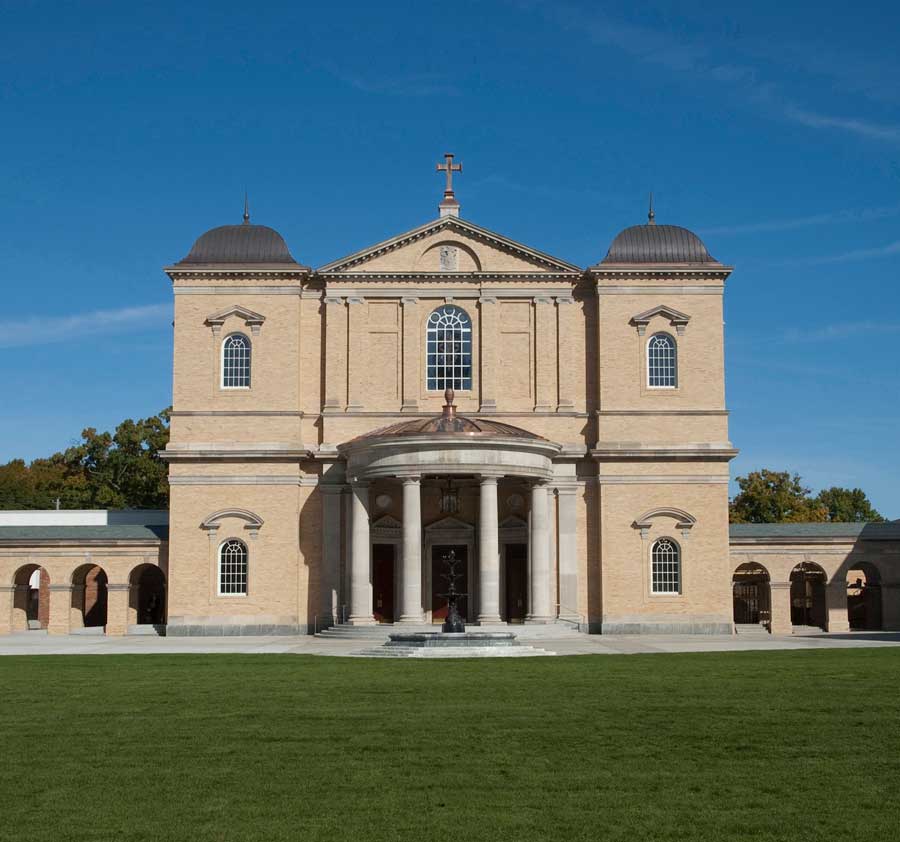
An Architectural Sign of Mere Christianity by Michael Ward
more from the online archives
34.1—January/February 2021
Live Not by Lies: A Manual for Christian Dissidents by Rod Dreher by Hans Boersma
27.6—Nov/Dec 2014
Tales of Forbidden Stereotypes
Real-Life Men & Women & the Tragic Loss of Human Comedy by Anthony Esolen

30.6—Nov/Dec 2017
Christ, Individualism & the Meaning of Cultural Diversity by Anthony Esolen
calling all readers
Please Donate
"There are magazines worth reading but few worth saving . . . Touchstone is just such a magazine."
—Alice von Hildebrand
"Here we do not concede one square millimeter of territory to falsehood, folly, contemporary sentimentality, or fashion. We speak the truth, and let God be our judge. . . . Touchstone is the one committedly Christian conservative journal."
—Anthony Esolen, Touchstone senior editor
