




Review
Campus Lost
The Coup at Catholic University: The 1968 Revolution in American Catholic Education
by Peter M. Mitchell
Ignatius Press, 2015
(311 pages, $19.95, paperback)
reviewed by Graeme Hunter
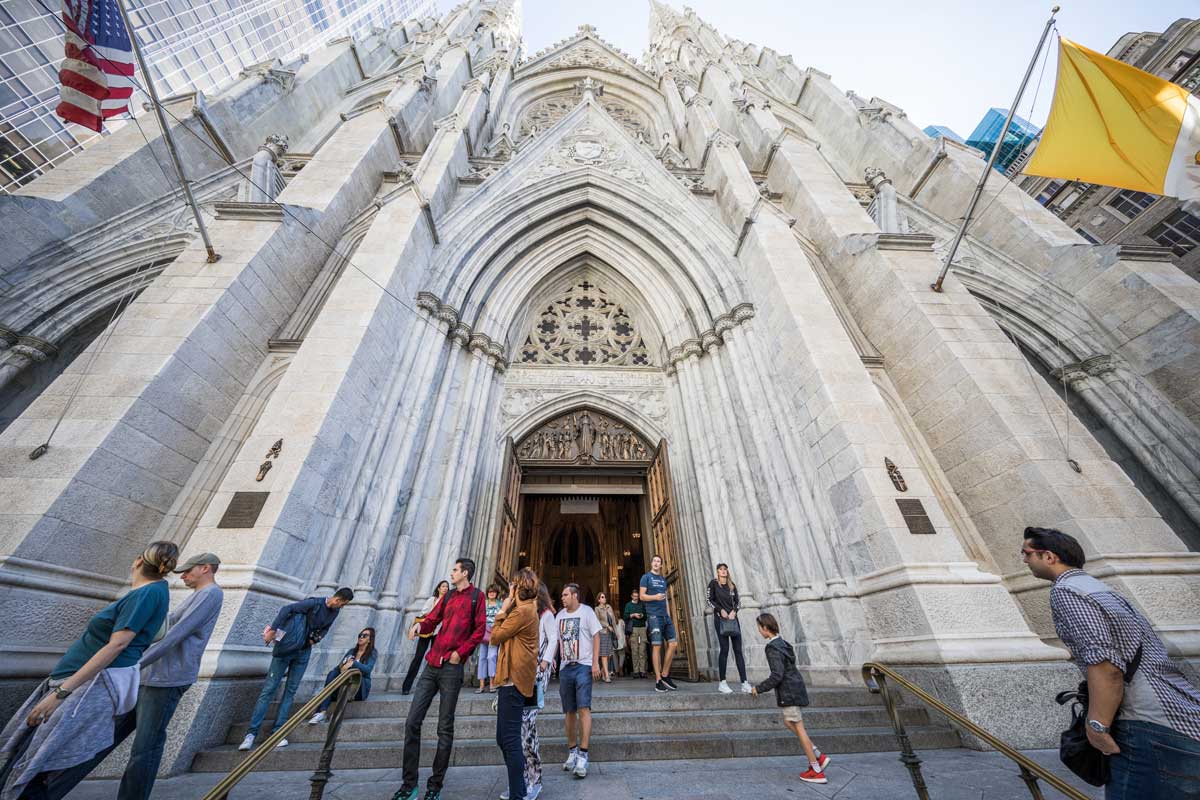
Washington, D.C.'s Catholic University of America (CUA) was established in 1889 as a pontifical university under the authority of the Holy See. It was to be an academic city set on a hill, a place where the academic and individual freedoms demanded at American universities would be reconciled with the obedience owed to the Magisterium of the Catholic Church. Sadly and ironically, in the turbulent 1960s CUA became famous not as a place where this reconciliation was achieved, but as one where it failed spectacularly.Fr. Peter Mitchell's meticulous, lucid account of CUA's disastrous years (1967–1969) is an admirable piece of historical scholarship. He does not allow his own regret at what occurred to color his presentation of the conflicts. The bold claims implicit in the title and subtitle of his work, that there was a "coup" at CUA and that it contributed to a "revolution" in American Catholic education, are carefully documented.
Readers old enough to remember the once widely publicized events that are the subject of Mitchell's book may recall that they began with the university's attempt not to renew the contract of Fr. Charles Curran, a junior professor of theology who, both in public lectures and in the classroom, had adopted dissenting views on sexual morality. Curran believed that the recently concluded Second Vatican Council permitted such views and even encouraged Catholic theologians to dissent from the teachings of the Magisterium. CUA thought otherwise and informed him of its decision not to renew his contract. Curran responded by mobilizing public opinion on campus and in the media. Anyone who recalls the 1960s will remember that in such situations David always won and Goliath always lost.
For those who do not remember, the titles of the three main divisions of Fr. Mitchell's book tell the tale: First, there is "The Curran Affair," in which the university tries but fails to fire Curran and ends up having not only to reinstate him, but also to give him tenure and promotion. The second part, called "The School of Theology Takes Control," recounts the way in which CUA's academic and ecclesial leaders are fired, replaced, or sidelined. The last section details the many humiliating and ineffective attempts by the university's administration to restore the ancien régime. This section is entitled "The Triumph of Dissent."
A brief concluding chapter attempts to inject a little hope into this gloomy tale. During the pontificates of John Paul II and Benedict XVI, we are told, the winds of change blew in a direction more favorable to the original mandate of CUA. A direct order from the Congregation for the Doctrine of the Faith in 1986 finally allowed CUA to dismiss Curran and even, three years later, to win the lawsuit against CUA with which Curran responded. A few such scraps from history's table motivate the book's closing wish that "the battle may not be lost."
Limits in Focus & Readership
Though Fr. Mitchell does a wonderful job of documenting the events leading up to the coup, the readership for this book is likely to be limited. Those with scholarly interest in Catholic education should by all means read it, as should those who would like an illuminating case study of how religious education can be subverted. Narrowly focused books such as this one, however, give more information than ordinary readers will find necessary about a smaller problem than the one they want to understand.
A narrow focus can also lead to overestimating the significance of one's topic. Mitchell sometimes writes as if the course of history in Catholic education generally might have been changed if the CUA authorities had been more vigilant and more astute. Occasionally he implies that the "religious doubt, doctrinal confusion, and outright crisis in Faith" experienced in Catholic universities today was caused by the debacle at CUA. But this study provides no evidence either that Catholic education might have been in a better position today or that events at CUA were the cause of things turning out as they have.
The once-Catholic university at which I teach took the path to secularization two years before the blowup at CUA and without any polarizing events to precipitate it. We were a regional Catholic college wanting to become a full-sized university with faculties of science and social science. To succeed, we needed government funding, and, after a couple of years of resistance, we relinquished most of our Catholic identity to get it. The funding issue also arises in Mitchell's account of the coup at CUA, but he does not consider how important it would have become had the administration not complied with the secularizing demands of successive CUA accreditation evaluations.
CUA did not have a monopoly on spectacular student revolutions, either. One thinks pre-eminently of the student riots in Paris in 1968, but also of the burning of the computer lab at Montreal's Concordia University in 1969, the shooting of students at Kent State in 1970, and the innumerable occupations, strikes, and protests in universities around the Western world during those years. It seems obvious that the events at Catholic University were themselves caused by forces deeper than the ones Mitchell documents.
Graeme Hunter is a contributing editor to Touchstone and Research Professor of Philosophy at Dominican University College in Ottawa. He is the author of Radical Protestantism in Spinoza's Thought (Ashgate).
A Journal of Mere Christianity—Delivered to Your Door
- Essays on theology, culture, and the Church
- Contributors from across the Christian traditions

Six print issues (one year) of Touchstone, plus full online access and PDF downloads for only $39.95.

Get a one-year full-access subscription to the Touchstone online archives for only $19.95.
bulk subscriptions
Order Touchstone subscriptions in bulk and save $10 per sub! Each subscription includes 6 issues of Touchstone plus full online access to touchstonemag.com—including archives, videos, and pdf downloads of recent issues for only $29.95 each! Great for churches or study groups.
Transactions will be processed on a secure server.
more on Catholic from the online archives
24.5—Sept/Oct 2011
A Critical Memoir of Thomas Merton at Gethsemani Abbey by Patrick Henry Reardon
35.4—Jul/Aug 2022
The Death Rattle of a Tradition
Contemporary Catholic Thinking on the Question of War by Andrew Latham
31.6—November/December 2018
The Slow Vindication of Leon Podles by S. M. Hutchens
more from the online archives

33.2—March/April 2020
Encounters with Faith & Forgiveness in Communities of Faith by Nicole M. King
29.3—May/June 2016
A Deathbed Reflection on Catholic Social Teaching & Our Future Prospects by Karl D. Stephan
5.3—Summer 1992
Everything You Need to Know About Morality & the Bible by David Mills
calling all readers
Please Donate
"There are magazines worth reading but few worth saving . . . Touchstone is just such a magazine."
—Alice von Hildebrand
"Here we do not concede one square millimeter of territory to falsehood, folly, contemporary sentimentality, or fashion. We speak the truth, and let God be our judge. . . . Touchstone is the one committedly Christian conservative journal."
—Anthony Esolen, Touchstone senior editor
