




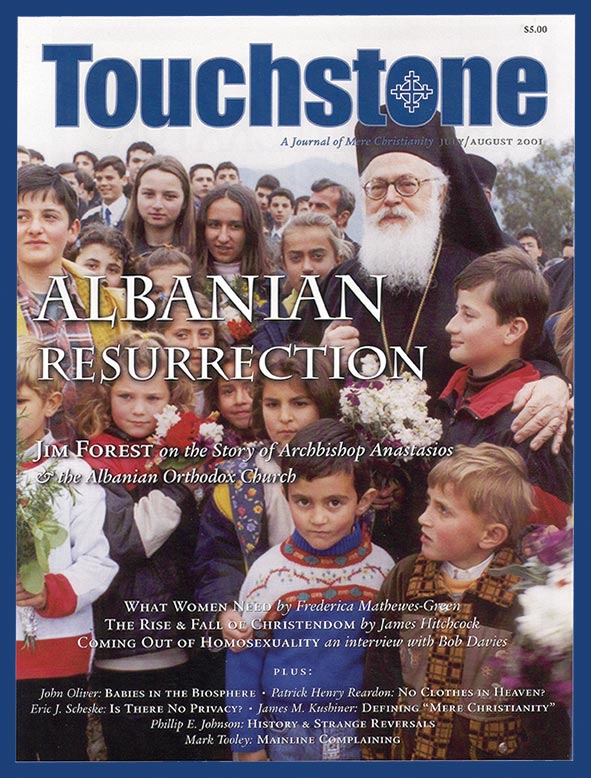
Coming Out of Homosexuality
An Interview with Bob Davies of Exodus International
Bob Davies is North American Director of Exodus International, a ministry for the support of men and women desiring to overcome homosexuality. He was interviewed by Executive Editor James M. Kushiner in Dallas in March 2000 while attending a conference on the family.
Touchstone: This year [2000] the United Methodist Church, the Presbyterian Church, U.S.A., and the Episcopal Church, U.S.A., are facing debates at their national meetings about homosexuality. But this really isn’t news, is it?
Robert Davies (RD): What we see happening in the mainline churches is that it seems like at almost every general conference homosexuality is again an issue that’s up for discussion. I think that in many of these churches there’s a small, vocal gay minority that is very persistent, and they are just not giving up easily. And so they keep bringing it up. In some of these denominations, the church as a whole may say, “We have made a stand on this.” But then it comes up again; they just will not let it rest.
Alan Medinger, director of Regeneration, thinks that eventually you have to cease and desist from any more discussion on it because once the church makes a decision, it needs to just let the issue lie and stop bringing it up every year or two. He sees continued discussion as having the potential to go in only one direction and that’s to a more liberal position. Eventually the dialogue has to stop. You should move onto other issues, not keep bringing it up again.
It would seem, however, that simple persistence is the strategy for victory of the homosexual activists.
RD: Definitely. You wear down the resistance. The conservatives get tired of discussing it and then the more liberal people come in and take over the discussion and push through their agenda.
You said a “vocal minority.” I assume that is a pretty small minority, but there must be a lot of people who are supportive of that small group.
RD: If you look at the gay community in general, I think that there is a silent majority. But then there’s a small group that keeps agitating for “rights” and “gay marriage” and adoption and so on. But it’s always the small group within the gay community. I think that’s parallel to what’s happening in the church, too. It’s always the small, vocal group. They’re in the minority but they make a lot of noise so they get a lot of attention.
The word gay is a fabricated word that has taken another word and radically changed its meaning. As somebody has said about homosexuality, there’s nothing gay about it. What do you think about the use of the word gay?
RD: I have been asked the question before and there are certainly valid viewpoints on both sides. It’s a matter of discussion. My personal conviction and practice is that I do use the word gay in discussing this subject. My reason for this is that I view the homosexual community as almost a culture or subculture unto itself.
James M. Kushiner is the Director of Publications for The Fellowship of St. James and the former Executive Editor of Touchstone.
A Journal of Mere Christianity—Delivered to Your Door
- Essays on theology, culture, and the Church
- Contributors from across the Christian traditions

Six print issues (one year) of Touchstone, plus full online access and PDF downloads for only $39.95.

Get a one-year full-access subscription to the Touchstone online archives for only $19.95.
bulk subscriptions
Order Touchstone subscriptions in bulk and save $10 per sub! Each subscription includes 6 issues of Touchstone plus full online access to touchstonemag.com—including archives, videos, and pdf downloads of recent issues for only $29.95 each! Great for churches or study groups.
Transactions will be processed on a secure server.
more on sex from the online archives


23.5—September/October 2010
The Loss of a Christian Understanding of Virginity Is Pure Tragedy by Eleanor Bourg Donlon
more from the online archives
34.1—January/February 2021
Jesus' Astonishing Other Teaching on Marriage by James Ware
19.10—December 2006
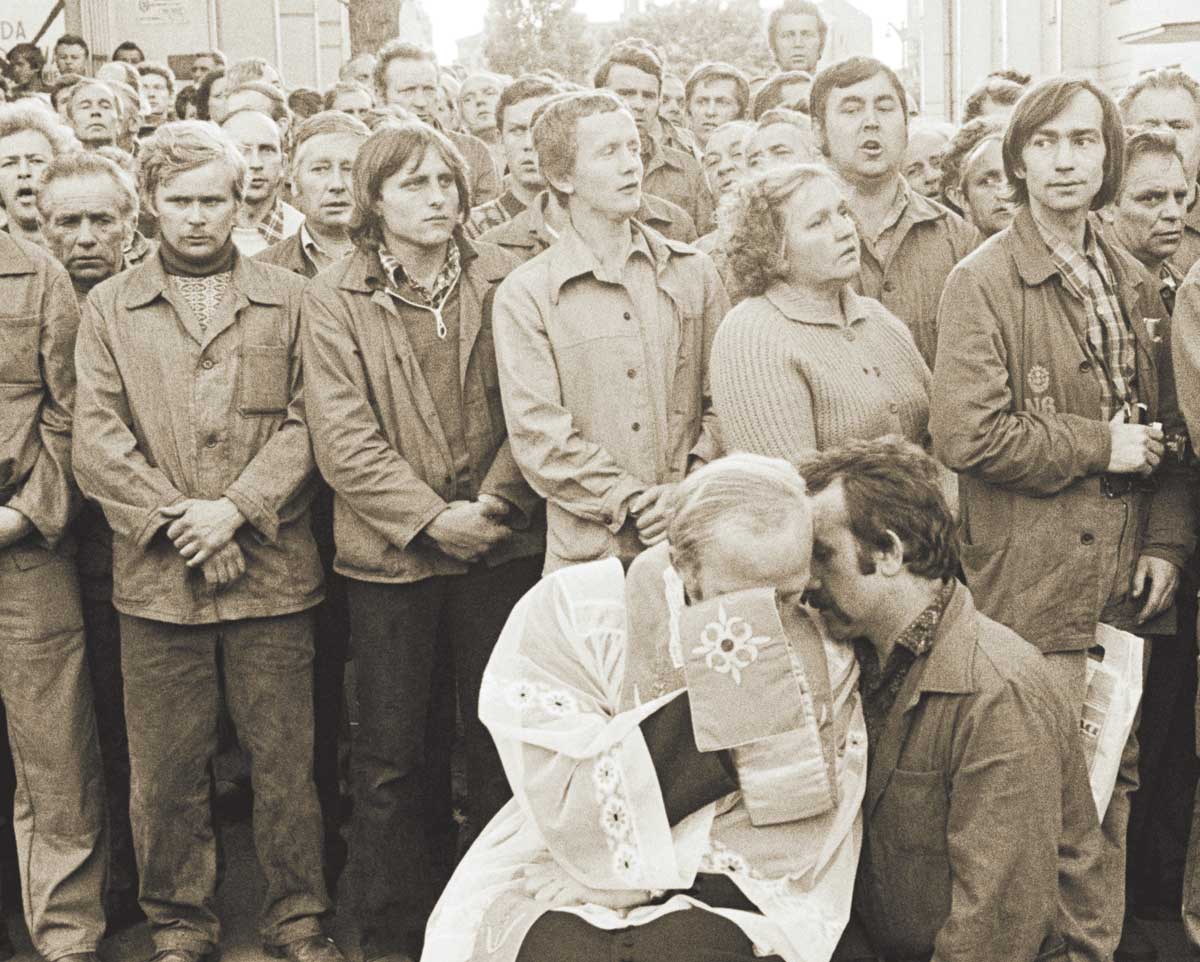
Workers of Another World United
A Personal Commemoration of Poland’s Solidarity 25 Years Later by John Harmon McElroy
calling all readers
Please Donate
"There are magazines worth reading but few worth saving . . . Touchstone is just such a magazine."
—Alice von Hildebrand
"Here we do not concede one square millimeter of territory to falsehood, folly, contemporary sentimentality, or fashion. We speak the truth, and let God be our judge. . . . Touchstone is the one committedly Christian conservative journal."
—Anthony Esolen, Touchstone senior editor
