





Sex & the American Experience
Facts versus Stereotypes About Love & Marriage in the Land of the Free
The following is an address delivered by Dr. Carlson at Aquinas College in Grand Rapids, Michigan, on November 19, 2013, under the sponsorship of the Intercollegiate Studies Institute.
One of the assumptions of the contemporary liberal mind is that the history of Anglo-American morals has moved mainly in a linear direction: from repression to liberty. As one author of this mindset explains, the sixteenth-century English "were known throughout Europe for approaching the whole subject of sex with their well-known capacity for enduring hardship." But within Elizabethan England, the writer continues, there was a group that found even British sexual decorum "repulsive and disgusting." These Puritans "grew angrier and angrier until finally they could no longer tolerate the degenerate carrying-ons of their countrymen," and so they set sail in 1620 on the Mayflower for America.
Meanwhile, down in Colonial Virginia, the liberal story goes, the similarly twisted creators of the new Jamestown legal code declared that "No man shall commit the horrible, and detestable sins of Sodomie upon pain of death; & he or she that can be lawfully convict[ed] of Adultery shall be punished with death…and he or she, that shall commit fornication . . . for their first fault shall be whipt. . . ." The next 400 years, this contemporary liberal reports, would see a struggle to free Americans from the iron grip of Puritanism and the loathsome legal suppression of sexual joy.
Now I agree with contemporary historians of sex—a relatively new specialty in my discipline—that the story of sexuality in the American experience is vitally important and has been poorly told. I agree as well that sexuality has revolutionary potential . . . for the good. And I also agree that we Americans have been, in our better decades and eras, a sexually boisterous lot. But on other important matters, I profoundly differ.
To begin with, I view sexuality as a natural, powerful, and wonderful human impulse, but one that does require conscious channeling into culturally constructive and emotionally fulfilling paths. Vernard Eller said it well in a 1970 essay for The Christian Century:
Sex is like fire. Harnessed, disciplined, bent to human ends . . . sex is indeed a very great good, capable of serving even greater goods than the present generation has dreamed possible. However, if allowed simply to run wild, sex can be a forest fire, a most destructive—and an anti revolutionary—force.
I also underscore the profound discontinuity of sexual behavior in the American past. Careful study does not show a steady evolution from early repression toward greater freedom or license. Rather, the historical record shows an ebb and flow between periods when religious belief guided and shaped sexuality toward culture-building ends and periods when this religious influence weakened, and sexuality grew troubled or even culturally destructive. I will tell this story through six episodes from the American past.
First Episode: Puritan Marriage
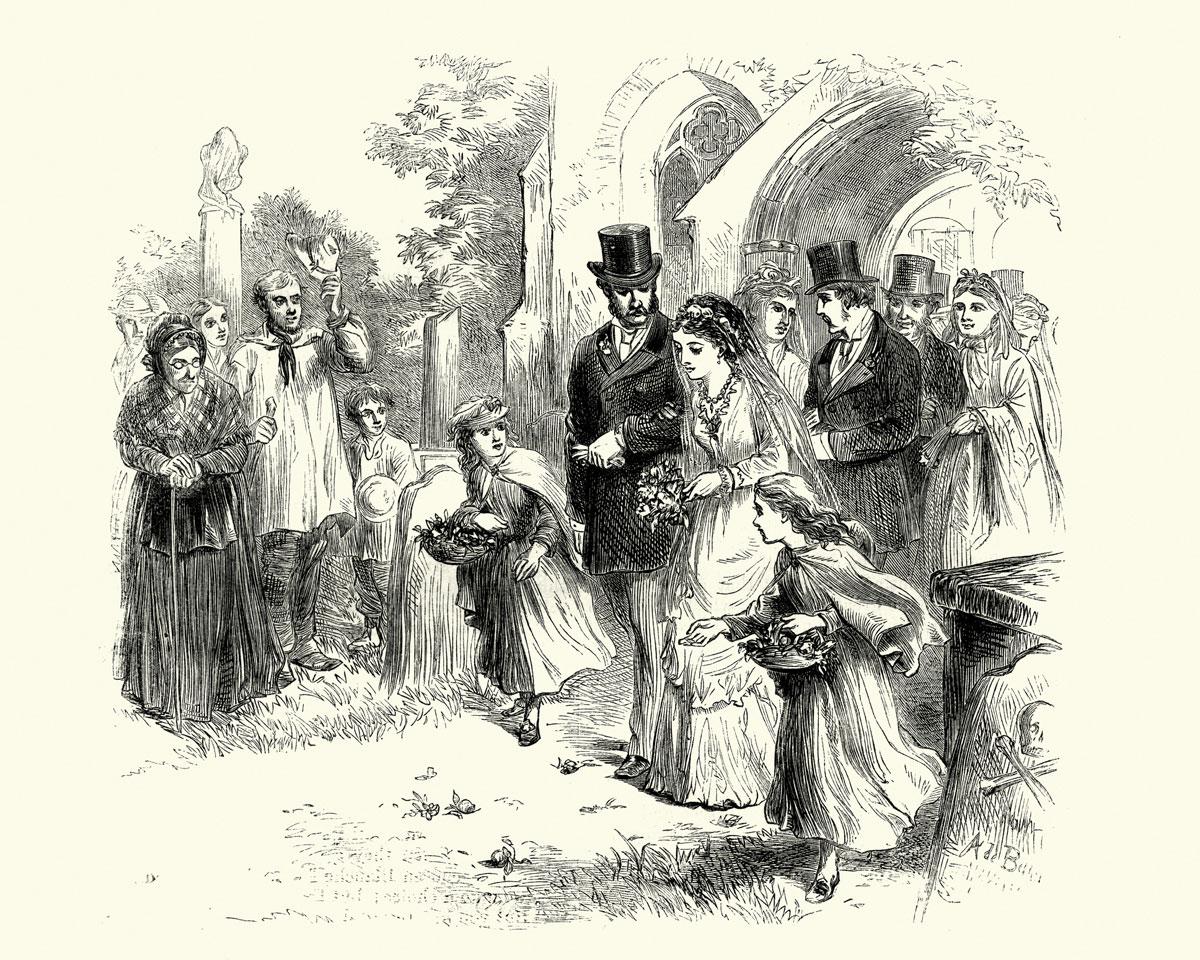
Without question, Puritan New England in the seventeenth century exhibited a culture where, in two historians' words, "strong viable churches existed to buttress the authority of the family and to help supervise the rearing of children and youths." Puritan society also clearly rested on the moral indoctrination of these young through devices such as special catechisms, private religious societies, and covenant renewals, where groups of the young came together on the Sabbath to reaffirm the Christian covenants made by their parents.
And yet, these Puritans were also a surprisingly frisky and sensual bunch. A fine, and still largely unchallenged, source here is Edmund Morgan's classic study from 1944, The Puritan Family.
Allan C. Carlson is the author of numerous books, including Family Questions: Reflections on the American Social Crisis and The American Way: Family and Community in the Shaping of the American Identity. He attends St. Paul Lutheran Church in Rockford, Illinois. He is a senior editor of Touchstone.
A Journal of Mere Christianity—Delivered to Your Door
- Essays on theology, culture, and the Church
- Contributors from across the Christian traditions

Six print issues (one year) of Touchstone, plus full online access and PDF downloads for only $39.95.

Get a one-year full-access subscription to the Touchstone online archives for only $19.95.
bulk subscriptions
Order Touchstone subscriptions in bulk and save $10 per sub! Each subscription includes 6 issues of Touchstone plus full online access to touchstonemag.com—including archives, videos, and pdf downloads of recent issues for only $29.95 each! Great for churches or study groups.
Transactions will be processed on a secure server.
more on sex from the online archives

31.1—January/February 2018
Getting Sex Wrong Is a Foundational Error by James M. Kushiner

31.6—November/December 2018
on the Church's Response to the Anti-marriage Tide by Diane Woerner
23.5—September/October 2010
The Loss of a Christian Understanding of Virginity Is Pure Tragedy by Eleanor Bourg Donlon
more from the online archives
24.1—January/February 2011
Marriage Thrives in Reality, Not in Our Dreams by Nathan Schlueter

28.2—March/April 2015
Man, Woman & the Mystery of Christ
An Evangelical Protestant Perspective by Russell D. Moore
calling all readers
Please Donate
"There are magazines worth reading but few worth saving . . . Touchstone is just such a magazine."
—Alice von Hildebrand
"Here we do not concede one square millimeter of territory to falsehood, folly, contemporary sentimentality, or fashion. We speak the truth, and let God be our judge. . . . Touchstone is the one committedly Christian conservative journal."
—Anthony Esolen, Touchstone senior editor
