





Twice as Good
Anyone who has managed to finish the first chapter of Genesis knows that the Creator was pleased with his work. Indeed, the goodness of Creation is probably the most obvious theme of the account; five of Creation's six days include some form of the refrain, "God saw that it was good," wayyara Elohim ki tov. It is hard to imagine that any reader of the text has failed to observe this very clear compositional pattern.
Perhaps less obvious, however, at least on a first reading, are certain more delicate details—threads, as it were, that weave the declaration, "God saw that it was good," into the story's larger fabric. To see how this is so, we might begin by observing that this refrain, wayyara Elohim ki tov, is not evenly distributed. Two of the days appear to be twice as good. I believe this feature calls for an explanation.
A Cycle of Creation
THIS ARTICLE ONLY AVAILABLE TO SUBSCRIBERS.
FOR QUICK ACCESS:
Patrick Henry Reardon is pastor emeritus of All Saints Antiochian Orthodox Church in Chicago, Illinois, and the author of numerous books, including, most recently, Out of Step with God: Orthodox Christian Reflections on the Book of Numbers (Ancient Faith Publishing, 2019).
A Journal of Mere Christianity—Delivered to Your Door
- Essays on theology, culture, and the Church
- Contributors from across the Christian traditions

Six print issues (one year) of Touchstone, plus full online access and PDF downloads for only $39.95.

Get a one-year full-access subscription to the Touchstone online archives for only $19.95.
bulk subscriptions
Order Touchstone subscriptions in bulk and save $10 per sub! Each subscription includes 6 issues of Touchstone plus full online access to touchstonemag.com—including archives, videos, and pdf downloads of recent issues for only $29.95 each! Great for churches or study groups.
Transactions will be processed on a secure server.
more on Bible from the online archives
32.3—May/June 2019
on the Implications of Changing the Pater Noster by John M. McCarthy
24.3—May/June 2011
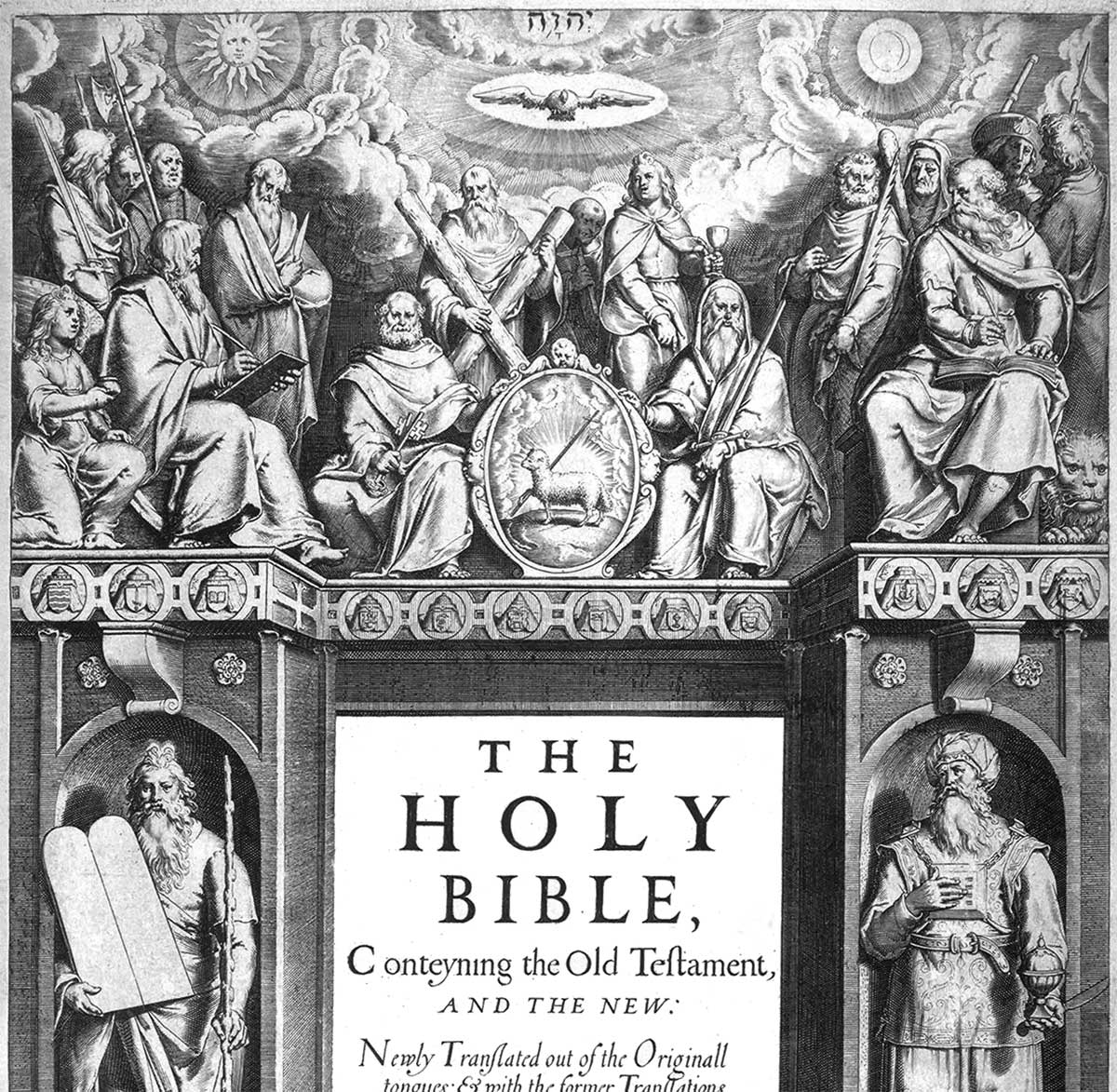
The Making & Endurance of the King James Bible, 1611-2011 by Barton Swaim
31.4—July/August 2018
on the Brevity & Theology of Her Recorded Words by Judith Anderson
more from the online archives
36.1—Jan/Feb 2023
A History of the Protestant Debate over Contraception by James A. Altena

27.6—Nov/Dec 2014
Tales of Forbidden Stereotypes
Real-Life Men & Women & the Tragic Loss of Human Comedy by Anthony Esolen
calling all readers
Please Donate
"There are magazines worth reading but few worth saving . . . Touchstone is just such a magazine."
—Alice von Hildebrand
"Here we do not concede one square millimeter of territory to falsehood, folly, contemporary sentimentality, or fashion. We speak the truth, and let God be our judge. . . . Touchstone is the one committedly Christian conservative journal."
—Anthony Esolen, Touchstone senior editor
