




Loving Others: Two Formulas
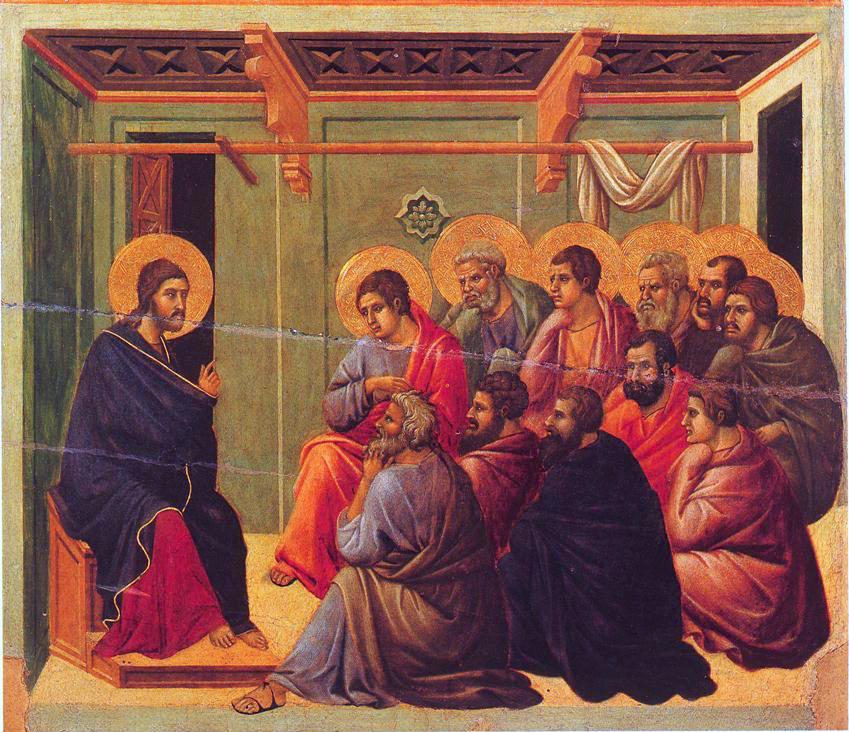
Our Savior, when someone inquired, "Which is the first commandment of all?", answered by the formula of the Shema, with its Deuteronomic injunction that a man must love God with all his heart and being. Then Jesus, although no one pressed him further, thought it important to add that there is, in fact, a similar second commandment—this one from Leviticus—obligating human beings to love their neighbors as themselves. Perhaps most significant in this juxtaposition of mandates is the fact that both of them employ the same verb for "love," agapao.
It is instructive to observe that the Septuagint, Israel's Greek translation of the Scriptures, used this identical verb in both of the passages to which Jesus alludes (Deut. 6:5; Lev. 19:18). What is new here is the Lord's joining of these two commandments in a way that makes them inseparable (cf. 1 John 4:20–21).
Now with respect to the "second" commandment, the New Testament speaks of it in two forms. The first and dominant form is the Lord's direct quotation from Leviticus: "You shall love your neighbor as yourself." This is how the commandment is expressed in multiple sources: James (2:8), Paul (Rom. 13:8–10; Gal. 5:14), and all the Synoptic Gospels (Matt. 19:19; 22:39; Mark 12:31; Luke 10:27).
THIS ARTICLE ONLY AVAILABLE TO SUBSCRIBERS.
FOR QUICK ACCESS:
Patrick Henry Reardon is pastor emeritus of All Saints Antiochian Orthodox Church in Chicago, Illinois, and the author of numerous books, including, most recently, Out of Step with God: Orthodox Christian Reflections on the Book of Numbers (Ancient Faith Publishing, 2019).
A Journal of Mere Christianity—Delivered to Your Door
- Essays on theology, culture, and the Church
- Contributors from across the Christian traditions

Six print issues (one year) of Touchstone, plus full online access and PDF downloads for only $39.95.

Get a one-year full-access subscription to the Touchstone online archives for only $19.95.
bulk subscriptions
Order Touchstone subscriptions in bulk and save $10 per sub! Each subscription includes 6 issues of Touchstone plus full online access to touchstonemag.com—including archives, videos, and pdf downloads of recent issues for only $29.95 each! Great for churches or study groups.
Transactions will be processed on a secure server.
more on bible from the online archives
24.3—May/June 2011
The Making & Endurance of the King James Bible, 1611-2011 by Barton Swaim

31.4—July/August 2018
on the Brevity & Theology of Her Recorded Words by Judith Anderson
more from the online archives
32.5—September/October 2019
Some Trivial Thoughts on the Study of Philosophy by Graeme Hunter

calling all readers
Please Donate
"There are magazines worth reading but few worth saving . . . Touchstone is just such a magazine."
—Alice von Hildebrand
"Here we do not concede one square millimeter of territory to falsehood, folly, contemporary sentimentality, or fashion. We speak the truth, and let God be our judge. . . . Touchstone is the one committedly Christian conservative journal."
—Anthony Esolen, Touchstone senior editor
