




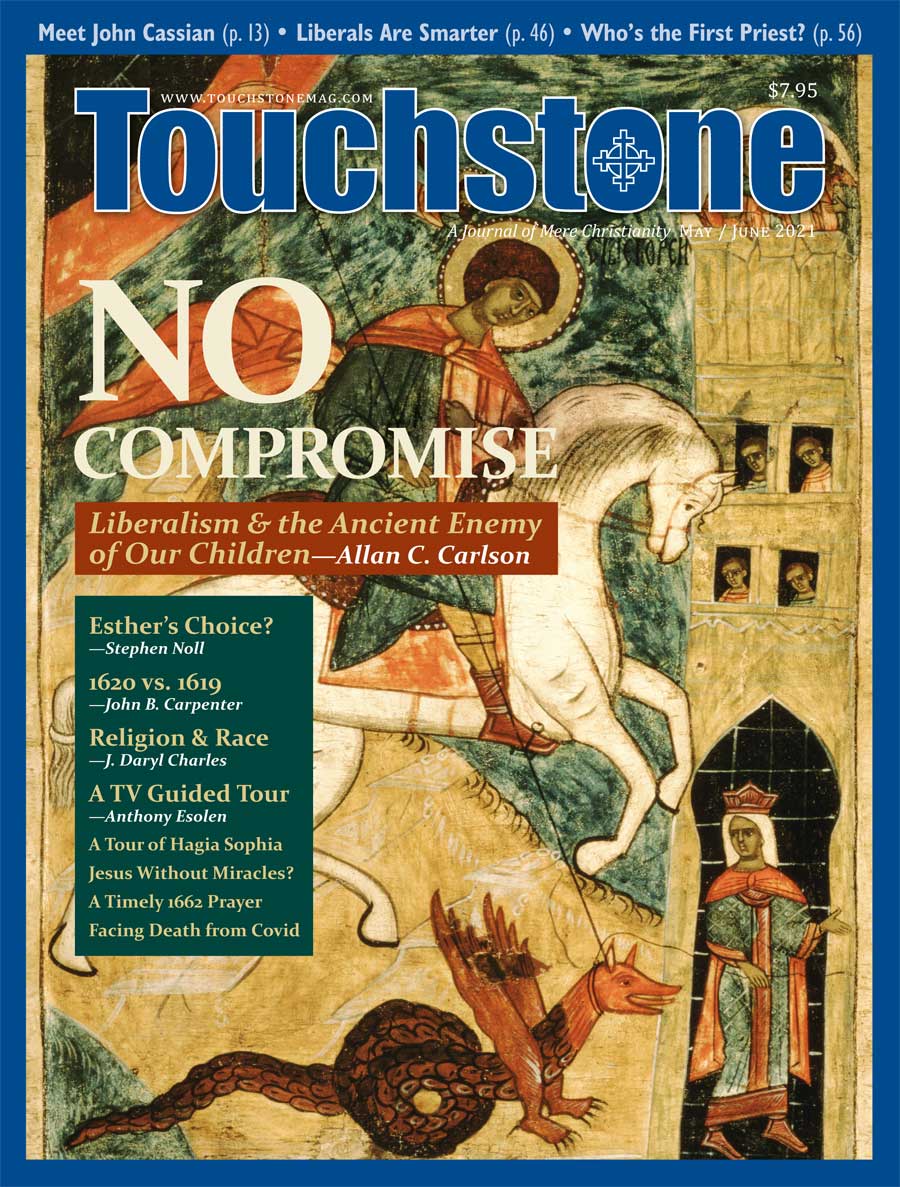
The First Priest
by Patrick Henry Reardon
The Bible's initial reference to sacrifice comes immediately after the Fall and the irruption of death into man's expectation. When Genesis 4 begins, no human being has actually died, as yet,in the physical sense, but the reader already knows that the inevitability of death now marks human existence.
In this context, at this precise point, the Bible introduces the idea of sacrifice—an offering (minchah)—to the Lord: "Now Abel was a shepherd of a flock, but Cain was a tiller of the soil. And in due course it came to pass that Cain brought an offering of the fruit of the ground to the Lord. Abel also brought of the firstborn of his flock and of their fat."
It seems useful to examine more closely Holy Scripture's opening mention of sacrifice. We observe, first, that God has said, so far, not a single word about sacrifice. There is no injunction; each man, in making an offering to God, simply follows a directive of his heart. It feels right to make a minchah to the Lord, so Cain and Abel do it.
Second, each man's sacrifice is related to his work. In both cases the offering is a dedication of human labor, a consecration of the economy. His minchah costs each man something. The offering cannot be made until it has been humanized through labor. Abel, for instance, does not bring a wild animal, nor does Cain present a plant that grows on its own.
Third, and by implication, only the minchah of Abel involves the death of something "animated" with a "living soul"—a nephesh chayyah. Every animal, the Bible declares, has a living soul (cf. Gen. 1:20,29–30); it is a feature they share with human beings: "And the Lord God formed man of the dust of the earth and breathed into his nostrils the breath of life, and man became a living soul"—nephesh chayyah (2:7). Consequently, there is a very deep affinity between man and the other animals. This means there is a quality very special about Abel's sacrifice, for it includes the death of something like himself. His immolation implies a substitution; it represents, in ritual form, an offering of himself.
Abel's sacrifice expresses, in addition, a religious consecration of death. It is the man's godly response to his mortality. This recently-become-mortal human being assumes the very curse of dying and presents it to God in a solemn act of worship. Abel thus takes on the role of our first priest, and his offering represents man's initial endeavor to return to his Creator.
As for the "living soul," the Hebrew nephesh chayyah is not a completely spiritual entity. It is, rather, a thing emphatically physical, because it is embedded in the blood. As the Book of Leviticus later explains, "the soul of the flesh is in the blood" (ki nephesh habasar baddam) (17:11). Blood is what Abel and his lamb have in common. So when Abel immolates his lamb, he literally pours out its soul unto death. In this ritual shedding of lamb's blood, Abel consecrates his life and his death to God.
It is important to see, I believe, that the Bible traces the priesthood back to Abel. Israel's elaborate sacrificial system was rooted in the deep intuition of humanity's first priest. Indeed, very much of the Torah is dedicated to making sure that God's people, when later they elaborate the ritual impulse of Abel (and Noah, Abraham, and the other patriarchs), should get it right. History testifies, after all, that sinful man, left to his own lights, is pretty certain to get it wrong. So a great deal of the Bible is concerned with the correct and proper way to do what Abel had in mind.
Gifts Among Friends
As for Abel himself, we know God was pleased with what he did: "And the Lord had regard for Abel and his offering (minchah)." Abel's, after all, was not just any kind of offering. So the third-century rabbis at Alexandria, when they translated this last sentence into Greek, adopted a more discreet expression. They rendered it, "And God regarded Abel and his gifts (dorois)."
Patrick Henry Reardon is pastor emeritus of All Saints Antiochian Orthodox Church in Chicago, Illinois, and the author of numerous books, including, most recently, Out of Step with God: Orthodox Christian Reflections on the Book of Numbers (Ancient Faith Publishing, 2019).
A Journal of Mere Christianity—Delivered to Your Door
- Essays on theology, culture, and the Church
- Contributors from across the Christian traditions

Six print issues (one year) of Touchstone, plus full online access and PDF downloads for only $39.95.

Get a one-year full-access subscription to the Touchstone online archives for only $19.95.
bulk subscriptions
Order Touchstone subscriptions in bulk and save $10 per sub! Each subscription includes 6 issues of Touchstone plus full online access to touchstonemag.com—including archives, videos, and pdf downloads of recent issues for only $29.95 each! Great for churches or study groups.
Transactions will be processed on a secure server.
more on bible from the online archives
32.3—May/June 2019
on the Implications of Changing the Pater Noster by John M. McCarthy
24.3—May/June 2011
The Making & Endurance of the King James Bible, 1611-2011 by Barton Swaim
32.2—March/April 2019
on Preserving Physical & Spiritual Nourishment by Nathanael Devlin
more from the online archives
33.3—May/June 2020
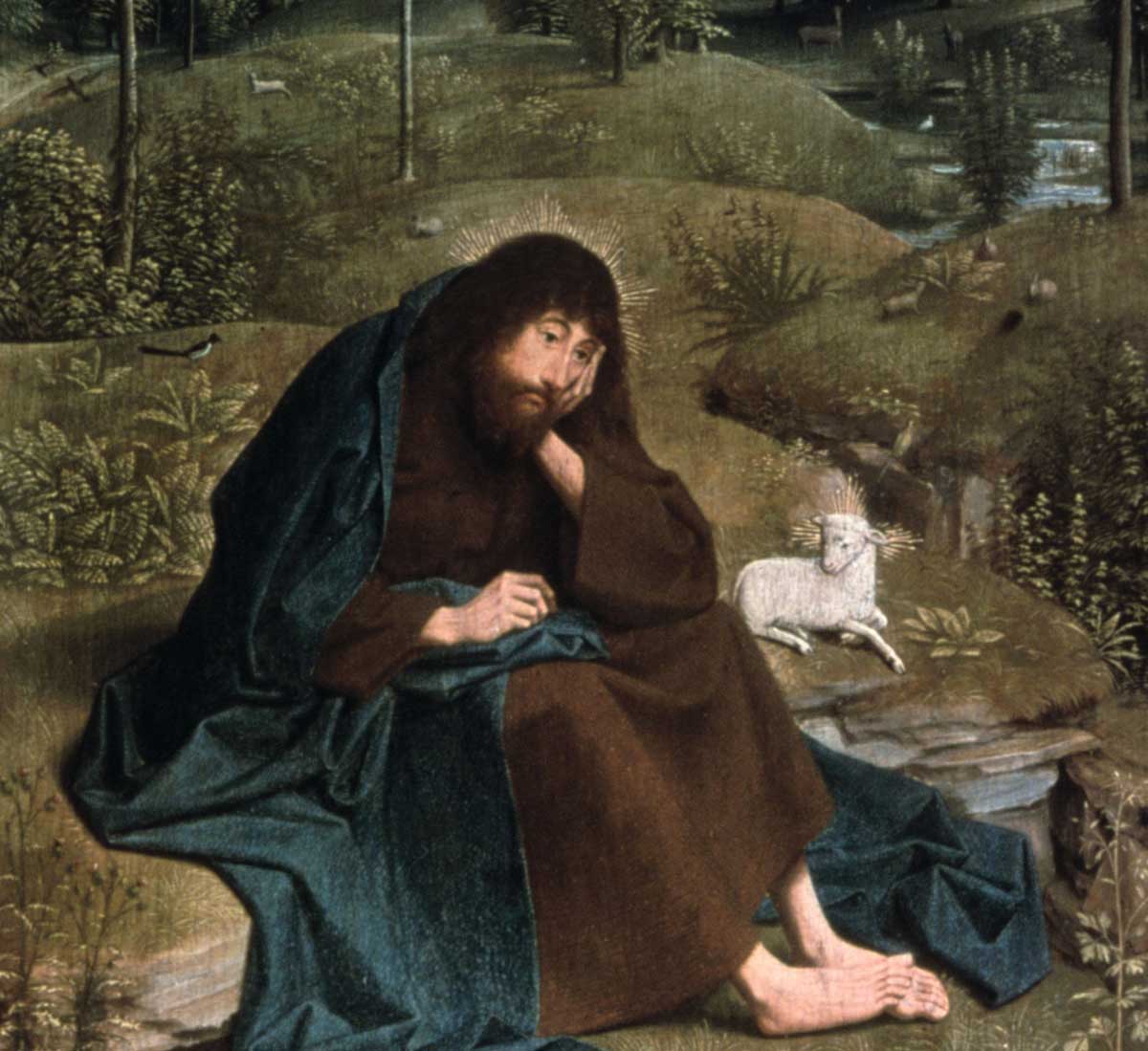
Human & Divine Societies Require Careful Thought & Discourse by Anthony Esolen
18.8—October 2005
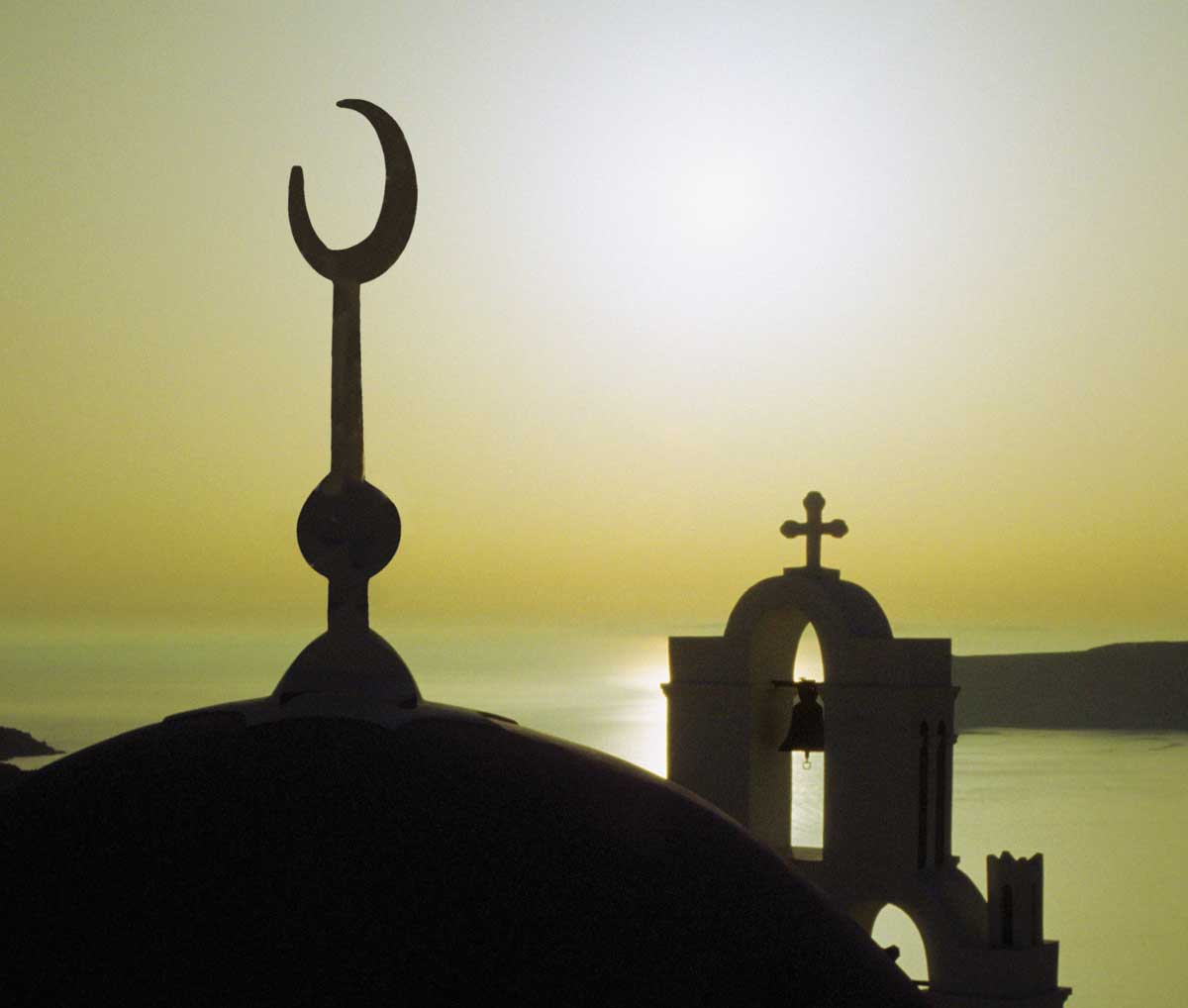
European Islam & the Doubtful Future of Christian Europe by William Murchison
32.1—January/February 2019
Sex, Women's Ordination & the Rejection of Hierarchy & Equality by James A. Altena
calling all readers
Please Donate
"There are magazines worth reading but few worth saving . . . Touchstone is just such a magazine."
—Alice von Hildebrand
"Here we do not concede one square millimeter of territory to falsehood, folly, contemporary sentimentality, or fashion. We speak the truth, and let God be our judge. . . . Touchstone is the one committedly Christian conservative journal."
—Anthony Esolen, Touchstone senior editor
