




Renewing Our Inheritance
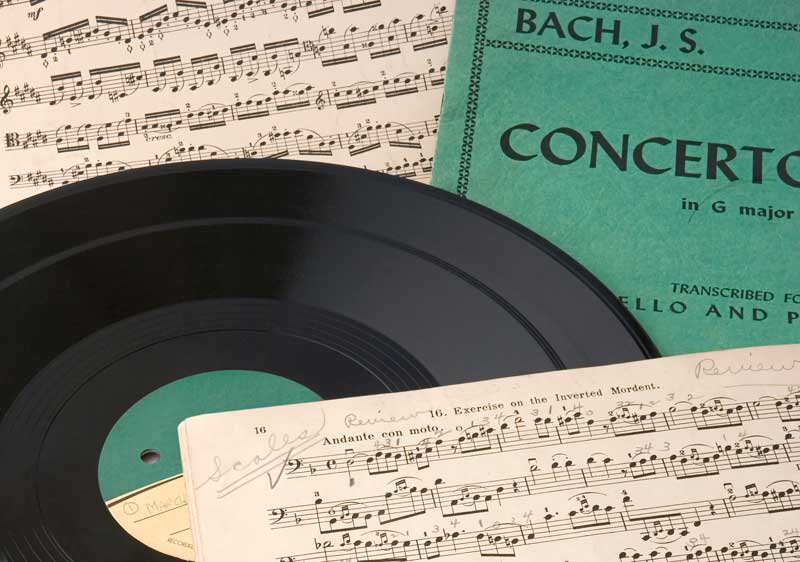
From early in the Church's history, Holy Week and Easter have inspired many profound artistic works, and for good reason. The events honored during this all-too-brief season invite creative commemoration, especially in music. They were and are the fulfillment of the redemptive love of God, of his eternal purposes being realized in history, and no art form expresses the mysterious relationship between time and eternity and between the personal and the cosmic better than music.
Those living through this history were propelled into a range of intense human emotion and spiritual alertness; their response has been conveyed (however approximately) to subsequent generations through poetry, visual representation, and musical forms. Music may have an edge on those other modes of communication: as philosopher Susanne Langer argued in Problems of Art, music sounds as feelings feel.
The significance of this sequence of experiences cannot be received without the engagement of sanctified imaginations and the welcome assistance of gifted servants capable of conveying to our minds and bodies the drama implicit in this victorious divine incursion. During the sacred meal shared with the disciples on the night in which he was betrayed, Christ gave a command to remember, a command followed by the singing—from memory—of one of the songs of Zion. Even in the midst of his suffering, our Lord quoted from the hymns of his ancestors. He recalled their history and articulated his membership in it by remembering their songs.
The Animating Power of Memory
The Greeks rightly understood that memory is the mother of the Muses. A living connection to the past enables an imaginative response to one's experience in the present. In The Religious Sense, Luigi Giussani warned that being cut off from the past makes experience in the present dry and hollow. "The substantial attraction for living comes from the past," he argued:
What a breath of fresh air to read a page of Homer or to repeat verses of Virgil by memory or to remember the plot of a tragedy by Sophocles! The substantial attraction of the present comes from the richness with which it is imbued with its past inheritance.
Without the vital connection to the past—a vitality sustained by the imagination—living becomes mere reacting.
Yves Congar offered similar claims in his book The Meaning of Tradition: "If we remembered nothing it would be impossible to advance." And thus, "Tradition is not merely memory; it is actual presence and experience. It is not purely conservative, but, in a certain way, creative."
The days of Holy Week and Easter are a time in which the animating power of memory may have its most heightened capacities. Fittingly, the musical repertoire available for use in liturgical and private devotional settings is extensive. Especially for the days leading up to Resurrection Sunday, we have many Passion oratorios and settings of the Stabat Mater, as well as many interpretations of the penitential Psalms. There are also musical treatments of countless poems reflecting on the horror and beauty of the Cross.
It is lamentable that such a treasure trove of abundantly rich expressions of faith is largely unknown to many Christians today. This ignorance is due in large measure to the acceptance and often enthusiastic endorsement by church leaders of the cultural habits of the surrounding society. The fact that the musical practices of most Christians are indistinguishable from those of their pagan neighbors is just one reason why I am fond of observing (perhaps too fond) that there never was a culture war—and we lost.
Gifts from the Professionals
Ken Myers is the host and producer of the Mars Hill Audio Journal. Formerly an arts editor with National Public Radio, he also serves as music director at All Saints Anglican Church in Ivy, Virginia. He is a contributing editor for Touchstone.
A Journal of Mere Christianity—Delivered to Your Door
- Essays on theology, culture, and the Church
- Contributors from across the Christian traditions

Six print issues (one year) of Touchstone, plus full online access and PDF downloads for only $39.95.

Get a one-year full-access subscription to the Touchstone online archives for only $19.95.
bulk subscriptions
Order Touchstone subscriptions in bulk and save $10 per sub! Each subscription includes 6 issues of Touchstone plus full online access to touchstonemag.com—including archives, videos, and pdf downloads of recent issues for only $29.95 each! Great for churches or study groups.
Transactions will be processed on a secure server.
more on music from the online archives
33.3—May/June 2020
Bach's Cantata BWV 106, Gottes Zeit ist die allerbesteZeit (God's time is the very best time) by Ken Myers
more from the online archives
27.6—Nov/Dec 2014
Tales of Forbidden Stereotypes
Real-Life Men & Women & the Tragic Loss of Human Comedy by Anthony Esolen

24.5—Sept/Oct 2011
on Wondering or Wandering Through College Education by Anthony Esolen

23.1—January/February 2010
It’s Bent on Bringing Down the House on the Family & the Church by Douglas Farrow
calling all readers
Please Donate
"There are magazines worth reading but few worth saving . . . Touchstone is just such a magazine."
—Alice von Hildebrand
"Here we do not concede one square millimeter of territory to falsehood, folly, contemporary sentimentality, or fashion. We speak the truth, and let God be our judge. . . . Touchstone is the one committedly Christian conservative journal."
—Anthony Esolen, Touchstone senior editor
