





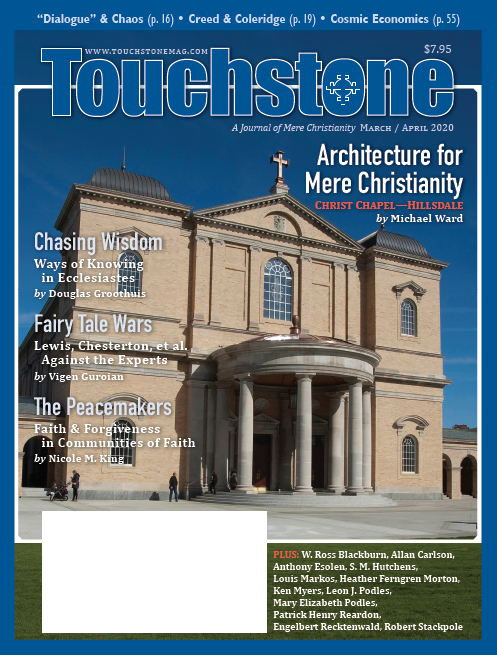
2019 Conference Talk
Christian Pro-Family Governments?
Old & New Lessons from Europe
As the catastrophic Second World War drew to a close in 1945, Christian politicians looked for ways to rebuild Western Christian civilization on the material and moral ruins of Europe. Except for Great Britain, Switzerland, and Sweden, all of the West and Central European states had been ruled by fascist or Nazi governments or conquerors during the prior ten years. Sometimes by election, sometimes by military defeat, democracy had been repudiated. So, too, had the economic regime of classical liberalism resting on notions of contracts and unfettered competition, which had contributed to the disorders of the early twentieth century. And now, the Red Army was pouring into Eastern Europe—and perhaps beyond.
How might things be put back together? How might the extreme inequalities, recurrent depressions, and social disruptions seemingly inherent to liberal capitalism be tempered? How might the retreat from marriage and rapidly falling fertility be countered? How might democracy be rebuilt within a compelling moral framework?
Christian Democracy
An answer would be found in Christian Democracy. Its origins reached back, among Roman Catholics, to the Center Party of old Germany, launched in 1858. Under the influence of Wilhelm Emmanuel von Ketteler, the bishop of Mainz, this vision of social Catholicism rejected a "capitalist absolutism" that threatened family life. It endorsed Christian labor associations that would shorten work days, deliver family-sustaining wages to fathers, and prohibit the labor of mothers and children in factories and mines. Such ideas would help to frame the great Catholic social encyclicals Rerum Novarum and Quadragesimo Anno.
Among Protestants, similar goals animated the Anti-Revolutionary Party of the Netherlands, founded by Reformed pastor Abraham Kuyper in 1879. The group's name reflected a fierce opposition to what Kuyper called the "anti-Christian world power" of the French Revolution and its curious spawn: both socialism and atomistic capitalism, which shared a hostility toward Christian family life. Accordingly, like the Roman Catholics, these Dutch Protestants emphasized the protection of Christian marriages and homes from the anti-family incentives inherent in both forms of industrialism. For example, in a diatribe from exactly 150 years ago, Pastor Kuyper denounced the "gigantic merchants," the Walmarts or Amazon.coms of his day:
[In the industrial order] no longer should each baby drink warm milk from the breast of its own mother; we should have some tepid mixture prepared for all babies collectively. No longer should each child have a place to play at home by its mother; all should go to a common nursery school.
Coming closer to our time: during the early 1940s, Christian Democratic writers such as Emmanuel Mour-nier, Etienne Gilson, and Etienne Bourne found new language to energize a radical Christian party to battle the inequalities and corruptions infecting modern European life, a "hard" party, a party worthy of Christ. They denounced Communism for its materialism, its collectivization of all property, and its hostility toward revealed religion. They also rejected the atomism of "bourgeois liberalism" for its "indifference toward basic institutions such as the family." Writing in Switzerland, economist Wilhelm Roepke urged that a rebuilt Europe should rest on "the natural solidarity of small groups, above all, the family."
And so it happened . . . for about twenty years. Christian Democratic parties came to power in France, the Netherlands, Italy, and West Germany. These governments laid out the spiritual and political conditions that enabled a rapid, indeed, almost miraculous, economic recovery in Europe. They also shaped welfare states that were broadly supportive of traditional families—ones with fathers earning a "family wage," mothers able to be at home full-time, and a relative abundance of children. Favored policies included child allowances, tax breaks for married couples, subsidies for family housing, and the mandatory training of schoolchildren in home economics: for the girls, sewing, cooking, and childcare; for the boys, carpentry, metal work, and simple mechanics. And after 70 years of steady fertility decline, Western European nations had marriage-booms and baby-booms of their own.
Western Entropy, Eastern Energy
Allan C. Carlson is the author of numerous books, including Family Questions: Reflections on the American Social Crisis and The American Way: Family and Community in the Shaping of the American Identity. He attends St. Paul Lutheran Church in Rockford, Illinois. He is a senior editor of Touchstone.
A Journal of Mere Christianity—Delivered to Your Door
- Essays on theology, culture, and the Church
- Contributors from across the Christian traditions

Six print issues (one year) of Touchstone, plus full online access and PDF downloads for only $39.95.

Get a one-year full-access subscription to the Touchstone online archives for only $19.95.
bulk subscriptions
Order Touchstone subscriptions in bulk and save $10 per sub! Each subscription includes 6 issues of Touchstone plus full online access to touchstonemag.com—including archives, videos, and pdf downloads of recent issues for only $29.95 each! Great for churches or study groups.
Transactions will be processed on a secure server.
more on family from the online archives
34.1—January/February 2021
Jesus' Astonishing Other Teaching on Marriage by James Ware


more from the online archives
28.5—Sept/Oct 2015
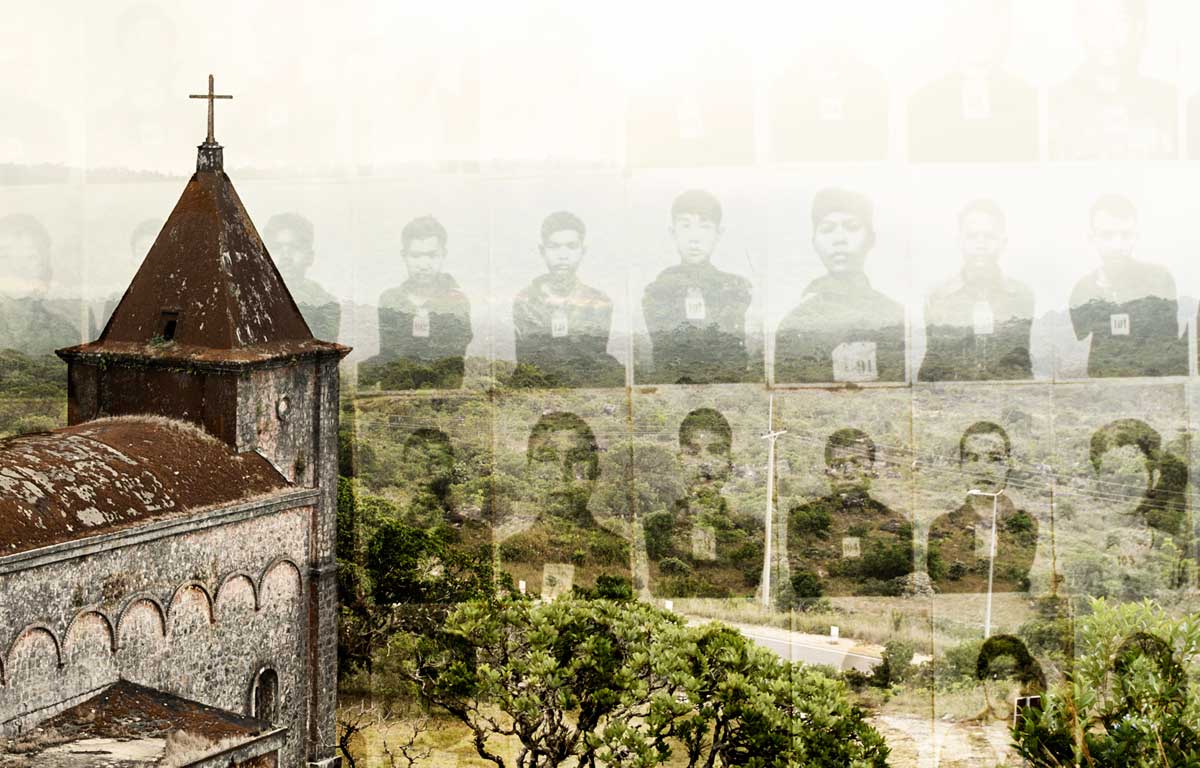
Remembering Angka & the Idolatry of the Khmer Rouge 40 Years Later by Les Sillars
32.6—November/December 2019
on Taking Heed of the Parallels Between the Crises of Yesterday & Today by Korey D. Maas
calling all readers
Please Donate
"There are magazines worth reading but few worth saving . . . Touchstone is just such a magazine."
—Alice von Hildebrand
"Here we do not concede one square millimeter of territory to falsehood, folly, contemporary sentimentality, or fashion. We speak the truth, and let God be our judge. . . . Touchstone is the one committedly Christian conservative journal."
—Anthony Esolen, Touchstone senior editor
