




Expository Preaching
My church had given me as a young man a great many questions that I knew, at least on an intuitive level, would give me no rest, however long I lived, until they were dealt with. I also knew enough by the time I graduated from a state university that such schools were not the best place to deal with "religious" matters (as David Tracy complained in Blessed Rage for Order), for the faculties were liberal, and although they had many scholars from whose work I profited, they were operated on the practical theory that God did not exist, or at least that if he did, he was not the proper, much less prime, object of human thought—as Pope and Kant had taught them—only perhaps of religious contemplation, which was something else entirely and had no objective, scientific validity.
The Dallas Experience
It appeared that what I needed to study was theology, and the obvious place for a person with my background to do this was Dallas Theological Seminary. In the mid-seventies it was the place to which all young men in my circle with aspirations to religious vocation wanted to go. The school was highly selective: I heard that in those days it only accepted thirty percent of its applicants, and they were the best and brightest of the American Bible schools and Christian colleges. The school was also beginning to favor the graduates of secular universities, and I was proud when a place in the student body was offered me.
I found my fellows at Dallas to be the brightest student group I had belonged to until I came to the University of Chicago. Still, I left Dallas after a year, part of what the dean told me in the exit interview was "a small exodus," because by then I had become nervous about being denied my degree for coming to disagree with a school that viewed its Th.M. as the faculty's nihil obstat for ministry. (There are good reasons for that policy, but, knowing myself, I did not wish to risk living under it.) I have heard that the current Dallas Seminary is not the same one I attended: that it is now much more of the standard-issue Evangelical sort. I only knew it in a former day.
Something that apparently remains, however, is Dallas's specialty since its earliest days, the training of Bible expositors. To that end, it does not offer the standard three-year seminary M.Div., but instead a four-year Th.M., the extra year providing time for more intensive study of Greek and Hebrew as foundational for competent scriptural exposition.
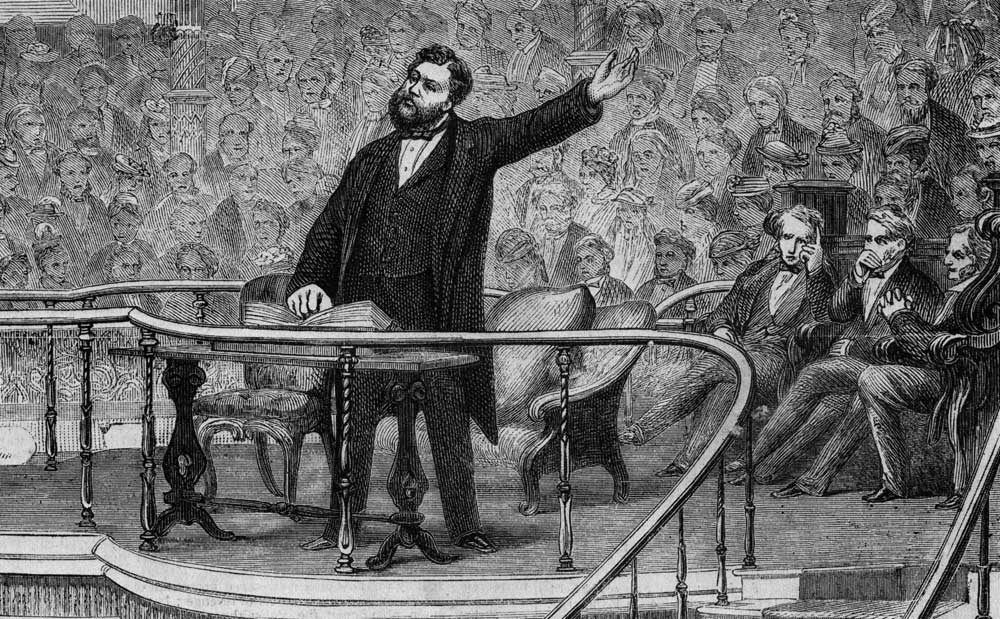
There was a saying at the seminary that the only real preaching was expository. Sermons built upon anything but close interpretation of the biblical text itself were not worthy of the name. The maxim, commonly but wrongly attributed to Karl Barth, that preachers should compose their sermons with the Bible at one hand and a newspaper at the other would have been rejected because it implies an unacceptable elevation of the word of man in proximity to the Word of God—which Barth, of course, rejected emphatically. To this expository end also its principal teacher of homiletics was the celebrated Haddon Robinson, who insisted that his students' preaching be made both substantive and moving by disciplined attention to the text itself.
Practical Experience
I left Dallas thoroughly convinced of the value of good knowledge of the biblical languages for adequate preaching, but with its expository preaching codicil still in suspension, for of that I was not so sure, since I could imagine excellent preaching of other varieties when placed in knowledgeable and competent hands. There did not seem to be any reason why orthodox, biblical, and penetrating homilies could not be built on other models—a dialog, for example, of newspaper and Scripture, or a subject or idea laid topically open to Christian thinking steeped in biblical word and wisdom, or even using Paul Tillich's Method of Correlation, with which I had no theoretical difficulties.
Forty years of listening to sermons after my Dallas days, however, has convinced me that Haddon Robinson and Dallas Seminary were resoundingly right about expository preaching—not because other kinds can't in theory be done well, but because as a practical matter they almost never are. They almost invariably contain too much preacher and not enough Bible. They are composed not upon tracks laid in and disciplined by Scripture itself, but which pre-exist and have been pre-cultivated in the minds of men who seek to make Scripture fit upon those lines
(if they are conscientious and scholarly), or which swerve precariously from truth to error and back again if the preacher is of an undisciplined, imaginative, and speculative turn of mind—which describes most attempts at preaching I have heard.
The Wheelbarrow
S. M. Hutchens is a senior editor and longtime writer for Touchstone.
A Journal of Mere Christianity—Delivered to Your Door
- Essays on theology, culture, and the Church
- Contributors from across the Christian traditions

Six print issues (one year) of Touchstone, plus full online access and PDF downloads for only $39.95.

Get a one-year full-access subscription to the Touchstone online archives for only $19.95.
bulk subscriptions
Order Touchstone subscriptions in bulk and save $10 per sub! Each subscription includes 6 issues of Touchstone plus full online access to touchstonemag.com—including archives, videos, and pdf downloads of recent issues for only $29.95 each! Great for churches or study groups.
Transactions will be processed on a secure server.
more on ministry from the online archives


32.1—January/February 2019
Sex, Women's Ordination & the Rejection of Hierarchy & Equality by James A. Altena

more from the online archives
27.6—Nov/Dec 2014
Tales of Forbidden Stereotypes
Real-Life Men & Women & the Tragic Loss of Human Comedy by Anthony Esolen
22.3—April 2009
Neil Postman's Amusing Ourselves to Death: Public Discourse in the Age of Show Business by J. Daryl Charles

37.5—Sept/Oct 2024
Why Law Schools Can't Teach Law
A sidebar to How Law Lost Its Way by Adam MacLeod
calling all readers
Please Donate
"There are magazines worth reading but few worth saving . . . Touchstone is just such a magazine."
—Alice von Hildebrand
"Here we do not concede one square millimeter of territory to falsehood, folly, contemporary sentimentality, or fashion. We speak the truth, and let God be our judge. . . . Touchstone is the one committedly Christian conservative journal."
—Anthony Esolen, Touchstone senior editor
