Errands into the Moral Wilderness by Allan Carlson

2017 Conference Talk

Errands into the Moral Wilderness

Forms of Christian Family Witness & Renewal
by Allan C. Carlson

This paper originally given at the 2017 Touchstone conference. Subscribers can log in to hear all of the talks. Don't miss the 2018 conference in Deerfield, IL!

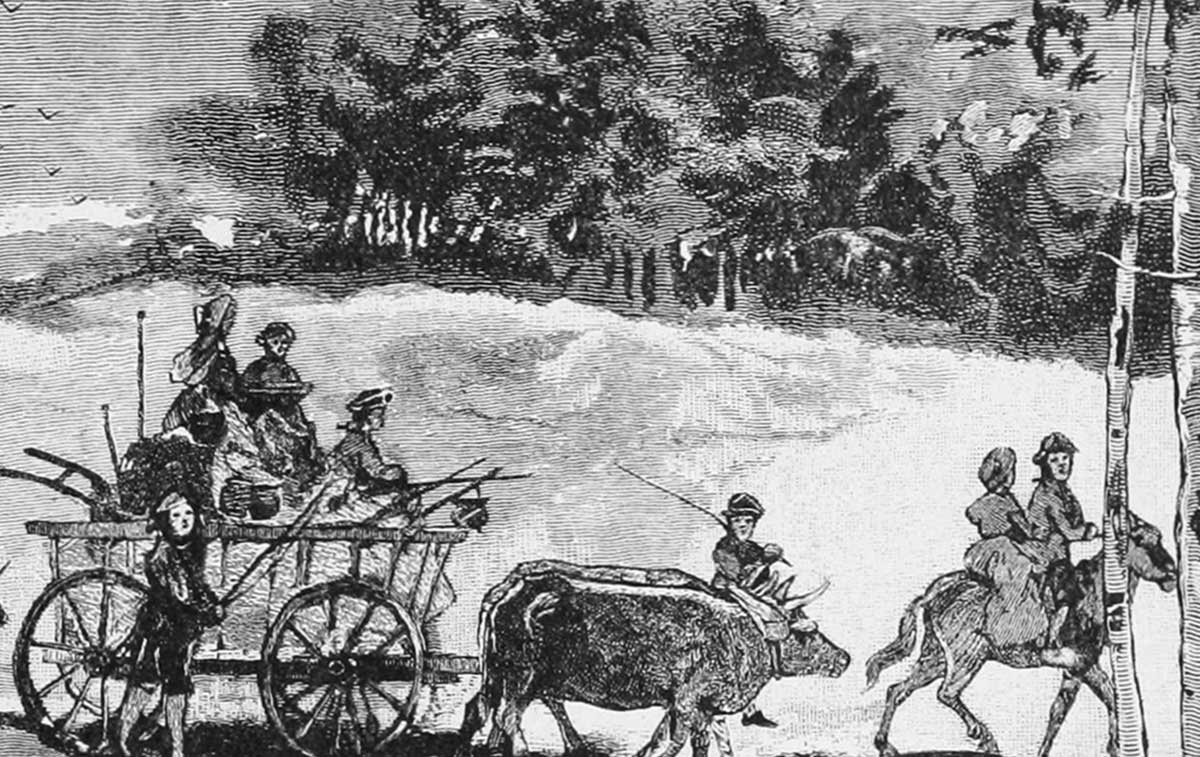
In 1670, Samuel Danforth preached an "election sermon" in Boston, with the title, "A Brief Recognitionof New England's Errand into the Wilderness." Like others of its kind, this sermon was a frank appraisal of how well the Puritan commonwealth in Massachusetts and Connecticut was performing.

The word "errand" is central here. As historian Perry Miller notes, the term then had two meanings: (1) a short journey on which an inferior is sent to perform a service for a superior (for example, in our time, when a husband runs an errand for his wife); and (2) the very purpose of an action or project, the conscious intention of an actor.

It was clearly this second meaning that Danforth had in mind. For John Winthrop and the other founders of the Massachusetts Bay Colony in 1630, their errand into the American wilderness was of enormous importance. As Miller nicely summarizes, their task was not a mere Christian "scouting expedition" for a battered remnant of persecuted Separatists. Rather, "it was an organized task force of Christians, executing a flank attack on the corruptions" of the Old World, "an essential maneuver in the drama of Christendom." They came to America to fulfill the re-formation of the Christian faith, launched a century earlier, but still incomplete in England and Europe.

Their errand, in the words of John Winthrop himself in his famed Arabella speech, was more specifically "to seeke out a place of Cohabitation and Consorteshipp under a due forme of Government both civill and ecclesiasticall." This would be a pure, biblical polity grounded in Holy Scripture, as interpreted by John Calvin and his followers.

The Puritans' Familial Errand

Most historians have focused on the theological and political implications of this project. Of equal importance was its social—and more specifically, its familial—component. Puritan literature from the early seventeenth century routinely denounced the moral corruptions—the fornications, the adulteries, the whoring, and the physical cruelties—found in English society. By intent, the Puritans set out to revitalize or reform the Christian family. As Winthrop implied, they sought to "improve" their lives in order to serve the Lord, to increase the body of Christ through the procreation of godly children, and to preserve and protect this posterity from the corruptions of an evil world.

Seventeenth-century Puritan theology, in both England and New England, was notable for its use of family imagery to describe the true faith. Richard Sibbes, for example, cast God as a stern, disciplinarian father who nonetheless would never disinherit his true "elected" children. As Sibbes elaborated, "the word 'father' is an epitome of the whole gospel." Other writers described the true Church in the female role. Said Thomas Palmer, "The church is called a woman, or woman in travail," giving birth to the saints. William Perkins saw the Church as "a mother, which by the ministry of the word brings forth children to God . . . and after they are born . . . she feeds them with milk out of [her] own breasts, which are the Scriptures." At other times, Puritan writers emphasized the nature of the Church as the "spouse of Christ."

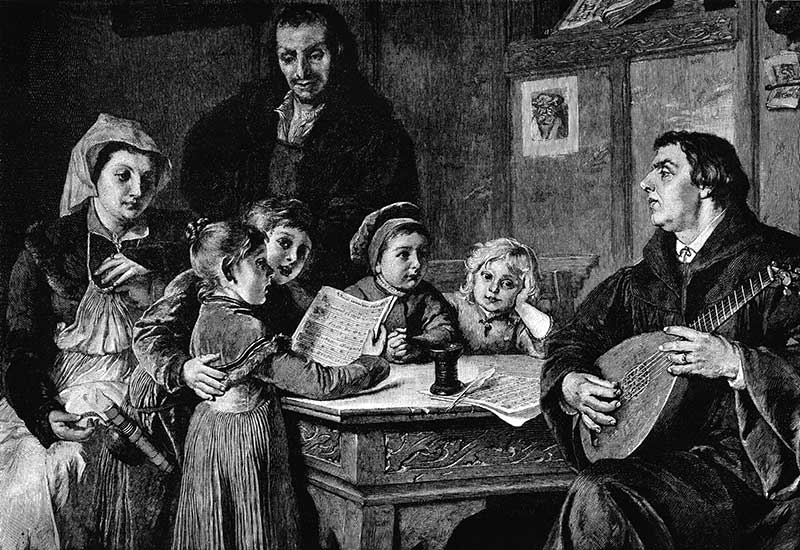
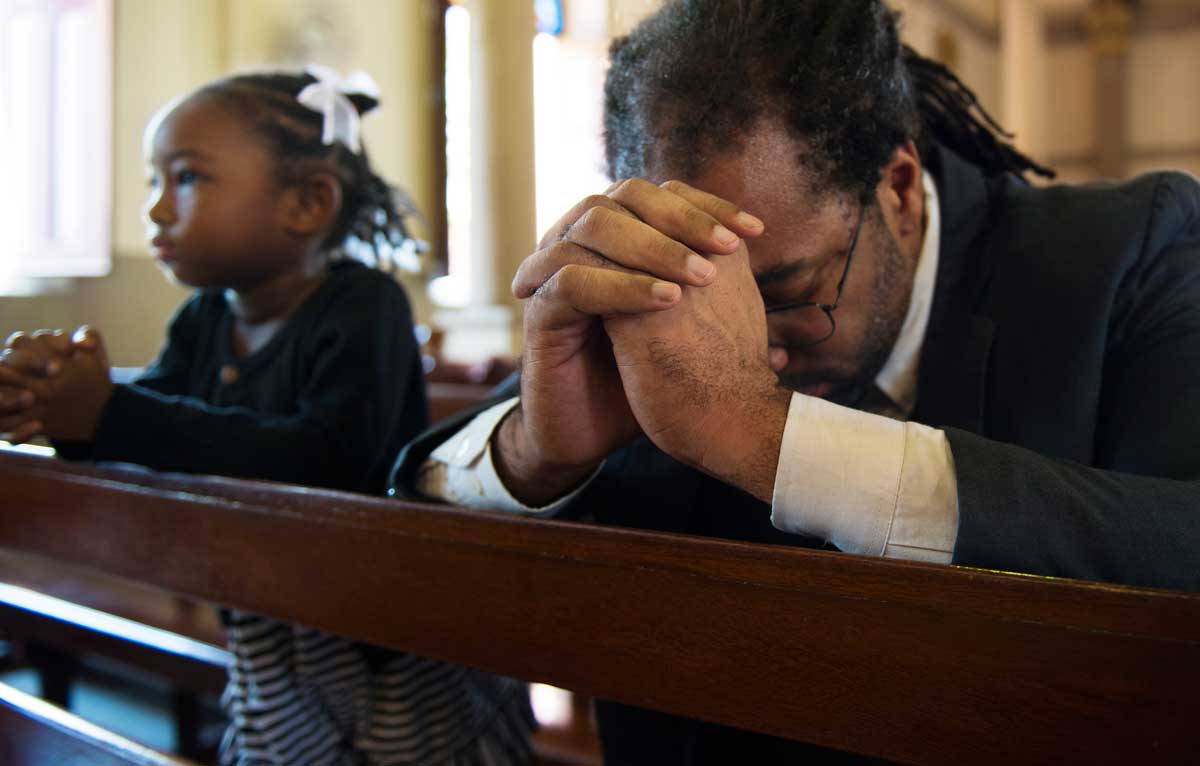
This theology contributed to the Puritan strategy of shrinking the role of the parish church while elevating the household into a "family church." The latter involved frequent family prayer, home Bible study, the singing of hymns, and father-led discussions of sermons. Through strengthened Christian homes, the Puritans believed, corrupt society might be regenerated. The family thus served—in historian Amanda Porterfield's words—as "the nucleus of moral armament and social stability" in the Puritans' divine errand.

More specifically, Thomas Cobbett called the family "the Mother Hive" out of which "both State and Church swarmed." Daniel Rogers held that "Marriage is . . . the Seminary of the Commonwealth, seed-plot of the Church, pillar (under God) of the world." As James Fitch summarized in 1683: "Such as families are, such at last the Church and Commonwealth
must be."


Allan C. Carlson is the author of numerous books, including Family Questions: Reflections on the American Social Crisis and The American Way: Family and Community in the Shaping of the American Identity. He attends St. Paul Lutheran Church in Rockford, Illinois. He is a senior editor of Touchstone.

A Journal of Mere Christianity—Delivered to Your Door

  • Essays on theology, culture, and the Church
  • Contributors from across the Christian traditions
Subscribe (Print + Online)

Six print issues (one year) of Touchstone, plus full online access and PDF downloads for only $39.95.

Subscribe (Online Only)

Get a one-year full-access subscription to the Touchstone online archives for only $19.95.


bulk subscriptions

Order Touchstone subscriptions in bulk and save $10 per sub! Each subscription includes 6 issues of Touchstone plus full online access to touchstonemag.com—including archives, videos, and pdf downloads of recent issues for only $29.95 each! Great for churches or study groups.

Transactions will be processed on a secure server.


more on family from the online archives

33.3—May/June 2020

Maternity as Theophany

Maternal Body: A Theology of Incarnation from the Christian East by Carrie Frederick Frost
Fertile Ground: A Pilgrimage Through Pregnancy by Laura S. Jansson by Agnes R. Howard

32.4—July/August 2019

An Alien Warfare

Today's Culture Wars Are Both Ancient & Modern by Allan C. Carlson

31.5—September/October 2018

Errands into the Moral Wilderness

Forms of Christian Family Witness & Renewal by Allan C. Carlson


more from the online archives

29.5—Sept/Oct 2016

The True Atheist Myth

on Past & Present Atheism & the Invention of Happiness by Jordan Bissell

31.1—January/February 2018

In Defense of Prudery

The Wisdom of the Victorian Quest for Innocence by David Sandifer

19.10—December 2006

God Rest Ye Merry

by Wilfred M. McClay

calling all readers

Please Donate

"There are magazines worth reading but few worth saving . . . Touchstone is just such a magazine."
—Alice von Hildebrand

"Here we do not concede one square millimeter of territory to falsehood, folly, contemporary sentimentality, or fashion. We speak the truth, and let God be our judge. . . . Touchstone is the one committedly Christian conservative journal."
—Anthony Esolen, Touchstone senior editor

Support Touchstone

00