





A Thousand Words
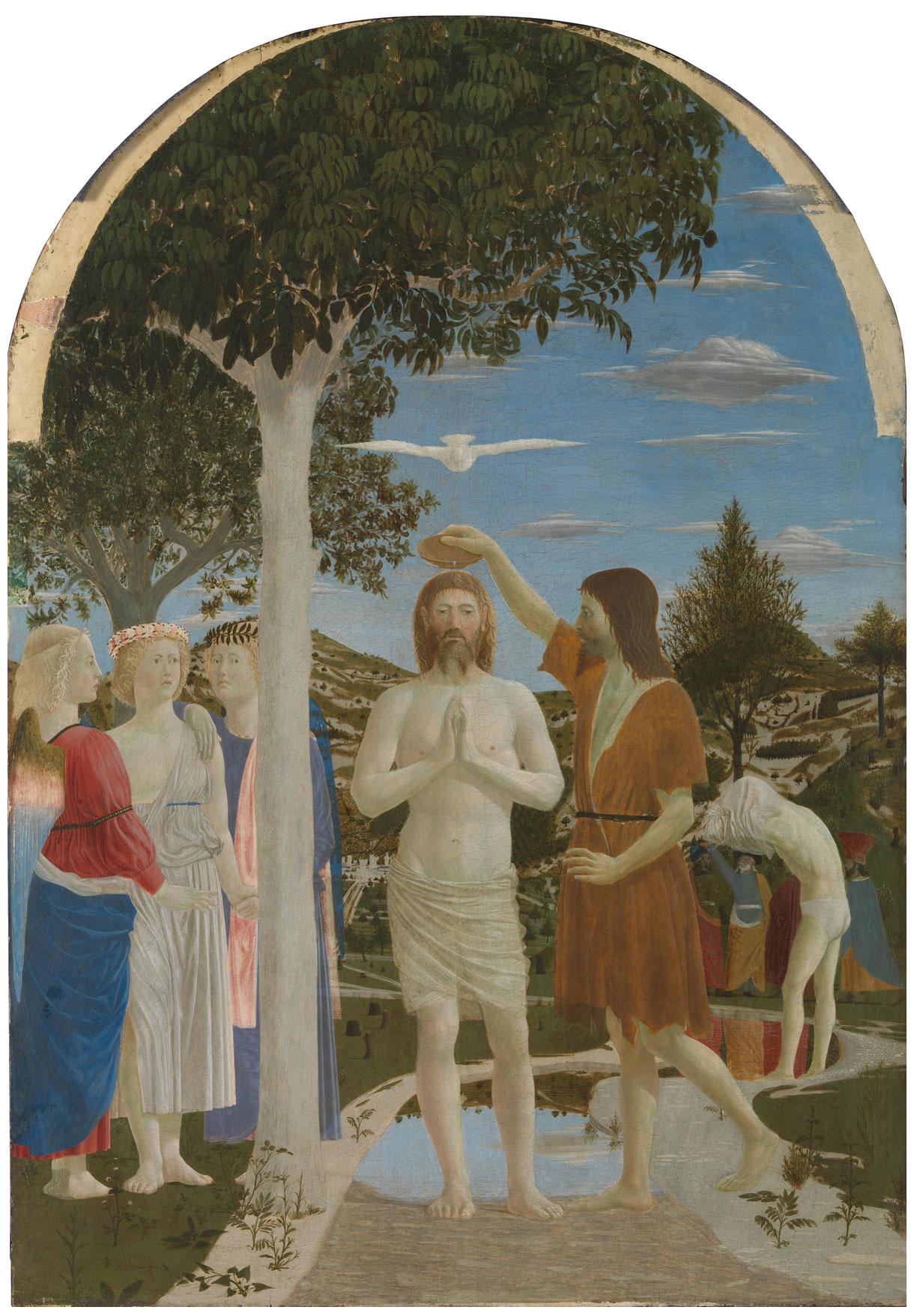
Piero della Francesca's The Baptism of Christ
by Mary Elizabeth Podles
At the Council of Florence in 1439, it seemed for a fleeting moment as if the Great Schism between the Eastern and Western branches of the Church might have been resolved. In 1417, the papal household had set itself in order, replacing three rival claimants with a single compromise candidate. Meanwhile, in the East, Byzantium was under siege by the Turks, and, desperate for help from the West, seemed ready, too, to make compromises. It was a moment of great hope, and, when representatives of both branches came together, a time of unparalleled pomp and pageantry. The city of Florence poured money into banners, parades, and temporary decorations, while the Byzantines, with their exotic beards, Eastern garments, and indescribable hats, were to Western eyes a visual feast in themselves. Presumably, too, they brought with them icons, which fed into the rich ferment that was early Renaissance art. Ultimately, the union was unsuccessful, but the council left its stamp on Italy, and especially on the youthful Piero della Francesca and his Baptism of Christ.
Piero was the son of a prosperous merchant, Benedetto de' Franceschi, who had close ties to the Camaldolese Benedictines of Borgo Sansepolcro; in fact, one of his other sons became a Camaldolese monk. One or the other may have been influential in procuring the commission for Piero of the altarpiece for the chapel of St. John the Baptist. Work was begun in 1438.
THIS ARTICLE ONLY AVAILABLE TO SUBSCRIBERS.
FOR QUICK ACCESS:
Mary Elizabeth Podles is the retired curator of Renaissance and Baroque art at the Walters Art Museum in Baltimore, Maryland. She is the author of A Thousand Words: Reflections on Art and Christianity (St. James Press, 2023). She and her husband Leon, a Touchstone senior editor, have six children and live in Baltimore, Maryland. She is a contributing editor for Touchstone.
A Journal of Mere Christianity—Delivered to Your Door
- Essays on theology, culture, and the Church
- Contributors from across the Christian traditions

Six print issues (one year) of Touchstone, plus full online access and PDF downloads for only $39.95.

Get a one-year full-access subscription to the Touchstone online archives for only $19.95.
bulk subscriptions
Order Touchstone subscriptions in bulk and save $10 per sub! Each subscription includes 6 issues of Touchstone plus full online access to touchstonemag.com—including archives, videos, and pdf downloads of recent issues for only $29.95 each! Great for churches or study groups.
Transactions will be processed on a secure server.
more on art from the online archives
33.2—March/April 2020
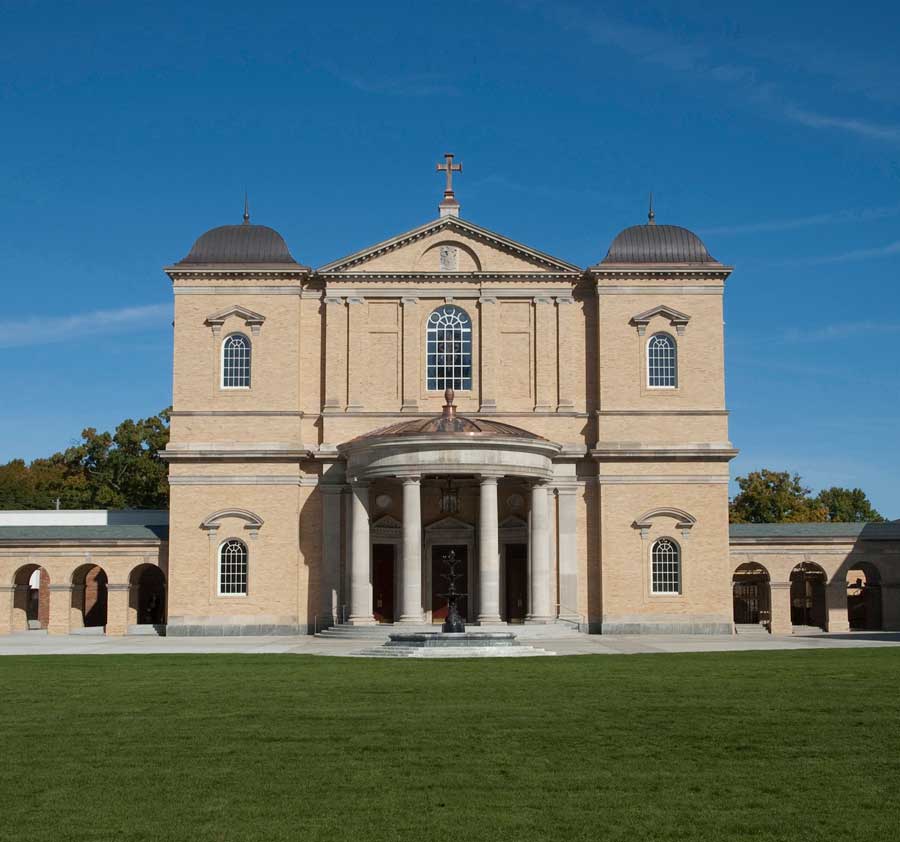
An Architectural Sign of Mere Christianity by Michael Ward
32.4—July/August 2019
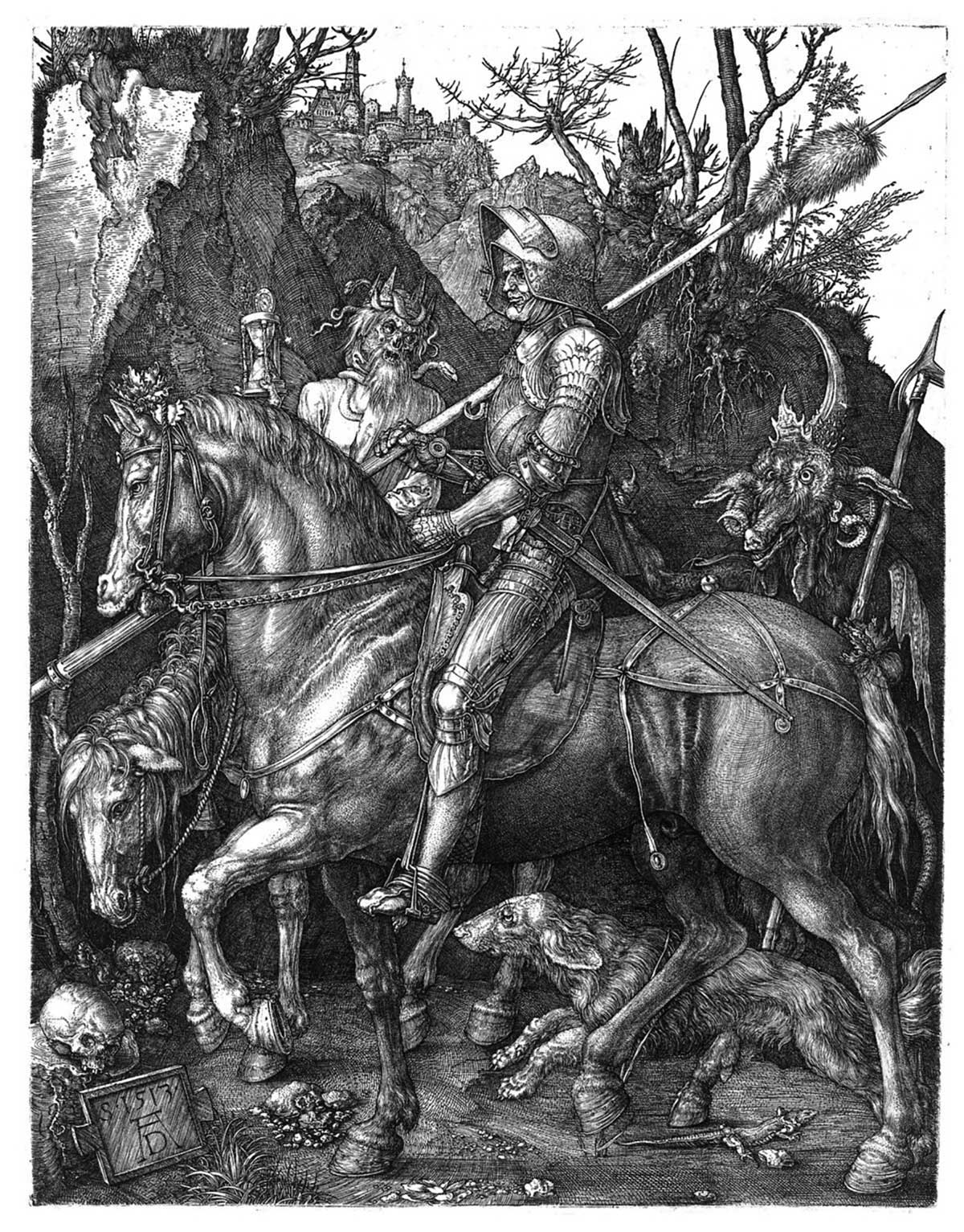
on Single-Mindedness in Durer's Ritter, Tod, und Teufel by Anthony Costello
more from the online archives
21.10—December 2008
Early Christian Teaching on the Incarnation & Redemption by Patrick Henry Reardon
20.6—July/August 2007
The Beowulf Poet Was a Shrewd Christian Apologist by Douglas Wilson
calling all readers
Please Donate
"There are magazines worth reading but few worth saving . . . Touchstone is just such a magazine."
—Alice von Hildebrand
"Here we do not concede one square millimeter of territory to falsehood, folly, contemporary sentimentality, or fashion. We speak the truth, and let God be our judge. . . . Touchstone is the one committedly Christian conservative journal."
—Anthony Esolen, Touchstone senior editor
