The Alfred Jewel by Mary Elizabeth Podles

A Thousand Words

The Alfred Jewel

by Mary Elizabeth Podles

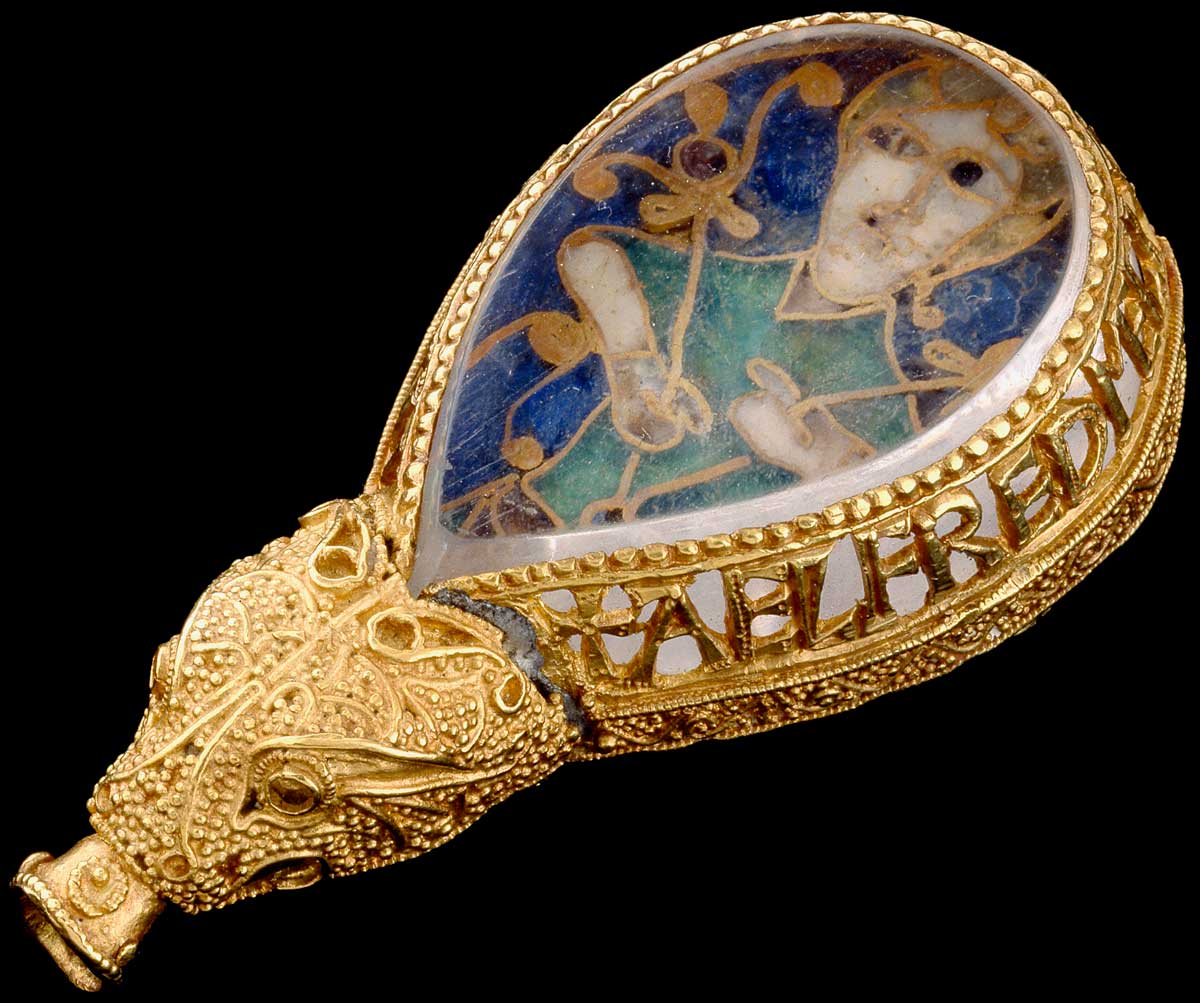
The gold, enamel, and crystal ornament known as the Alfred Jewel, standing slightly over 2.5 inches high, is a dazzling display of Anglo-Saxon workmanship from the late ninth century, a period that we generally consider rather a dark age. The front of the jewel depicts a half-length figure holding two foliated scepters; he has been variously interpreted as Christ in majesty, Christ as the Divine Wisdom, or perhaps, based on comparison to other contemporary images, the sense of sight. The enamel plaque is executed in cloisonné, that is, the outlines are made from gold wires attached to a back plate, and the colors are laid in with enamel and fired. The back plate is overlaid with a thick piece of rock crystal; its unusual teardrop shape suggests that it was an older, possibly Roman, gem repurposed by the Anglo-Saxon craftsman.

A gold filigree frame holds the crystal in place. Around the edge in tiny letters runs the inscription, "AELFRED MEC HEHT GEWYRCAN" ("Alfred had me made"). At the bottom, the edges of the frame are attached together by a dragon-like creature with a hollow snout, worked in fine wire filigree and gold granulation. On the back, in low relief, is a plant design, likely a representation of the Tree of Life.

When the jewel was discovered after being buried for centuries, it was not clear what it had been intended for. Hung as a pendant, it would be upside down; it is too top-heavy to stand on its own; and it is not big enough to make an impressive scepter finial, even if a stick were inserted into the hollow snout.

But Alfred himself left a clue: the king, a learned man, made a translation of Gregory the Great's Pastoral Care and sent a copy to every bishop and abbot in his kingdom to aid in the formation of priests. Along with each book, as he states in his preface, he is sending a valuable aestel, which can mean a guide, an index, or a staff, that is, a pointer to assist one in following the text, as is still done today in Jewish ritual. Each of these aestels, Alfred further states, "is of 50 mancuses, and I command, in God's name, that no man take the staff from the book, nor the book from the church." And no wonder: the mancus was a monetary measure, either of gold or silver, equal to about a month's wages for a skilled craftsman, so this is a very valuable gem indeed. Since the discovery of the Alfred Jewel, at least six similar but less spectacular pieces have come to light, all with similar sockets (and all missing their handles).

King & Reformer

Alfred inherited the Kingdom of Wessex in a desperate state. Already beset by Vikings for nearly a century, in 865 all England fell under siege by the Great Heathen Army, Norsemen assembled from Denmark, Norway, and southern Sweden, who were determined to conquer the entire island. They were very nearly successful. Alfred ascended the throne of Wessex in 871. By 878 all the other Anglo-Saxon kingdoms had capitulated to Viking rule, and Alfred, on the run, had retreated to a fortress on the marshy island of Athelney. From there, he managed to rally sufficient local fighting men to a desperate resistance movement.

In time, Alfred won decisive military victories, and the Viking army withdrew to East Anglia, leaving Alfred the undisputed ruler of the combined Anglo-Saxon kingdoms. There followed a period of relative peace, during which time the Alfred Jewel was probably produced.

Alfred was not only a brilliant military leader and a Latin scholar. He also engaged in political, administrative, judicial, and—most importantly for us—educational and spiritual reform. British monasteries, as unprotected centers of wealth, had taken a particularly hard hit from the Vikings and were in disarray. While Alfred did establish new monasteries at Shaftesbury and his island sanctuary in the marshes, Athelney, institutional reform was not his primary interest. Rather, as a Christian king, he saw himself as responsible for the spiritual welfare of all his subjects. Key to that was the appointment of pious and educated bishops and abbots.

In the same preface to Pastoral Care quoted above, Alfred laments that "learning had declined so thoroughly in England that there were very few men on this side of the Humber who could understand their divine services in English or even translate a single letter from Latin into English: and I suppose that there were not many beyond the Humber either." To restore literacy, at least in Anglo-Saxon, Alfred established schools for all free men who might one day hold administrative posts, and he sent abroad for clerical scholars to assist in the revival of Latin. It was probably during this period that Alfred made his own translation of Gregory, as well as of works of Boethius, Augustine, and the Psalmist, and sponsored the translation of numerous other, as he says, "books of Wisdom."

Lost, Found & Treasured


Mary Elizabeth Podles is the retired curator of Renaissance and Baroque art at the Walters Art Museum in Baltimore, Maryland. She is the author of A Thousand Words: Reflections on Art and Christianity (St. James Press, 2023). She and her husband Leon, a Touchstone senior editor, have six children and live in Baltimore, Maryland. She is a contributing editor for Touchstone.

A Journal of Mere Christianity—Delivered to Your Door

  • Essays on theology, culture, and the Church
  • Contributors from across the Christian traditions

Subscribe (Print + Online)

Six print issues (one year) of Touchstone, plus full online access and PDF downloads for only $39.95.

Subscribe (Online Only)

Get a one-year full-access subscription to the Touchstone online archives for only $19.95.


bulk subscriptions

Order Touchstone subscriptions in bulk and save $10 per sub! Each subscription includes 6 issues of Touchstone plus full online access to touchstonemag.com—including archives, videos, and pdf downloads of recent issues for only $29.95 each! Great for churches or study groups.

Transactions will be processed on a secure server.


more on art from the online archives
33.2—March/April 2020

Christ Chapel at Hillsdale

An Architectural Sign of Mere Christianity by Michael Ward
32.4—July/August 2019

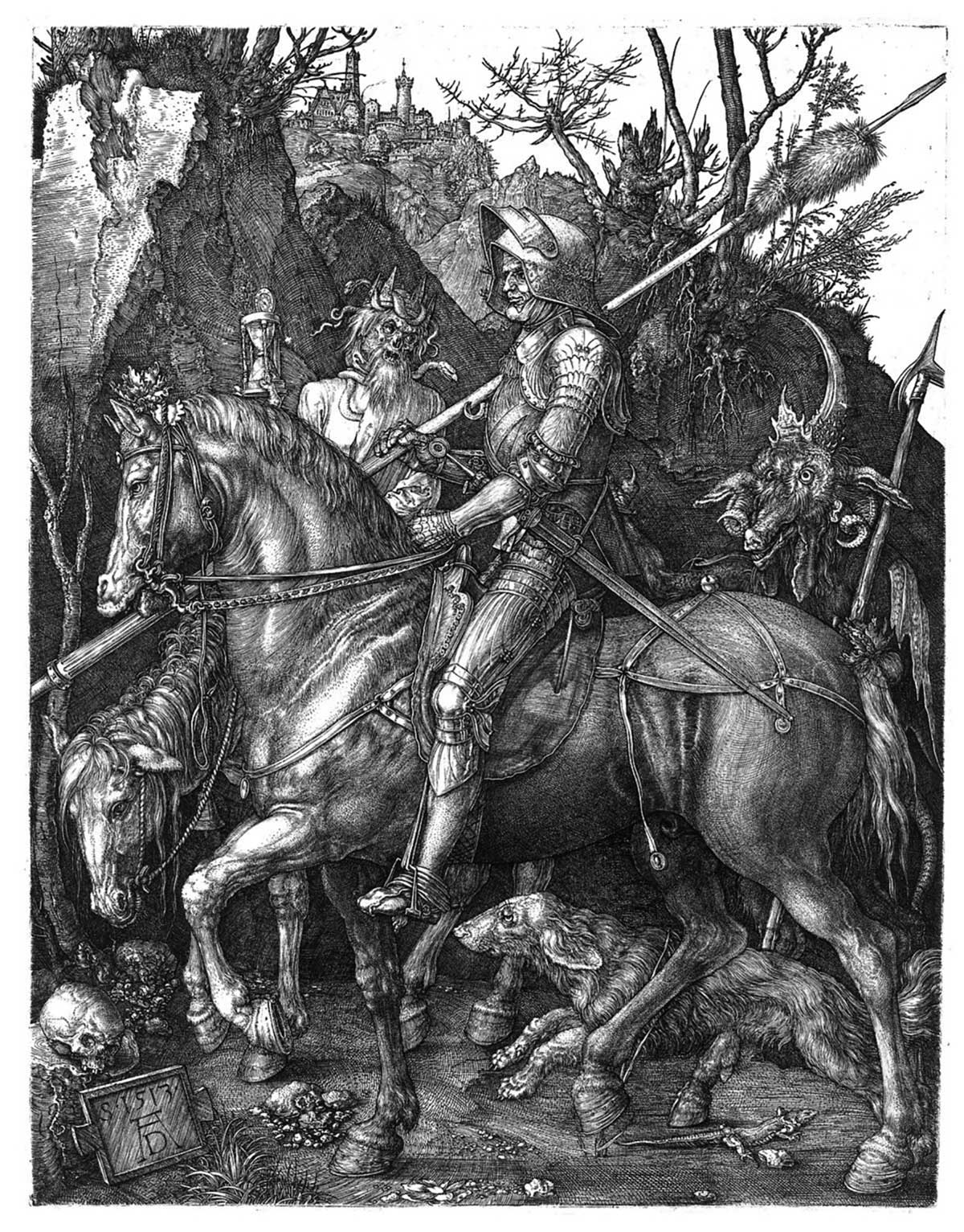
Sojourner Knight

on Single-Mindedness in Durer's Ritter, Tod, und Teufel by Anthony Costello

30.3—May/June 2017

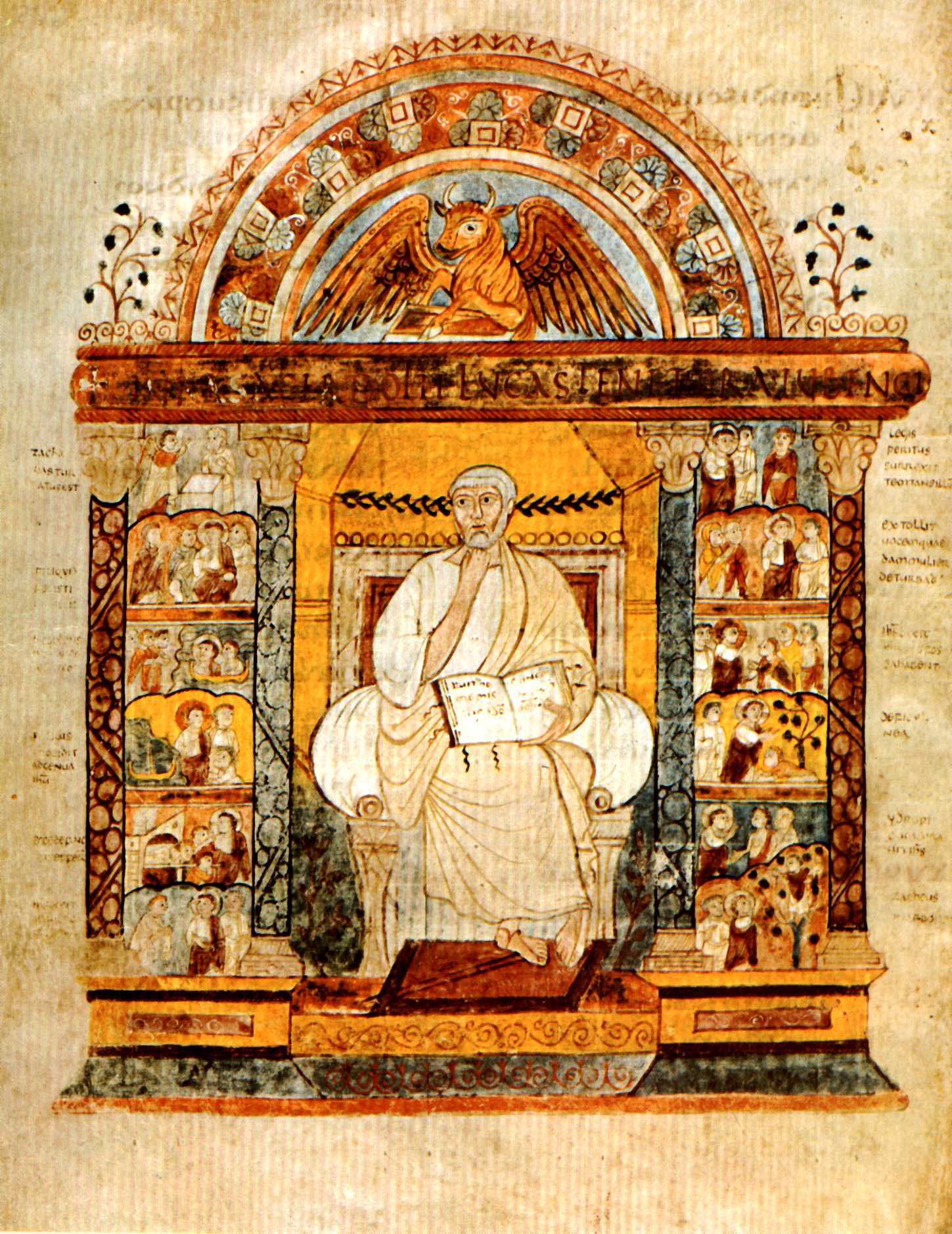
St. Luke the Evangelist

by Mary Elizabeth Podles


more from the online archives

33.4—July/August 2020

No Option

Clear Out the Rubble & Rebuild! by Anthony Esolen

32.2—March/April 2019

What Gives?

on Properly Rendering Things to Caesar & to God by Peter J. Leithart

18.10—December 2005

A Mighty Child

on an Apostle’s Encounter with the Son’s Children by Anthony Esolen

calling all readers

Please Donate

"There are magazines worth reading but few worth saving . . . Touchstone is just such a magazine."
—Alice von Hildebrand

"Here we do not concede one square millimeter of territory to falsehood, folly, contemporary sentimentality, or fashion. We speak the truth, and let God be our judge. . . . Touchstone is the one committedly Christian conservative journal."
—Anthony Esolen, Touchstone senior editor

Support Touchstone

00