


From Heavenly Harmony
A Recovered Beauty
by Ken Myers
Gratitude and wonder are necessary and appropriate responses to the choral music of the sixteenth century: gratitude for the treasury of beauty that can still enliven our lives and liturgies, wonder at the fact that so many brilliant and dedicated composers arose almost simultaneously across Christendom, artists whose works continue to serve as aural epiphanies of mystery and glory.
Music is about harmony, love made audible. As love is a fruit of the Holy Spirit, an era noted for such an abundant musical harvest must have been especially visited by Spiritual presence; it wasn't mechanical craftsmanship that accounts for the achievements of those decades. So it is baffling and sorrowful that, despite the prevalence of wisdom and passion about the blending of voices (a mode of life we share with the angels), the sixteenth century was also an era of divisive dissonance within the Church.
True, the fracturing occasioned by the Protestant Reformation bore unpredicted musical fruit in setting the stage for later hymnody, and for cultivating the liturgical developments that resulted in (as a superlative example) J. S. Bach's cantatas and Passions. And I for one am grateful that we now live in a time when Roman Catholics can sing Lutheran chorales and many Protestants have the space to benefit from the blessings of plainchant and Renaissance polyphony.
We shouldn't whitewash the fact that the ecclesiastical turmoil of the sixteenth century took its toll on church music, even though there were instances—especially in England—of fruitful cross-pollination achieved by some composers (in spite of what the more dogmatic clergy on either side may have wished).
Consider the case of the English composer John Sheppard, whose career straddled England's shifts between Roman and Protestant liturgical forms. Sheppard's music displays a distinctive musical voice; conductor Peter Phillips says that "Sheppard's Latin music [i.e., music for the Catholic rather than Anglican liturgy] displays one of the most consistently worked, strongly personal compositional styles of the whole period." Sheppard was a prolific as well as a distinctive composer. Music historian Peter Le Huray, in his Music and the Reformation in England, 1549–1660, judges that "in terms of sheer quantity Sheppard has no mid sixteenth-century rival." Yet, sadly, large portions of his music were destroyed in the wholesale destruction of monastic libraries during the Tudor period.
Slow & Spacious, Thick & Dark
Sheppard was born around 1515 and died (probably from influenza) sometime not long after Mary Tudor's death in November of 1558. Appointed Master of the Choristers at Magdalen College, Oxford, in 1542, he later secured a place in the Chapel Royal choir during Edward VI's reign. He remained in this prestigious position during Mary Tudor's time on the throne, during which time a large body of his Latin church music was composed.
In addition to five extant settings of the Mass, Sheppard left us some Anglican Service music (i.e., canticles for Morning and Evening Prayer) and about a dozen anthems in English. His setting of "The Lord's Prayer," written for five parts, is a remarkable instance of how the rich polyphonic style Sheppard developed for use in the Catholic liturgy could be adapted for use in the typically more austere English-language worship. Peter Phillips writes: "The music unfolds so clearly, and is so well paced, that one is tempted to say that the words must sound as clear here as in any Anglican music, despite its polyphonic nature."
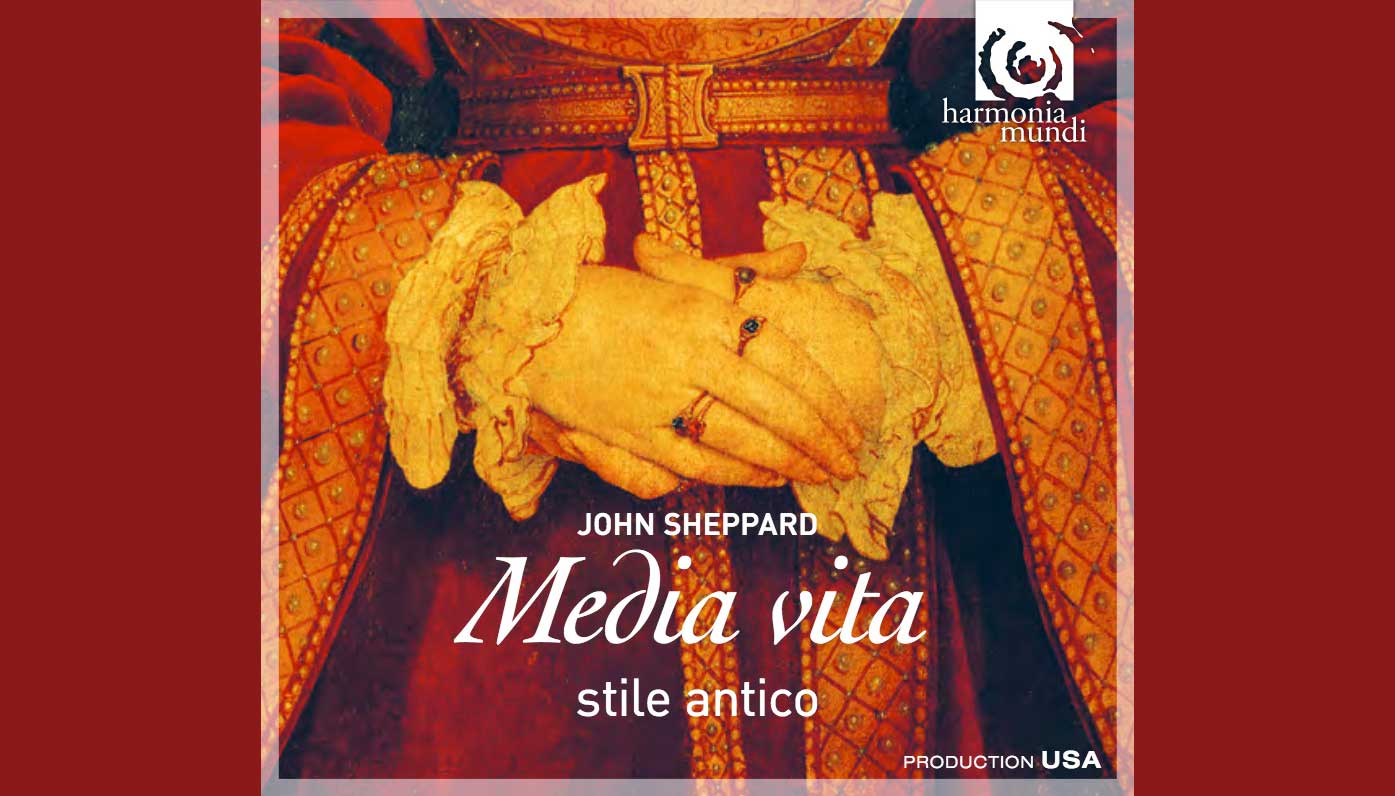
I had not heard this setting of "The Lord's Prayer" until 2009, when I came across it on a recording of Sheppard's music by Stile Antico called Media Vita. That album also includes three other English anthems by Sheppard: "I Give You a New Commandment," "Christ Rising Again," and "Haste Thee, O God." These shorter works hold their own against the much larger works in Latin: a setting of the Te Deum, one of the canticles appointed for use in Morning Prayer; Gaude, gaude, gaude Maria ("Rejoice, rejoice, rejoice, Mary"), a responsory for Vespers at the feast of the Purification of the Blessed Virgin Mary; and Media vita in morte sumus ("In the midst of life we are in death").
This last piece is a large-scale setting of a text traditionally sung at Compline in the Sarum Rite liturgy (common in pre-Reformation England) on the last Sundays during Lent. Matthew O'Donovan (one of the founding singers in Stile Antico) has commented that the gravitas in this work is evident in its earliest notes. "Sheppard could hardly have gone to greater length to give the piece more weightiness."
Ken Myers is the host and producer of the Mars Hill Audio Journal. Formerly an arts editor with National Public Radio, he also serves as music director at All Saints Anglican Church in Ivy, Virginia. He is a contributing editor for Touchstone.
A Journal of Mere Christianity—Delivered to Your Door
- Essays on theology, culture, and the Church
- Contributors from across the Christian traditions
Six print issues (one year) of Touchstone, plus full online access and PDF downloads for only $39.95.
Get a one-year full-access subscription to the Touchstone online archives for only $19.95.
bulk subscriptions
Order Touchstone subscriptions in bulk and save $10 per sub! Each subscription includes 6 issues of Touchstone plus full online access to touchstonemag.com—including archives, videos, and pdf downloads of recent issues for only $29.95 each! Great for churches or study groups.
Transactions will be processed on a secure server.
more on music from the online archives
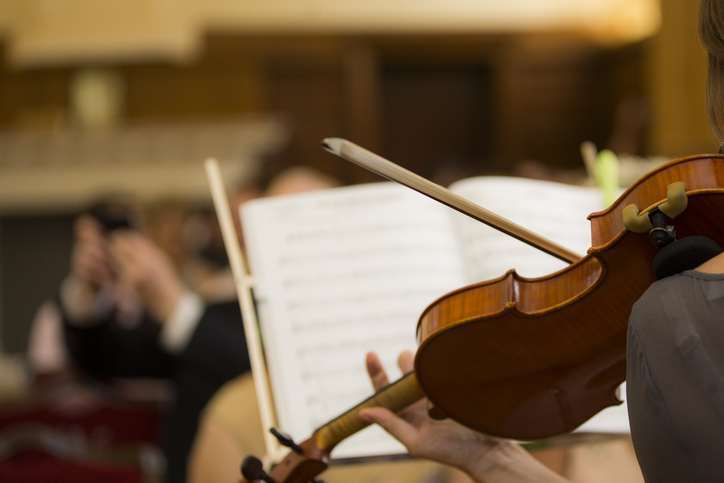
33.3—May/June 2020
Bach's Cantata BWV 106, Gottes Zeit ist die allerbesteZeit (God's time is the very best time) by Ken Myers
more from the online archives

31.4—July/August 2018
Life & Love Are Real Despite Theatrical Illusions by Anthony Esolen

18.3—April 2005
on Being a Free Narnian & the Joy of Subordination by Donald T. Williams
calling all readers
Please Donate
"There are magazines worth reading but few worth saving . . . Touchstone is just such a magazine."
—Alice von Hildebrand
"Here we do not concede one square millimeter of territory to falsehood, folly, contemporary sentimentality, or fashion. We speak the truth, and let God be our judge. . . . Touchstone is the one committedly Christian conservative journal."
—Anthony Esolen, Touchstone senior editor