





Review
The Counterculture of Reason
12 Rules for Life: An Antidote to Chaos by Jordan B. Peterson
Random House Canada, 2018
(416 pages, $25.95, hardcover)
Dr. Jordan Peterson has recently been all over TV and the Internet making a number of courageous, politically incorrect observations. The comment that has most driven the PC crowd to distraction is the now heretical claim that boys and girls are actually different both physically and psychologically—an assertion that the self-proclaimed party of science doubts in spite of evidence that has been "settled" for at least half a century.
Now comes Peterson's new book, 12 Rules for Life—a work that not only provides extensive evidence of how the sexes differ but also gives "progressives" even more reasons for conducting hate sessions against the Canadian psychologist. Among the author's PC transgressions is his trenchant protest against know-it-all ideologues who ought to put their own houses in order before criticizing the world. Peterson notes that beneath a pose of limitless compassion these self-styled savants typically exhibit personal psychological aberrations detectable in their adherence to utopian belief systems that subject existing reality to constant criticism.
Part and parcel of this ideologically fed self-deception is a hatred of tradition, a lack of gratitude to one's forebears, and an unwillingness to listen to anyone who doesn't reflect one's own views. To the great chagrin of leftists, Peterson repeatedly cites the disastrous and murderous failures of communism to illustrate these points. His comments about the destructive unwillingness to tolerate dissent would have been even more cogent, however, if he had aimed them directly at academic dogmatists and college snowflakes who fail to acknowledge that "the person you are listening to might know something you don't." Another obvious but neglected target of this principle would be the "climate change" ideologues.
Wisdom from the Lion's Den
Here is a sampling of the many worthwhile observations proffered by Peterson in his book: (1) The "insistence that all gender differences are socially constructed" is "insane." (2) Ideas that are "new and radical" are "almost always wrong." (3) "To think about culture only as oppressive is ignorant and ungrateful, as well as dangerous." Furthermore, "there isn't a shred of hard evidence . . . that Western society is pathologically patriarchal" or "that the prime lesson of history is that men, rather than nature, were the primary source of the oppression of women." (Five-minute PC hate session to follow!) (4) "It took untold generations to get you where you are. A little gratitude might be in order." (5) "Parents should come in pairs" because it is incredibly difficult to raise children alone. (6) "Children in father-absent homes are four times as likely to be poor" and "twice as likely to commit suicide" as children whose fathers are present and active in the home. (7) Hierarchies are pervasive in nature. Thus, human hierarchies are inevitable and not necessarily oppressive since "the collective pursuit of any valued goal produces a hierarchy." (8) Evil is real. Some actions are "intrinsically terrible" and "run counter to the proper nature of human Being." (9) Columbine murderer Eric Harris simply took to its practical conclusion David Attenborough's spectacularly egotistical ecological judgment that humans are a "plague" on the planet and the Club of Rome's view that humanity is a "cancer" within nature.
These observations, which have made Peterson a folk hero in some quarters and a reactionary villain in others, aren't among the specific "rules" that comprise the book's twelve chapters, but are comments made within those chapters. The rules themselves, which form the chapter titles, Peterson drew largely from problems he confronted in his clinical work. Here are the first three: Rule 1: Stand up straight with your shoulders back. Rule 2: Treat yourself like someone you are responsible for helping. Rule 3: Make friends with people who want the best for you. As these examples show, 12 Rules for Life contains many poignant observations—backed by scientific evidence, as well as the author's professional interactions and personal experience—that run counter to the politically correct nostrums that permeate our culture.
A Few Caveats
Readers should be aware, however, of the verbal terrain they often must traverse to arrive at these gems. Chapter one, for example, begins with a lengthy description of lobster and wren territoriality, only one of a number of socio-biological detours the reader will be sent on throughout the book. Moreover, Peterson often gives extended Jungian interpretations to biblical stories and religious symbols—a fact that might lead a reader to wonder whether, for the author, God has been reduced to little more than a psychological abstraction.
Nevertheless, if readers are able to overlook a lack of conciseness and to embrace the much-neglected "rule" of actually listening to someone who isn't an intellectual clone of themselves, they will find Dr. Peterson's book well worth perusing. After all, a good man is often recognized by the enemies he makes.
Richard Kirk is a freelance writer living in southern California whose book Moral Illiteracy: "Who's to Say?" is also available on Kindle.
A Journal of Mere Christianity—Delivered to Your Door
- Essays on theology, culture, and the Church
- Contributors from across the Christian traditions

Six print issues (one year) of Touchstone, plus full online access and PDF downloads for only $39.95.

Get a one-year full-access subscription to the Touchstone online archives for only $19.95.
bulk subscriptions
Order Touchstone subscriptions in bulk and save $10 per sub! Each subscription includes 6 issues of Touchstone plus full online access to touchstonemag.com—including archives, videos, and pdf downloads of recent issues for only $29.95 each! Great for churches or study groups.
Transactions will be processed on a secure server.
more on culture from the online archives


32.4—July/August 2019
Will Islamicization Become Its New Future by Peter Riddell

34.1—January/February 2021
What the World Needs Now It Hardly Knows by Anthony Esolen
more from the online archives
31.1—January/February 2018
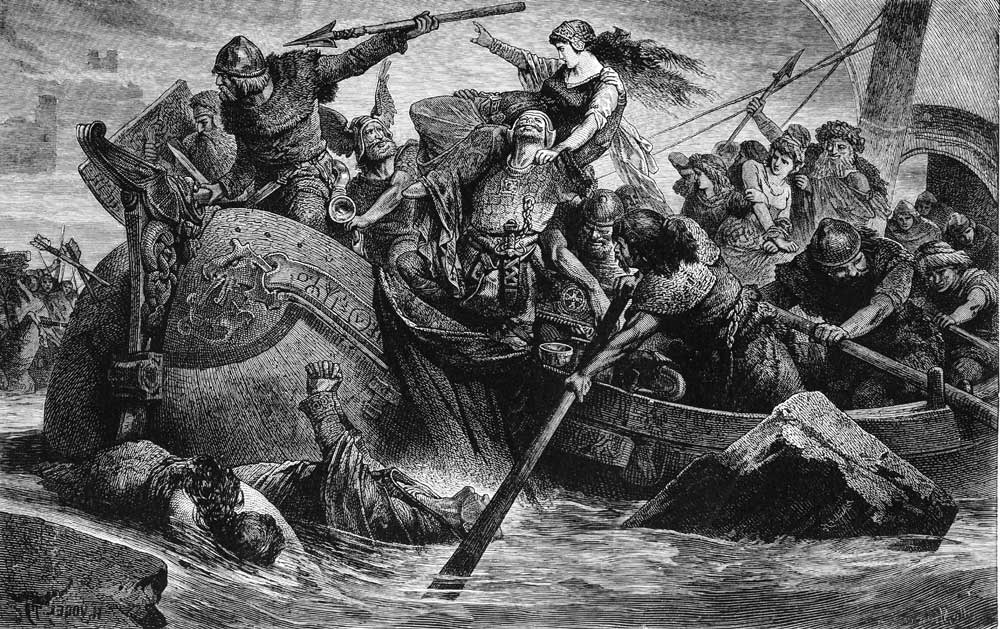
on Ragnarök, an Extreme Weather Event & the Paths to Conversion by Timothy J. Burbery

31.4—July/August 2018
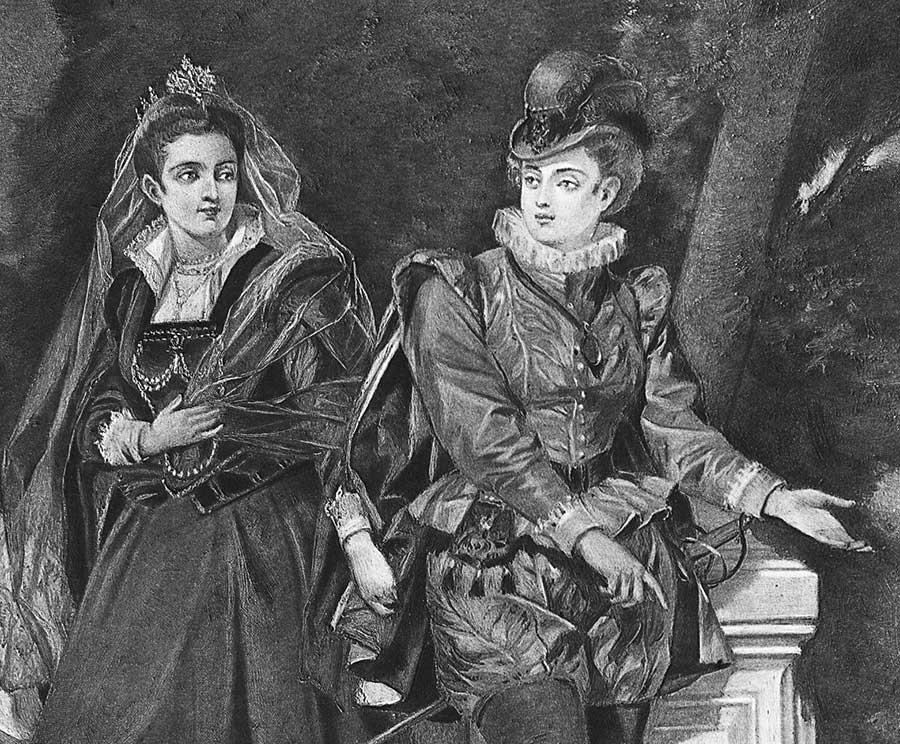
Life & Love Are Real Despite Theatrical Illusions by Anthony Esolen
calling all readers
Please Donate
"There are magazines worth reading but few worth saving . . . Touchstone is just such a magazine."
—Alice von Hildebrand
"Here we do not concede one square millimeter of territory to falsehood, folly, contemporary sentimentality, or fashion. We speak the truth, and let God be our judge. . . . Touchstone is the one committedly Christian conservative journal."
—Anthony Esolen, Touchstone senior editor
