





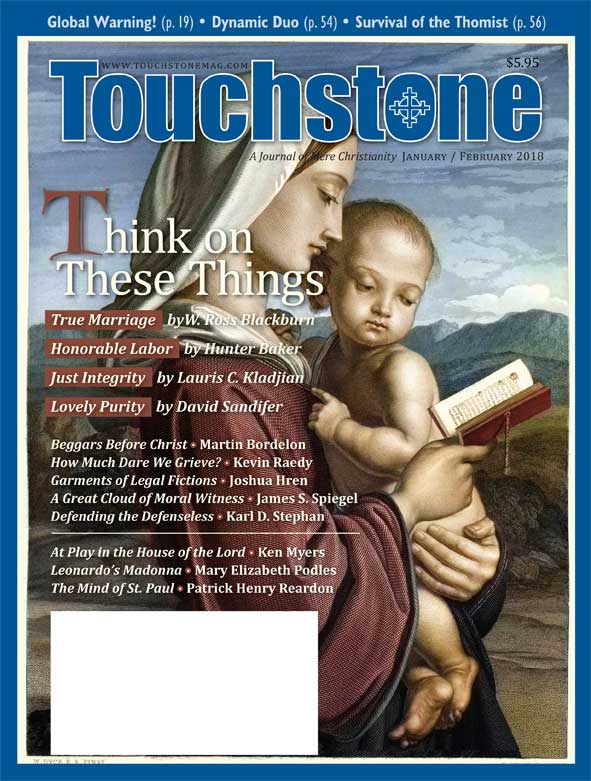
Feature
Model Marriage
An Appeal to the Churches Concerning Marriage Vows by W. Ross Blackburn
Vows are serious in the Scriptures. They are so serious that the Scriptures discourage them, for if made, they are to be kept: "If a man vows a vow to the Lord, or swears an oath to bind himself by a pledge, he shall not break his word. He shall do according to all that proceeds out of his mouth" (Num. 30:2). The most sobering biblical example of the weight of a vow must be Jephthah, who, apparently believing he had no alternative, offered his daughter in fulfillment of a foolish vow (Judg. 11). For this reason the Bible discourages the making of vows, rather encouraging us to speak plainly and let our yes be yes and our no be no (Matt. 5:37; James 5:12). The weight of a vow makes it all the more important that, when we do make one, we make it wisely, and with solid understanding of the commitments we enter into.
The most common, and arguably the most important, vow made is the marriage vow. Yet despite the promises made by the bride and groom—usually with the best of intentions—to remain faithful to one another until death, marriages fail. It is unnecessary to cite statistics concerning divorce, adultery, pornography, abortion, the decline in childbearing, and the increasing reluctance to marry—we know something is wrong. Marriage vows are commonly broken. Perhaps the reason they are broken is that they were not the right vows.
Different Vows
This is an issue about which I hadn't given much thought until Sarah, a 21-year-old woman from the small Anglican church I serve, asked me to officiate her wedding. In planning the service, Sarah asked if she could modify the wedding vows, using the ones in the old 1662 Prayer Book instead of those in the 1979 Prayer Book, used today by the Episcopal Church and most Anglican churches. Why? In the 1662 book, the wife pledges to obey her husband, whereas in the 1979 book (and even in the earlier 1928 Prayer Book), she does not. That was important to Sarah. Why? Because her vows gave form to the commitment she was about to enter into. And she knew it.
In the 1662 book, the man declares to the woman, "I take thee to my wedded wife, to have and to hold, from this day forward, for better for worse, for richer for poorer, in sickness and in health, to love and to cherish, till death us do part, according to God's holy ordinance. . . ." The woman declares, "I take thee to my wedded husband, to have and to hold from this day forward, for better for worse, for richer for poorer, in sickness and in health, to love, to cherish, and to obey, till death us do part, according to God's holy ordinance. . . ."
The difference between the two vows lies in the pledge of obedience on the part of the wife. The Declaration of Consent at the beginning of the 1662 service likewise reflects a similar difference. Whereas the man pledges to "love her, comfort her, honor and keep her," the woman pledges to "obey him, and serve him, love, honor, and keep him." The man pledges uniquely to comfort her, the woman uniquely to obey and serve him. They both pledge to love, honor, and keep one another.
Unlike the 1662 book, the vows the husband and wife make to one another in the 1979 book are identical. Both say the following: "In the Name of God, I, N., take you, N., to be my wife/husband, to have and to hold from this day forward, for better for worse, for richer for poorer, in sickness and in health, to love and to cherish, until we are parted by death. . . ." Likewise for the Declaration of Consent, where each promises to love, honor, keep, and be faithful to the other, in sickness and in health, until death. This egalitarian form of vows is not unique to the Anglican Church—vows that are the same for husband and wife are used in, among others, Catholic, Lutheran, Presbyterian, and Baptist liturgies as well.
There is much beauty and truth in the declaration of consent and the vows in the 1979 book, and there is much to commend them. Yet the fact that the husband promises to treat his wife in exactly the same way as the wife promises to treat her husband contains an important implication: there is no meaningful difference between the callings of the husband and the wife. Herein lies the problem.
The Form of Marriage
Let me begin with a question: Do we know what marriage is? For the world, marriage is entered into when two people love one another and decide they want to remain together for life. While this usually assumes sexual exclusivity, there is not much definition otherwise. Culturally, there are no real expectations with respect to how husbands and wives are to relate to one another, how they are to order their home, and whether or not they will have children (or how those decisions are made). In the Christian church, things are not much different, save for the couple's understanding that their marriage is to submit to the lordship of Christ. But for many, what that means practically is unclear.
W. Ross Blackburn is the rector of Christ the King, an Anglican Fellowship in Boone, North Carolina. He also writes weekly reflections for the Human Life Review's website on matters of life.
A Journal of Mere Christianity—Delivered to Your Door
- Essays on theology, culture, and the Church
- Contributors from across the Christian traditions

Six print issues (one year) of Touchstone, plus full online access and PDF downloads for only $39.95.

Get a one-year full-access subscription to the Touchstone online archives for only $19.95.
bulk subscriptions
Order Touchstone subscriptions in bulk and save $10 per sub! Each subscription includes 6 issues of Touchstone plus full online access to touchstonemag.com—including archives, videos, and pdf downloads of recent issues for only $29.95 each! Great for churches or study groups.
Transactions will be processed on a secure server.
more on family from the online archives

33.3—May/June 2020
Maternal Body: A Theology of Incarnation from the Christian East by Carrie Frederick Frost
Fertile Ground: A Pilgrimage Through Pregnancy by Laura S. Jansson by Agnes R. Howard
34.1—January/February 2021
Jesus' Astonishing Other Teaching on Marriage by James Ware
more from the online archives
33.2—March/April 2020
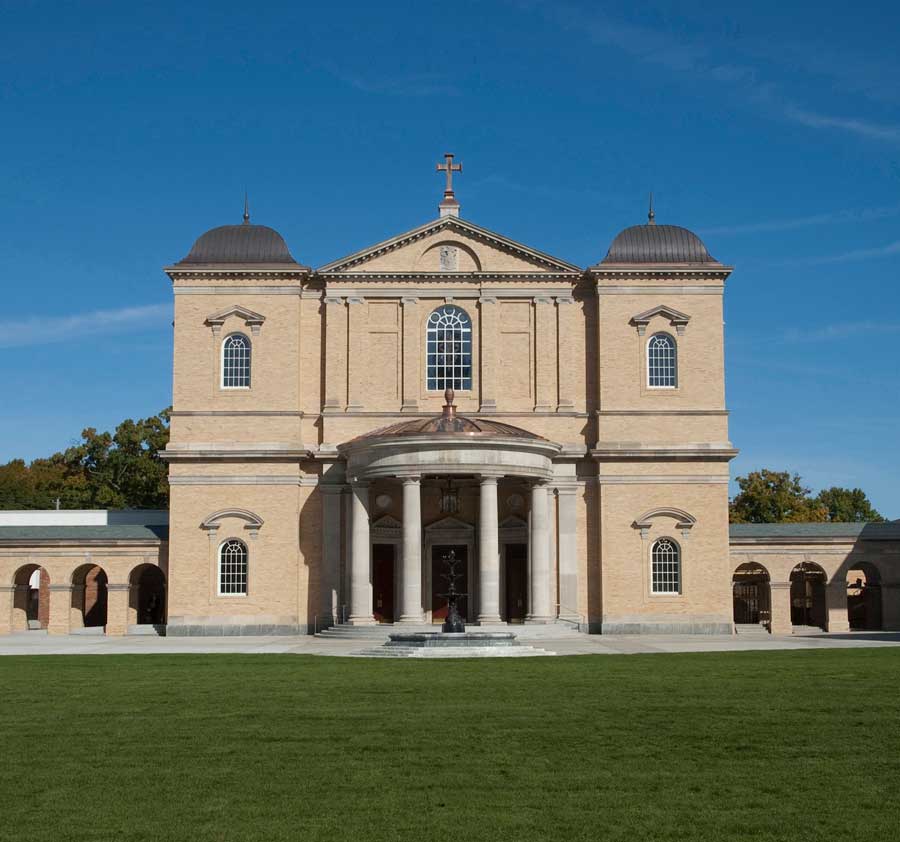
An Architectural Sign of Mere Christianity by Michael Ward
19.8—October 2006
on the Good Father’s Quiet Desperation by Russell D. Moore
19.10—December 2006
Workers of Another World United
A Personal Commemoration of Poland’s Solidarity 25 Years Later by John Harmon McElroy
calling all readers
Please Donate
"There are magazines worth reading but few worth saving . . . Touchstone is just such a magazine."
—Alice von Hildebrand
"Here we do not concede one square millimeter of territory to falsehood, folly, contemporary sentimentality, or fashion. We speak the truth, and let God be our judge. . . . Touchstone is the one committedly Christian conservative journal."
—Anthony Esolen, Touchstone senior editor
