





A Thousand Words
El Greco's St. Joseph and the Child Jesus
by Mary Elizabeth Podles
El Greco's image of St. Joseph is that of a young and vigorous father protectively holding the child Jesus, while a tumbling vortex of angels descends through a stormy sky. This is a newly minted iconography for Joseph, not seen before in the history of art. It springs primarily from the theologians of the Counter-Reformation. At the end of the Middle Ages, marriage was in an increasingly sorry state. Social and economic changes had pushed the marriage age for men later, while for women, it grew younger. This resulted in a good bit of disaffection all around. Divorce, or rather annulment on complicated grounds of consanguinity, was rife. Families fell apart. The resulting chaos, and the general reluctance to institute drastic reforms, was one of the generally unacknowledged causes of the fracture we call the Reformation.
In response, the Catholic Council of Trent (1545–1563) set in place counter-measures to rectify the marriage laws and also to bolster the spiritual life of the family. St. Joseph, for example, was proposed as a model for fathers, and his image was upgraded from the little old man of Byzantine and medieval art to the athletic young male we see here. The cult of St. Joseph took hold strongly in Spain (it is at this time that the name "José" became popular in Spanish-speaking lands). El Greco's painting was a special commission for the revamping of a chapel within the cathedral in Toledo in 1597.
The man who first proposed the commission, Martin Ramirez, was a devotee of St. Teresa of Avila. She professed a deep devotion to St. Joseph; she attributed her recovery from a near-fatal illness to his intercession and adopted him as the patron of her reformed Carmelite order. He seemed particularly well-suited to her blend of mystical vision and wry practicality: while he received his divine marching orders only in the form of dreams, he had also the down-to-earth job of directing and guiding Jesus' upbringing. "It is now very many years since I began asking him for something on his feast, and I always received it," wrote St. Teresa of St. Joseph. "If the petition was in any way amiss, he rectified it for my greater good." And elsewhere, "Would that I could persuade all men to be devout to this glorious saint," for she recognized Joseph to be the image of the good father.
Borrowed Clothes
Scripture gives us very little information about Joseph beyond the fact of his dreaming. Poor Saint Joseph—in his new incarnation as ideal father, he is always dressed in borrowed clothes; images taken from other saints and personages are recut to fit him. El Greco's composition, for instance, is a reworking of the Counter-Reformation Holy Family theme (figure 1), in which Jesus walks with both Mary and Joseph; here, Mary has simply been excised. Above, angels descend bearing more borrowed attributes: roses and lilies long associated with Mary; and the laurel crown, the hero's reward, borrowed from the martyrs. Joseph shelters Jesus under his cloak, in a gesture borrowed from an image of Mary called the Mater Misericordiae.
El Greco spent time in Venice before coming to Spain; there he would have seen paintings like Titian's Holy Family (figure 2), in which Joseph, in his role as protector, has borrowed the shepherd's staff from his son, the Good Shepherd. He borrows, too, the young, dark, bearded face of his son, and his pose, x-shaped, with one hand upraised and the other reaching down, is surely a recollection of the great striding Christ of the Anastasis of Byzantine iconography. He would have known this iconography well. El Greco, "the Greek," is only his Spanish nickname. He signed all his paintings Domenikos Theotokopoulos, in Greek characters, and indeed began his life as an icon painter in Crete.
From the monks in Crete he learned a strain of abstraction that he never deserted, though he left Crete behind around 1567 for the siren song of Venice. In Venice he would, as mentioned above, have known the works of Titian and perhaps the man himself. Though by this time in his eighties, Titian was still vigorous and active, and had left his stamp of warm color and effects of light and atmosphere on all Venice. El Greco would also have been drawn to Tintoretto, whose agile and elongated figures left a mark on the younger painter's art, along with an exaggeration of light, movement, and emotive effect.
Impact of Spain
In 1577 El Greco made his way to Madrid. There he hoped to become an official painter to the Spanish court. His style, however, did not suit the official machine, and he removed to Toledo, where he was free to develop fully his own very individual style. Art historians like to trace an artist's footsteps to see what visual imagery he might have known, and how and why he changed it into a language of his own. In El Greco's case the transformation is pretty radical.
Returning to the painting of St. Joseph, we can see the impact that twenty years in Spain have made on El Greco. In the upper region of the painting, El Greco reverts to his Byzantine roots: this is the breaking through of the divine into our world that we know from so many icons. But how it has changed! Now the divine blasts into our space in a precipitous tumble of angelic arms and legs bursting through an already stormy sky; here without doubt, in jagged living color, is the visual equivalent of the vivid writings of visionaries like St. Teresa and St. John of the Cross. But their instructions also embraced a warm and human tenderness, such as we see in the tilt of Joseph's head and the gentle hand that gathers in a frightened Jesus. He is humanly frightened, perhaps, at the prospect of the sacrifice at the altar below: he looks outward at us, whose sins have brought him there. And at the feet of Joseph and Jesus spreads the city of Toledo, which St. Teresa placed under the protection of St. Joseph.
Mary Elizabeth Podles is the retired curator of Renaissance and Baroque art at the Walters Art Museum in Baltimore, Maryland. She is the author of A Thousand Words: Reflections on Art and Christianity (St. James Press, 2023). She and her husband Leon, a Touchstone senior editor, have six children and live in Baltimore, Maryland. She is a contributing editor for Touchstone.
A Journal of Mere Christianity—Delivered to Your Door
- Essays on theology, culture, and the Church
- Contributors from across the Christian traditions

Six print issues (one year) of Touchstone, plus full online access and PDF downloads for only $39.95.

Get a one-year full-access subscription to the Touchstone online archives for only $19.95.
bulk subscriptions
Order Touchstone subscriptions in bulk and save $10 per sub! Each subscription includes 6 issues of Touchstone plus full online access to touchstonemag.com—including archives, videos, and pdf downloads of recent issues for only $29.95 each! Great for churches or study groups.
Transactions will be processed on a secure server.
more on art from the online archives
32.4—July/August 2019
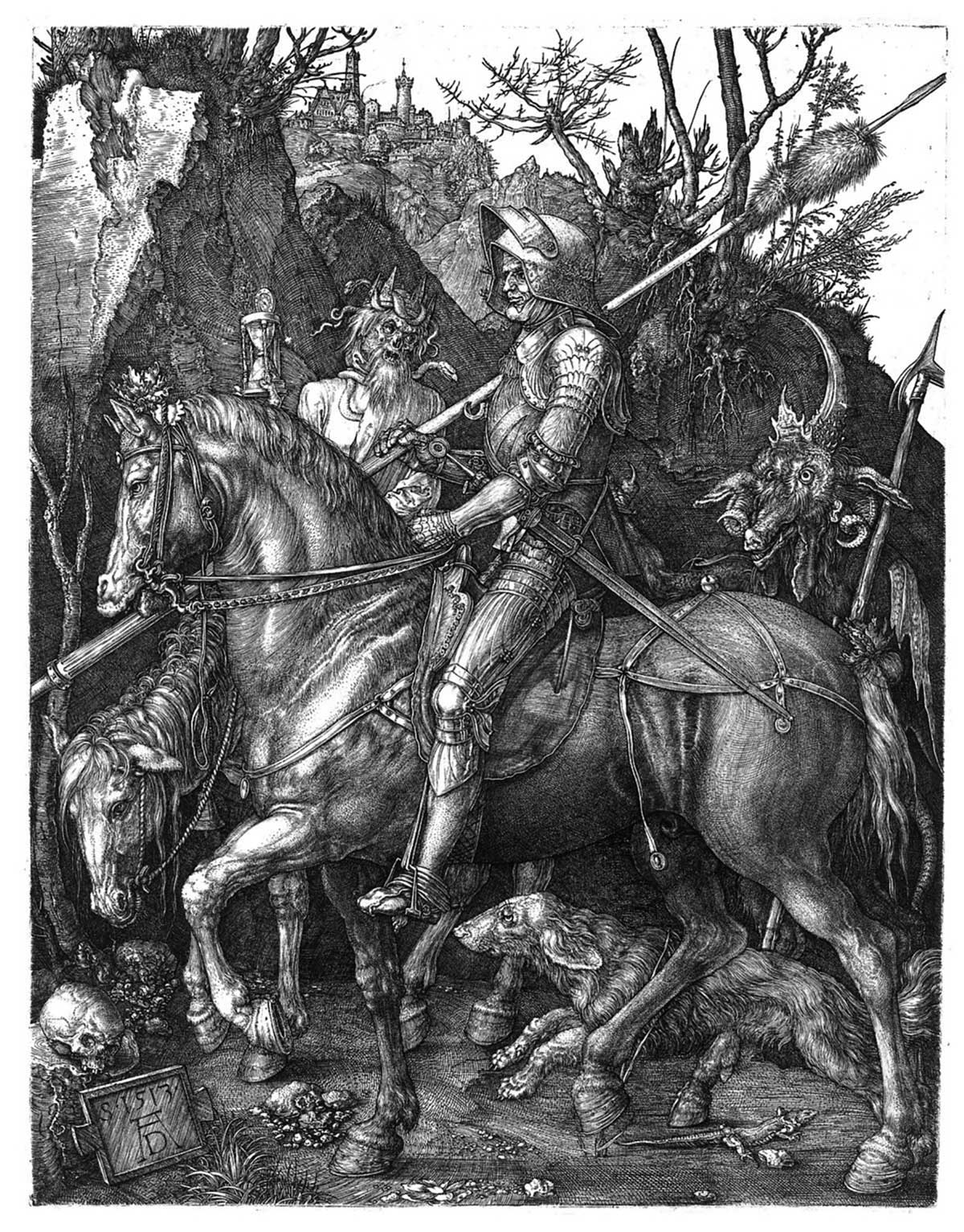
on Single-Mindedness in Durer's Ritter, Tod, und Teufel by Anthony Costello
33.2—March/April 2020
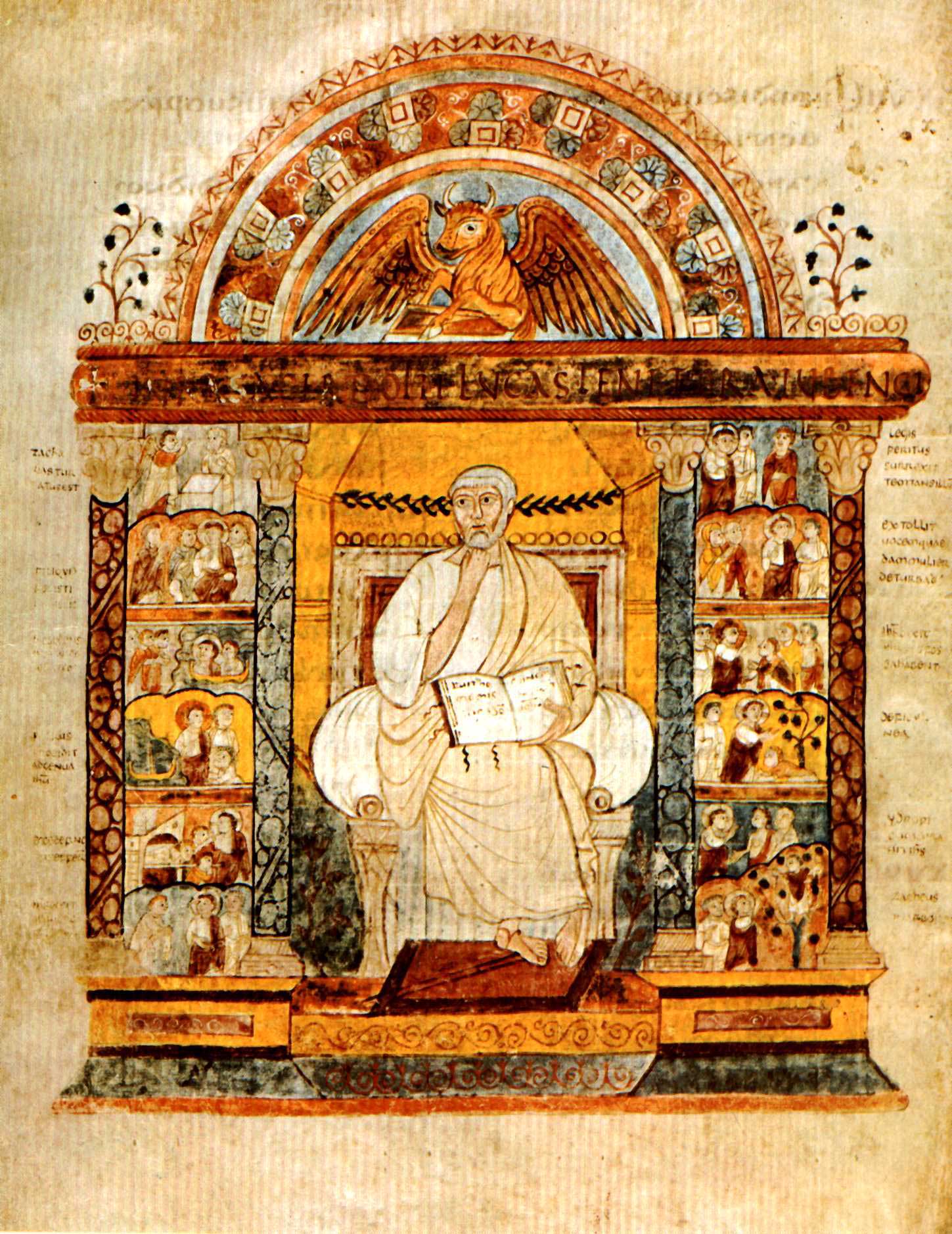
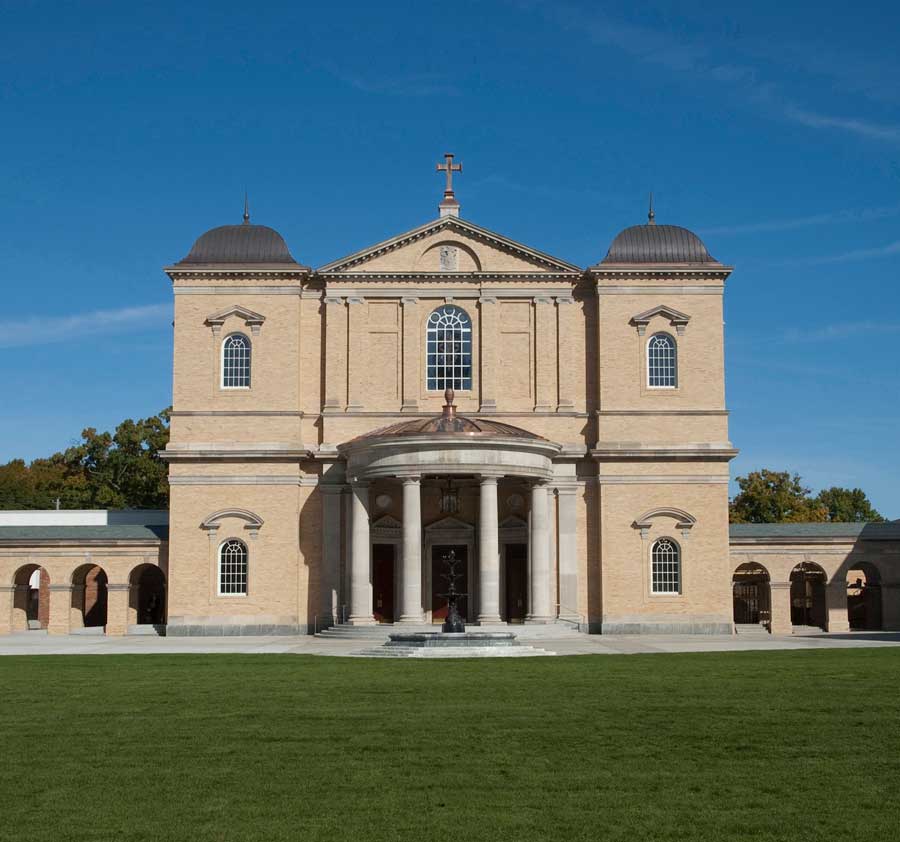
An Architectural Sign of Mere Christianity by Michael Ward
more from the online archives

25.4—July/August 2012
The Corrosive & Far-Reaching Fallout of the Sexual Revolution by Anthony Esolen
27.6—Nov/Dec 2014
Tales of Forbidden Stereotypes
Real-Life Men & Women & the Tragic Loss of Human Comedy by Anthony Esolen
calling all readers
Please Donate
"There are magazines worth reading but few worth saving . . . Touchstone is just such a magazine."
—Alice von Hildebrand
"Here we do not concede one square millimeter of territory to falsehood, folly, contemporary sentimentality, or fashion. We speak the truth, and let God be our judge. . . . Touchstone is the one committedly Christian conservative journal."
—Anthony Esolen, Touchstone senior editor
