




AS IT IS WRITTEN by Patrick Henry Reardon
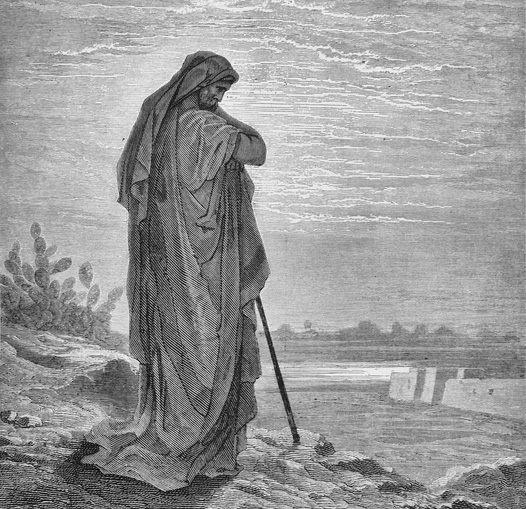
Amos into Scripture
Most of us are so accustomed to finding the prophetic books included in the Bible that it is perhaps difficult to appreciate the significance of their inclusion. Although the Israelites seem always to have had their prophets—Nathan, Elijah, and so on—literary works of prophecy did not make their appearance until the eighth century before Christ, and their inclusion in the canon of Holy Scripture came later yet.
The sudden emergence of the literary prophets was an extraordinary phenomenon. Although its origins are mysterious, we do know it was tied to the political and social turmoil in the western half of the Fertile Crescent near the middle of the eighth century.
Around 765 B.C.—as though out of nowhere—the shrine at Bethel was suddenly shaken by the voice of Amos, roaring like a lion (Amos 1:2; 3:8; 5:19). Not only was the voice arresting; his words poured forth in eloquent, unrelenting cadences of condemnation. Amos began, "Thus says the Lord, 'For three transgressions of Damascus, and for four, I will not relent.'" Then, after naming the sins of the Syrians, the prophet proceeded to list the offenses of the other peoples surrounding the Holy Land: Philistines, Phoenicians, Edomites, Ammonites, and Moabites.
THIS ARTICLE ONLY AVAILABLE TO SUBSCRIBERS.
FOR QUICK ACCESS:
Patrick Henry Reardon is pastor emeritus of All Saints Antiochian Orthodox Church in Chicago, Illinois, and the author of numerous books, including, most recently, Out of Step with God: Orthodox Christian Reflections on the Book of Numbers (Ancient Faith Publishing, 2019).
A Journal of Mere Christianity—Delivered to Your Door
- Essays on theology, culture, and the Church
- Contributors from across the Christian traditions

Six print issues (one year) of Touchstone, plus full online access and PDF downloads for only $39.95.

Get a one-year full-access subscription to the Touchstone online archives for only $19.95.
bulk subscriptions
Order Touchstone subscriptions in bulk and save $10 per sub! Each subscription includes 6 issues of Touchstone plus full online access to touchstonemag.com—including archives, videos, and pdf downloads of recent issues for only $29.95 each! Great for churches or study groups.
Transactions will be processed on a secure server.
more on bible from the online archives
32.2—March/April 2019
on Preserving Physical & Spiritual Nourishment by Nathanael Devlin
31.4—July/August 2018
on the Brevity & Theology of Her Recorded Words by Judith Anderson
32.3—May/June 2019
on the Implications of Changing the Pater Noster by John M. McCarthy
more from the online archives

19.10—December 2006
Training Up a Child Requires a Well-Formed Imagination by David Mills

27.2—March/April 2014
Higher Education Should Advance the Glorious Liberty of the Sons of God by Anthony Esolen
29.1—Jan/Feb 2016
Secular Credibility Is a Devilish Temptation by James Hitchcock
calling all readers
Please Donate
"There are magazines worth reading but few worth saving . . . Touchstone is just such a magazine."
—Alice von Hildebrand
"Here we do not concede one square millimeter of territory to falsehood, folly, contemporary sentimentality, or fashion. We speak the truth, and let God be our judge. . . . Touchstone is the one committedly Christian conservative journal."
—Anthony Esolen, Touchstone senior editor
