





A THOUSAND WORDS: Mary Podles on Christian Art
Rembrandt & the Speaking Image of Christ
In seventeenth-century Holland, many Protestant preachers were regarded as popular celebrities, and their parishioners and admirers hung their portraits on their walls. In response to popular demand, in 1641, the artist Rembrandt van Rijn published a portrait etching of the Mennonite preacher Cornelis Anslo (Figure 1). Seeing it, the poet Joost van den Vondel (known as “the Dutch Milton”) responded with the epigram Ay, Rembrandt, mal Cornelis stem:
Ay, Rembrandt, paint Cornelis’s voice.
The visible part is the least of him.
The invisible, one knows only through the ears.
Who desires to see Anslo, must hear him.
Without hearing his preaching, we miss the essence of the man. Rembrandt in turn painted a portrait of Anslo and his wife (Figure 2), in which the silent canvas answers Vondel’s challenge to convey the impact of Anslo’s voice, to make the image speak.
“To make the image speak.” In a later etching, Christ Preaching (Figure 3), Rembrandt again struggles to make a voice and its effects visible, this time the voice of Jesus. In the etching, Christ stands at the center, his hands upraised and his lips parted and his head inclined to one side, a clear reference to the pose of Christ in Raphael’s Disputa, the Disputation on the Eucharist, in the Vatican Palace in Rome. (Rembrandt would have known it from prints himself.) There, Christ holds up his wounded hands as the ultimate explication of the sacrament; here, Rembrandt has transformed the gesture into one of speaking. Christ, then, is the ultimate Word incarnate.
Christ speaks, and all around him people listen. With only a few sketchy lines, Rembrandt lets us know just how each person is listening. Look at their faces one by one. Some, with their eyes cast into shadow, listen with hardened hearts, waiting to trip him up; another, his face full in the light but his expression impassive, seems, like Nicodemus, to think, “Does our law judge a man without giving him a hearing?” Another tilts his head and raises his hand to his face as if beginning to be swayed; others lean forward and listen intently; still others are rapt.
All the lines of the composition focus our own attention on Jesus. The wedge of figures on the left makes a line that directs our gaze inward to the central figure of Jesus, while on the right, the crowd spirals upward and around to where Jesus stands in a halo of light. Everyone’s eyes, ours included, are on Jesus.
Everyone’s but one. A small boy directly below Christ’s feet has set aside his toys and turned away; it is at him that Jesus is looking and to him he speaks. The little boy is engrossed in drawing in the dust. He is an artist. Not only an artist, but, perhaps, the artist, Rembrandt.
Rembrandt, whose face we know well from his dozens of self-portraits, included himself specifically in the painting Christ on the Sea of Galilee (now, sadly, lost to thieves in a heist from the Gardner Museum). The twelve apostles, in varying states of distress, man the boat as Christ sleeps exhausted in the stern. One bails; others struggle with tiller and sails or shake Christ awake; one throws up over the side. And clinging helplessly to the rigging, a fourteenth figure, with the face of Rembrandt, stares outward at us in desperation.
Why does an artist include himself within a biblical scene, particularly one in which Christ is present? It is a tradition of long standing: perhaps Rembrandt self-consciously wished to place himself in the company of the medieval and Renaissance masters.
Or perhaps it reflects some aspect of his personal life. In the years before Rembrandt etched Christ Preaching, his wife had died and he had become embroiled with the widow hired as his son’s nanny. She sued him for breach of promise, and in the end he had her detained in the house of correction. In the meantime, he had entered into a common-law (and very happy) marriage with Hendrickje Stoffels, a girl originally hired as a maid in his household. The provisions of his first wife’s will precluded him from remarrying without incurring considerable financial loss, and Rembrandt was, to say the least, not a good money manager. Hendrickje was called up before church elders and reproached for her irregular status. Rembrandt, though under strong Mennonite influence (witness the portraits of Anslo), was officially unchurched and escaped public sanction.
That he was unchurched by no means implies that he was an irreligious man. Few artists before or since have studied Scripture so closely, or to such effect as Rembrandt. Perhaps in Christ Preaching the artist gives us a glimpse of his inner mind: he, Rembrandt the little boy, has turned his back on Christ, who calls to him and looks upon him tenderly. But the boy, unheeding, is absorbed in his art. So Rembrandt the etcher draws upon his knowledge of older art, his knowledge of the Bible, his observation of the expression of inner psychology in the human face, and perhaps his own personal struggles, to create this image of the Word and its power, and to make us hear it speak.
Mary Elizabeth Podles is the retired curator of Renaissance and Baroque art at the Walters Art Museum in Baltimore, Maryland. She is the author of A Thousand Words: Reflections on Art and Christianity (St. James Press, 2023). She and her husband Leon, a Touchstone senior editor, have six children and live in Baltimore, Maryland. She is a contributing editor for Touchstone.
A Journal of Mere Christianity—Delivered to Your Door
- Essays on theology, culture, and the Church
- Contributors from across the Christian traditions

Six print issues (one year) of Touchstone, plus full online access and PDF downloads for only $39.95.

Get a one-year full-access subscription to the Touchstone online archives for only $19.95.
bulk subscriptions
Order Touchstone subscriptions in bulk and save $10 per sub! Each subscription includes 6 issues of Touchstone plus full online access to touchstonemag.com—including archives, videos, and pdf downloads of recent issues for only $29.95 each! Great for churches or study groups.
Transactions will be processed on a secure server.
more on art from the online archives
33.2—March/April 2020
An Architectural Sign of Mere Christianity by Michael Ward
32.4—July/August 2019
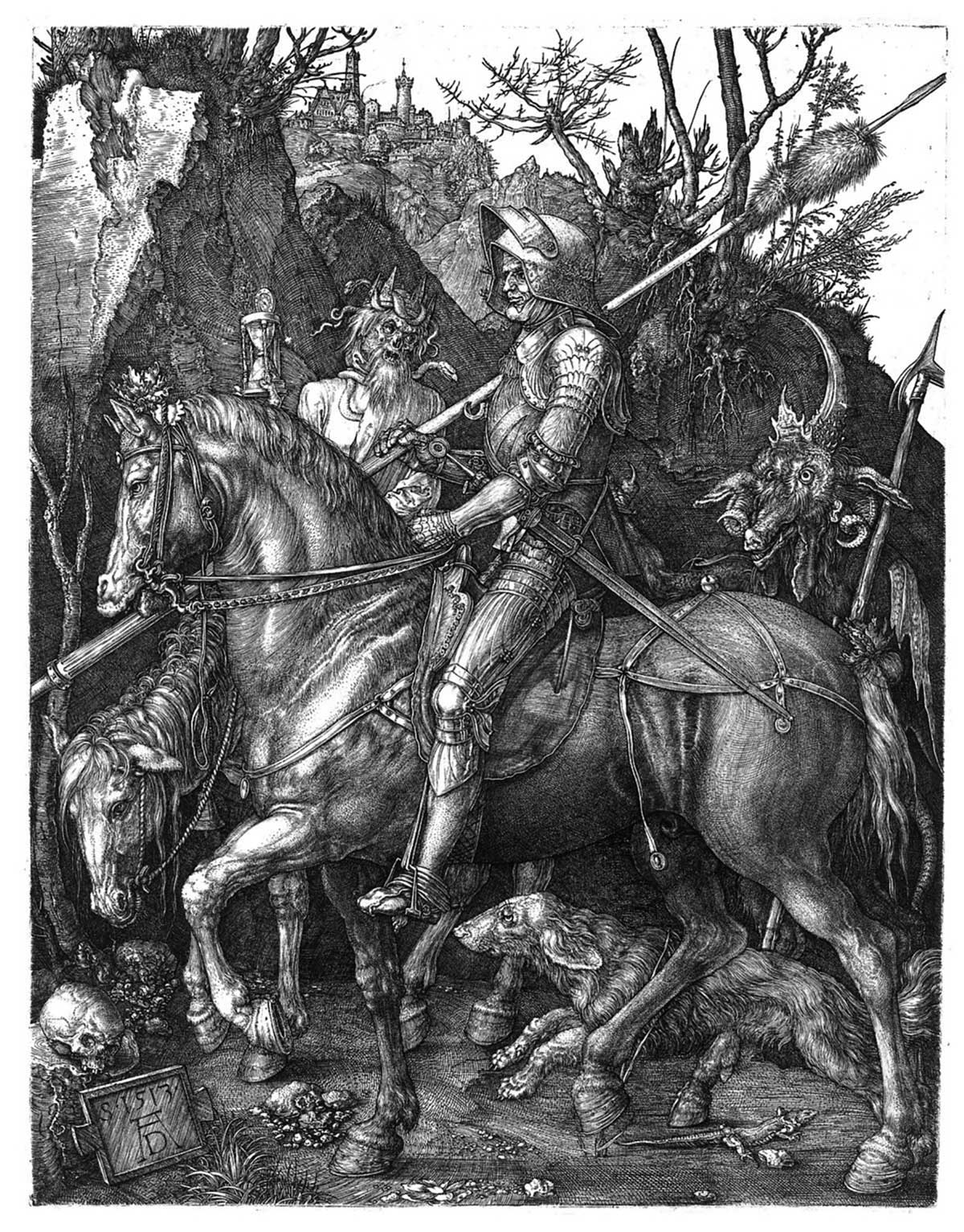
on Single-Mindedness in Durer's Ritter, Tod, und Teufel by Anthony Costello
more from the online archives
30.6—Nov/Dec 2017
on Benedict XVI on the Fairest of the Sons of Men by Michael Martin De Sapio


32.4—July/August 2019
Today's Culture Wars Are Both Ancient & Modern by Allan C. Carlson
calling all readers
Please Donate
"There are magazines worth reading but few worth saving . . . Touchstone is just such a magazine."
—Alice von Hildebrand
"Here we do not concede one square millimeter of territory to falsehood, folly, contemporary sentimentality, or fashion. We speak the truth, and let God be our judge. . . . Touchstone is the one committedly Christian conservative journal."
—Anthony Esolen, Touchstone senior editor
