





Christ in China
Louis Markos on David Marshall’s Take on Chinese Religion & Tradition
As the Apostle Paul stood on Mars Hill before a coterie of educated Athenian Stoics and Epicureans, who likely thought there was little of value this babbling barbarian Jew from Asia Minor could teach them, his knees must have been shaking behind his toga. How could he build a bridge between the holy, omnipotent God who had revealed himself in the Incarnation, death, and Resurrection of Christ and the squabbling, decidedly unholy gods of Greek paganism? True, most of the philosophers who smiled condescendingly at him thought themselves above the fanciful myths believed in by the common, credulous crowd, but that would not help him to convince them that his God should also be theirs.
Perhaps he thought of something he would, a few years hence, write to the church in Rome: that though God had spoken directly only to the Jews, he had made known his power and holiness by inscribing it into the created world around us and the conscience within us (Rom. 1:20; 2:14–15). In fact, just a few years earlier, he had explained to a group of excited pagans in Turkey that God had not left himself without a witness among the Gentiles but had filled their fields with rain and their hearts with joy (Acts 14:17).
THIS ARTICLE ONLY AVAILABLE TO SUBSCRIBERS.
FOR QUICK ACCESS:
Louis Markos , Professor in English and Scholar in Residence at Houston Baptist University, holds the Robert H. Ray Chair in Humanities. His 19 books include Lewis Agonistes; Restoring Beauty: The Good, the True, and the Beautiful in the Writings of C. S. Lewis; On the Shoulders of Hobbits: The Road to Virtue with Tolkien and Lewis; and From A to Z to Narnia with C. S. Lewis.
A Journal of Mere Christianity—Delivered to Your Door
- Essays on theology, culture, and the Church
- Contributors from across the Christian traditions

Six print issues (one year) of Touchstone, plus full online access and PDF downloads for only $39.95.

Get a one-year full-access subscription to the Touchstone online archives for only $19.95.
bulk subscriptions
Order Touchstone subscriptions in bulk and save $10 per sub! Each subscription includes 6 issues of Touchstone plus full online access to touchstonemag.com—including archives, videos, and pdf downloads of recent issues for only $29.95 each! Great for churches or study groups.
Transactions will be processed on a secure server.
more on Christianity from the online archives

31.1—January/February 2018
on Taking the Measure of the Deserving & the Undeserving Poor by Martin Bordelon

27.5—Sept/Oct 2014
on Growing Vegetables as a Primer in Moral Philosophy by Rachel Lu
33.3—May/June 2020
Human & Divine Societies Require Careful Thought & Discourse by Anthony Esolen
more from the online archives
30.2—March/April 2017
Our Path to Holiness Runs Straight Through Calvary by Robin Phillips
31.6—November/December 2018
on Futility & the Open Door to Deliverance by Patrick Henry Reardon
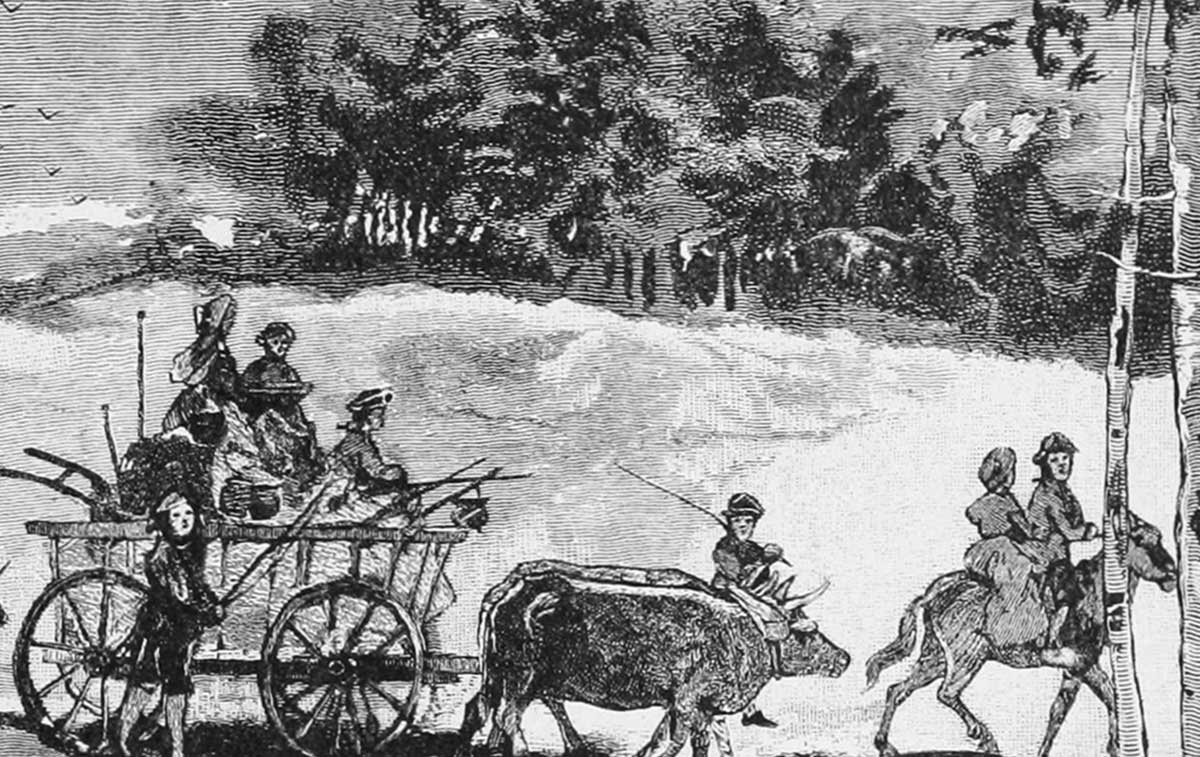
31.5—September/October 2018
Errands into the Moral Wilderness
Forms of Christian Family Witness & Renewal by Allan C. Carlson
calling all readers
Please Donate
"There are magazines worth reading but few worth saving . . . Touchstone is just such a magazine."
—Alice von Hildebrand
"Here we do not concede one square millimeter of territory to falsehood, folly, contemporary sentimentality, or fashion. We speak the truth, and let God be our judge. . . . Touchstone is the one committedly Christian conservative journal."
—Anthony Esolen, Touchstone senior editor
