





Old Woman Cutting Her Nails
by Mary Elizabeth Podles
Long attributed to Rembrandt, this painting represents an old woman cutting her nails in a darkened room. A dramatic fall of light veils her eyes but casts light on her hands engaged in a seemingly humdrum activity. A sewing box and cloth on the table behind her suggest that this is a scene from ordinary life. However, she is dressed in a fur-trimmed robe in rich browns and with a veil of a muted gold color, which hint at something perhaps rather out of the ordinary. A brief look at Rembrandt’s career might shed more light on our picture and its possible meaning.
Both Rembrandt’s style and subject matter evolved considerably over the course of his lifetime. Most artists of seventeenth-century Holland were specialists, often choosing the subject category practiced by their apprentice masters and painting only, say, still lifes for the length of their careers: one artist, for example, spent his whole life painting pictures of asparagus. Not so Rembrandt. Originally he apprenticed to Pieter Lastman, a history painter. Histories, in the seventeenth-century hierarchy, were the most exalted of subjects, including not just history, but also literature, mythology, and the Bible. Landscape, portrait, and still life were considered less serious, and history painters targeted connoisseurs with literary and artistic tastes. Even if the subject were a religious one, history paintings seemed to be aesthetic, not devotional, in nature.
Rembrandt’s early history paintings, from the 1620s, were narratives on a small scale, highly finished, and jewel-like in color. As he gained independence and success, his pictures grew larger, his handling of paint looser, his subject matter broader in scope and his lighting more dramatic. He painted every kind of subject matter, not just history, but also landscape, portraits, genre scenes drawn from everyday life, the occasional still life, and hundreds of etchings and drawings. He was a fashionable portraitist but also painted tronies, fanciful non-specific portraits and costume pieces. The tronie was perhaps a device for artists to explore subtle variations of expression or lighting; think of Vermeer’s Girl with a Pearl Earring.
Hidden Histories
By the 1650s, when the Old Woman Cutting Her Nails was painted, Rembrandt had embarked on a series of paintings of single figures, often elderly, cast in shadow and absorbed in melancholy thought. Scholars long thought these to be simple genre figures reflecting the artist’s own preoccupation with aging, or tronies, moody paintings of fantasy figures. Within the past fifty years, however, scholarship spearheaded by an art historian who was also a Lutheran minister, began to recognize such paintings as “hidden histories,” portraits of specific figures from history or, especially, the Bible. In them, Rembrandt, a serious student of Scripture, explored his characters’ imagined states of mind through facial expression, powerful lighting, and a broad range of gesture.
Consider his painting called A Woman in Bed (Figure 1). In early scholarship it was thought to be an intimate portrait of one of the women in Rembrandt’s life, but the elaborate headdress and the rich drapery call for a more serious historical interpretation. Now it is posited that the painting is a psychological portrait of Sarah from the Book of Tobit, watching her new husband Tobias expelling the demons that have tormented her, with a look of mingled anxiety, hope, and erotic anticipation.
This picture brings us closer to our Old Woman Cutting Her Nails. While technical examination and scholarly comparisons of quality and personal style have led to the conclusion that this picture is not actually from Rembrandt’s hand, clearly his vision reverberates through it. How did this come about? Throughout his life, Rembrandt frequently took in apprentices and pupils. He was a generous teacher, and often seems to have painted passages of correction on his students’ paintings (confusing art historians). He was also a notoriously bad money manager and in chronic need of steady income.
In any case, each of his pupils seems to have absorbed and adopted whatever style Rembrandt was practicing at the time of their association and then stayed with it permanently. That fact narrows the field of possible authorship for the Old Woman to those working with Rembrandt around 1655. At that time the Dordrecht painter Nicolaes Maes was working in Rembrandt’s studio, so some attribute it to his hand; the quality is very high, if not as high as Rembrandt’s. Others attribute it to Maes’s own pupil, Abraham van Dijck, who painted in the same style.
The Old Woman’s Identity
Questions of authorship aside, how are we to interpret the Old Woman? The traditional title suggests that it was long thought to be a simple genre figure, perhaps carrying an implication of Dutch domestic virtue in her sewing and her tidy habits. Or it might have been considered a tronie, a figure in fancy dress illustrating the physiognomy and expression of the very old. Some scholars have noted the connection of nail-cutting to Jewish ritual without venturing further. Some suggest she might be a prophetess or a sybil and leave it at that.
Mary Elizabeth Podles is the retired curator of Renaissance and Baroque art at the Walters Art Museum in Baltimore, Maryland. She is the author of A Thousand Words: Reflections on Art and Christianity (St. James Press, 2023). She and her husband Leon, a Touchstone senior editor, have six children and live in Baltimore, Maryland. She is a contributing editor for Touchstone.
A Journal of Mere Christianity—Delivered to Your Door
- Essays on theology, culture, and the Church
- Contributors from across the Christian traditions

Six print issues (one year) of Touchstone, plus full online access and PDF downloads for only $39.95.

Get a one-year full-access subscription to the Touchstone online archives for only $19.95.
bulk subscriptions
Order Touchstone subscriptions in bulk and save $10 per sub! Each subscription includes 6 issues of Touchstone plus full online access to touchstonemag.com—including archives, videos, and pdf downloads of recent issues for only $29.95 each! Great for churches or study groups.
Transactions will be processed on a secure server.
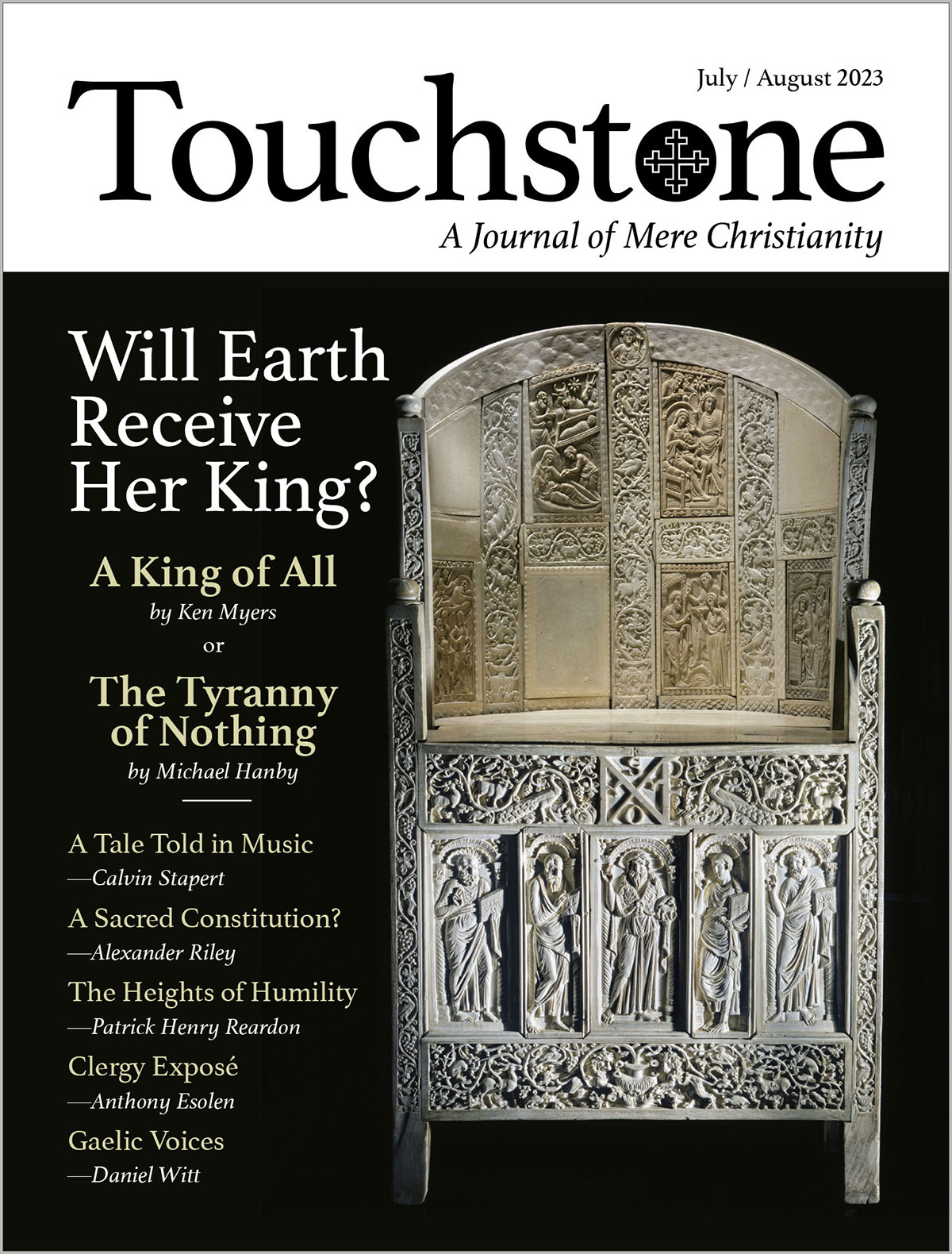
more on Art from the online archives
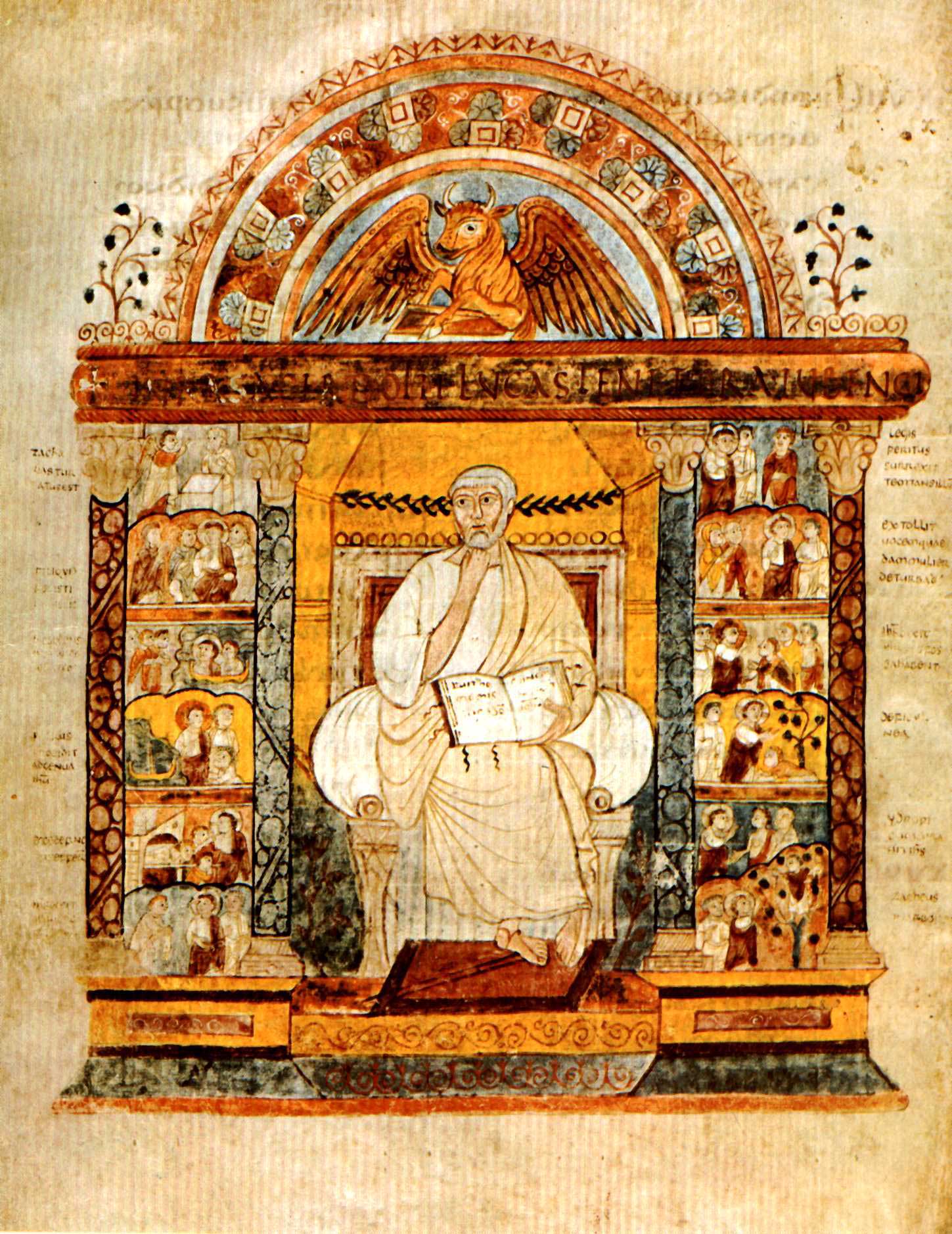
33.2—March/April 2020
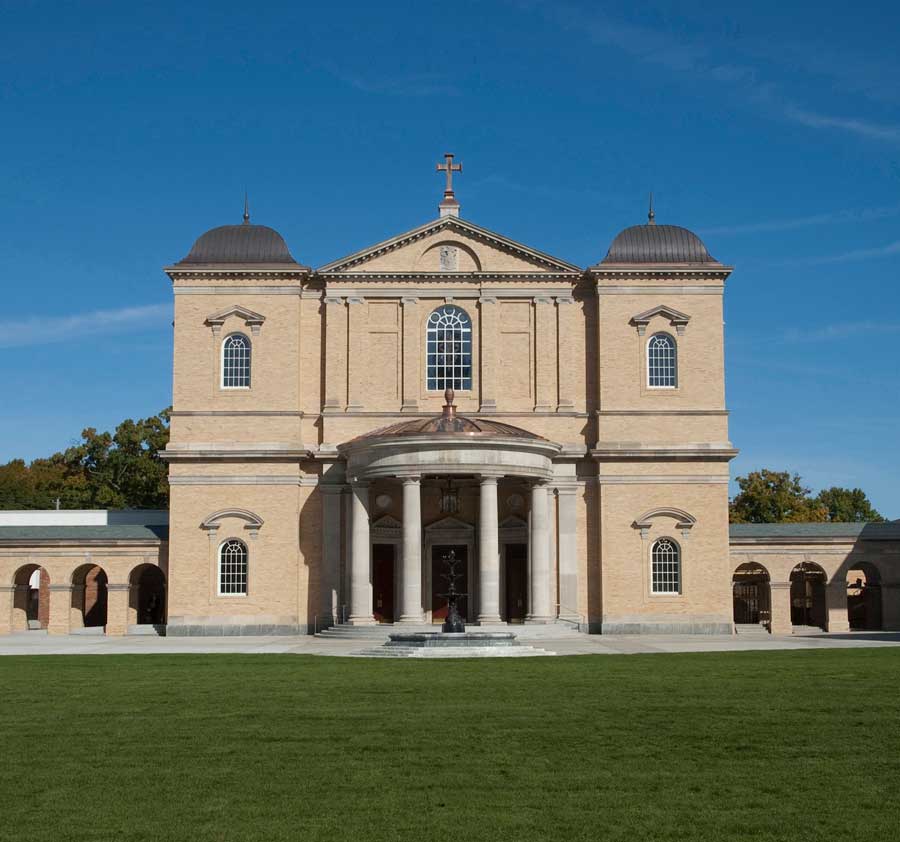
An Architectural Sign of Mere Christianity by Michael Ward
32.4—July/August 2019
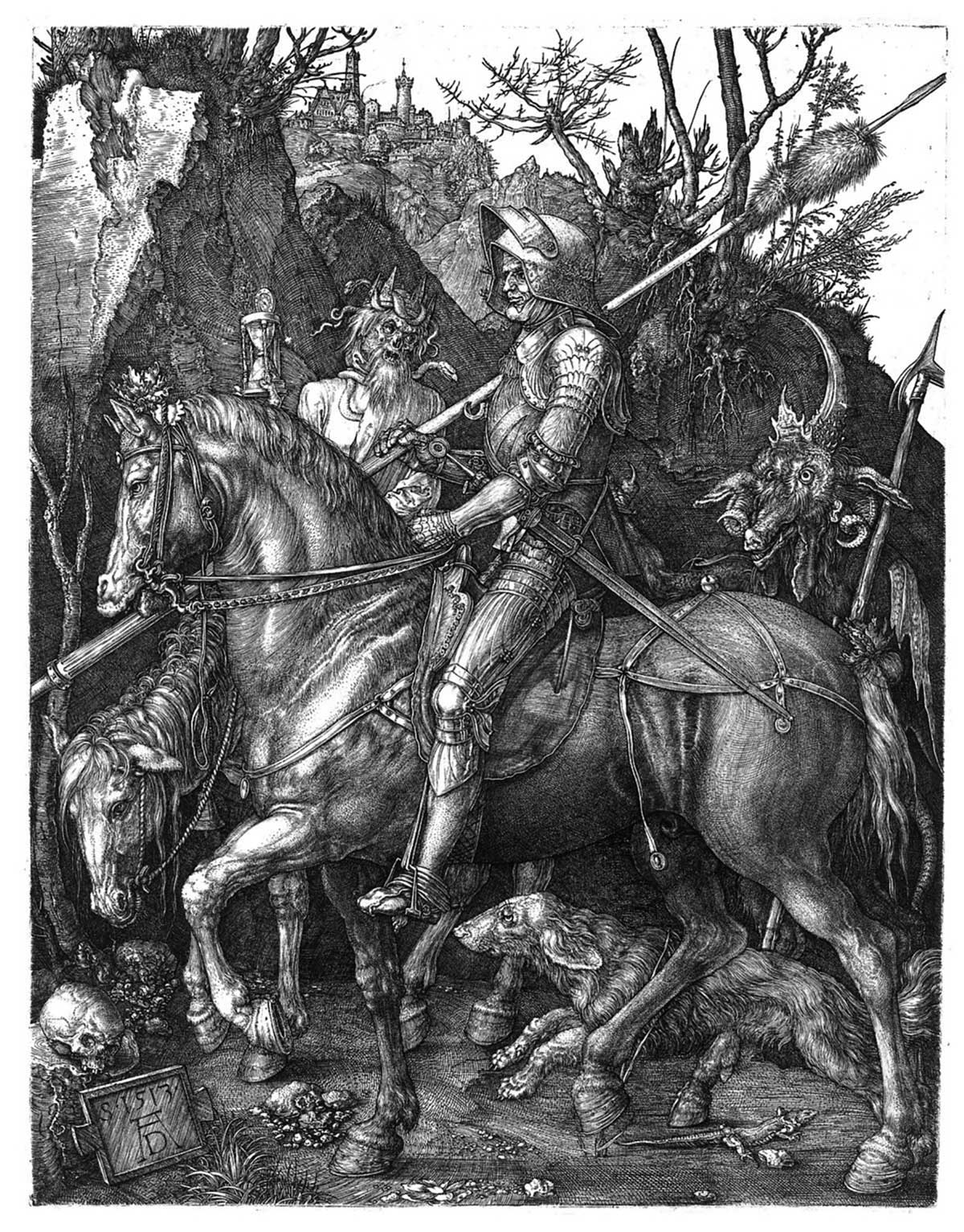
on Single-Mindedness in Durer's Ritter, Tod, und Teufel by Anthony Costello
more from the online archives

32.6—November/December 2019
Historical Truth, Beguiling Stories & Three Kinds of Hearers by Anthony Esolen

32.2—March/April 2019
Flight from the Absolute: Cynical Observations on the Postmodern West, Volume II by Paul Gosselin by Louis Markos
33.3—May/June 2020
On Flight & Fight in the Present Tribulation by Douglas Farrow
calling all readers
Please Donate
"There are magazines worth reading but few worth saving . . . Touchstone is just such a magazine."
—Alice von Hildebrand
"Here we do not concede one square millimeter of territory to falsehood, folly, contemporary sentimentality, or fashion. We speak the truth, and let God be our judge. . . . Touchstone is the one committedly Christian conservative journal."
—Anthony Esolen, Touchstone senior editor
