Sabbath Grain

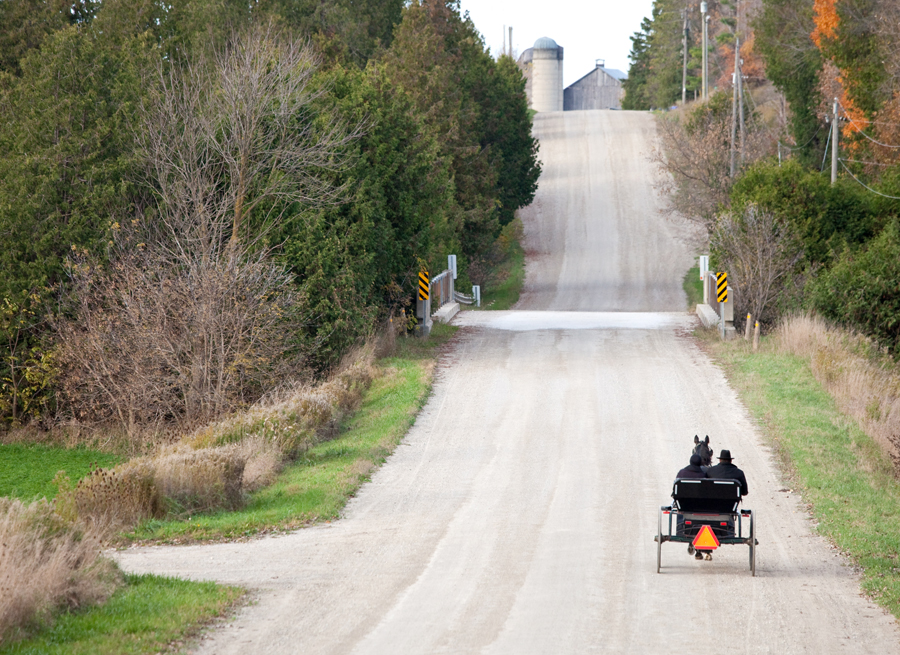
If we look for an original context for Israel’s Sabbath observance, I believe the evidence points to agriculture; the prohibitions of the day of rest were first directed to such activities as plowing, sowing, tilling, irrigating, and harvesting.

This supposition explains the extension of the Sabbath rest to the benefit of farm animals. The beasts that pull the plow and the wagon, after all, arguably work harder than the farmer himself. (Robert Palmer, in The World of the French Revolution, records how France’s brief experiment with a ten-day week caused extreme fatigue and a high death-rate among draft animals. Nine straight days of labor was too deadly to last long.) So dominant is farming in considerations of the Sabbath that a variant of it was imposed even on the soil (’adamah), which was to lie fallow every seventh year.

Genesis says that agriculture was man’s first form of labor: “Now the Lord God took the man and placed him in the garden of Eden to work it and to guard it.” After the Fall—and because of it—man’s care and cultivation of the soil became exceedingly onerous: “Cursed be the ground (’arurah ha’adamah) because of you. . . . You shall eat bread in the sweat of your face until you return to the ground (’el-ha’adamah).” Henceforth, an ongoing struggle with weeds was added to the daily burden, until man himself, at the end of his labors, would return to the soil.

The punitive aspect of man’s work adds a further significance to the Sabbath rest; the latter expresses a weekly reprieve from the sentence imposed at the Fall.

Rabbinic commentary on the Sabbath rule was very detailed in every aspect of food production; no part of farming was exempt. On this special day, there was to be neither sowing nor reaping, neither harrowing nor threshing, nor anything else involved in getting the food out of the ground and onto the table. All these activities were covered, each by its own specific prohibition. Moreover, in case the question should arise, on the Sabbath there was to be no preparing the food for the meal. Don’t light that fire, don’t heat that oven, don’t cut those carrots. Don’t even think about it!

This complex set of rules was the background of a story preserved in all three Synoptic Gospels, the narrative in which the disciples of Jesus, as they walked with him on a Sabbath day, happened to pass through or beside a field of standing grain. Spontaneously, it appears, and perhaps without much thought, “his disciples plucked and ate the heads of grain, rubbing them with their hands” (Luke 6:1).

This exercise did not last long, nonetheless; Matthew (12:1) and Mark (2:23) specify that the disciples only “began” to do this. Right away the reputed experts on the subject, closely observing the activity, raised an objection: “Why are you doing what is not lawful to do on the Sabbath?”

By rabbinic reckoning, in fact, the disciples were guilty of at least two violations of the Sabbath rest: First, they were harvesting the grain by picking it. Second, by rubbing it in their hands to remove the chaff, they were threshing the grain. Indeed, it wasn’t much of a stretch to accuse them of preparing a meal. Clearly these apostolic offenders had  . .  . well, bitten off more than they could chew.

The irony in this account is immense; the disciples’ harmless plucking of a few grains is perversely equated with strenuous farm labor. Whereas the Almighty’s intent in the Sabbath precept was, clearly, to provide a weekly relief to his servants from their regular burden of labor, the rabbinical interpretation of the precept renders the Sabbath itself just a further burden.

Such an inhumane attitude must be included in the censure Jesus elsewhere directs to those who “bind heavy burdens, hard to bear, and lay them  on men ’s shoulders” (Matt. 23:4). And the Apostle Peter, perhaps remembering this occasion, later spoke against “putting a yoke on the neck of the disciples which neither our fathers nor we were able to bear” (Acts 15:10).

Jesus begins his rebuttal by appealing to an implicit standard of rationality: “The Sabbath was made for man, not man for the Sabbath” (Mark 2:27). He bolsters this judgment by an appeal to precedent, reminding these harsh critics of young David and his crew when they arrived, famished and fatigued, at the shrine of Nob. At that time, the priest Abimelech (“cautiously,” bequshi, explained the medieval Talmudist Rashi) permitted them to consume the ritual “show bread,” which the Torah had reserved for the priests (1 Sam. 21:1–6).


Patrick Henry Reardon is pastor emeritus of All Saints Antiochian Orthodox Church in Chicago, Illinois, and the author of numerous books, including, most recently, Out of Step with God: Orthodox Christian Reflections on the Book of Numbers (Ancient Faith Publishing, 2019).

A Journal of Mere Christianity—Delivered to Your Door

  • Essays on theology, culture, and the Church
  • Contributors from across the Christian traditions

Subscribe (Print + Online)

Six print issues (one year) of Touchstone, plus full online access and PDF downloads for only $39.95.

Subscribe (Online Only)

Get a one-year full-access subscription to the Touchstone online archives for only $19.95.


bulk subscriptions

Order Touchstone subscriptions in bulk and save $10 per sub! Each subscription includes 6 issues of Touchstone plus full online access to touchstonemag.com—including archives, videos, and pdf downloads of recent issues for only $29.95 each! Great for churches or study groups.

Transactions will be processed on a secure server.


more on bible from the online archives
31.4—July/August 2018

Listening to Eve

on the Brevity & Theology of Her Recorded Words by Judith Anderson

32.3—May/June 2019

Editing Jesus

on the Implications of Changing the Pater Noster by John M. McCarthy

27.4—July/August 2014

The Things Freely Given

The Bible, Sacred Theology & the Mind of Christ by Patrick Henry Reardon


more from the online archives

36.4—Jul/Aug 2023

Nothingness Rules

Our Political Void & the Disintegration of Truth by Michael Hanby

29.1—Jan/Feb 2016

Wilberforce for Good

on Marriage, Moral Corruption & the Christian Duty of Witness by Regis Nicoll

35.2—Mar/Apr 2022

Say Something

on Fatigued Christians Deciding to Engage the Culture by Keith Lowery

calling all readers

Please Donate

"There are magazines worth reading but few worth saving . . . Touchstone is just such a magazine."
—Alice von Hildebrand

"Here we do not concede one square millimeter of territory to falsehood, folly, contemporary sentimentality, or fashion. We speak the truth, and let God be our judge. . . . Touchstone is the one committedly Christian conservative journal."
—Anthony Esolen, Touchstone senior editor

Support Touchstone

00