




The Paradise Carpet
The Persian word for enclosed park or walled garden is paridaeza, whence our “paradise.” Such gardens, which were also orchards, flowerbeds, water sources, and sometimes menageries, existed throughout the ancient Near East (and still are built today). They were, and are, important places of refreshment, of fruitfulness, of fragrance and sweetness, of rest and shade and delight. Not surprisingly, such gardens became sources of enduring imagery for literature and poetry across the region, including the Israel of the Old Testament.
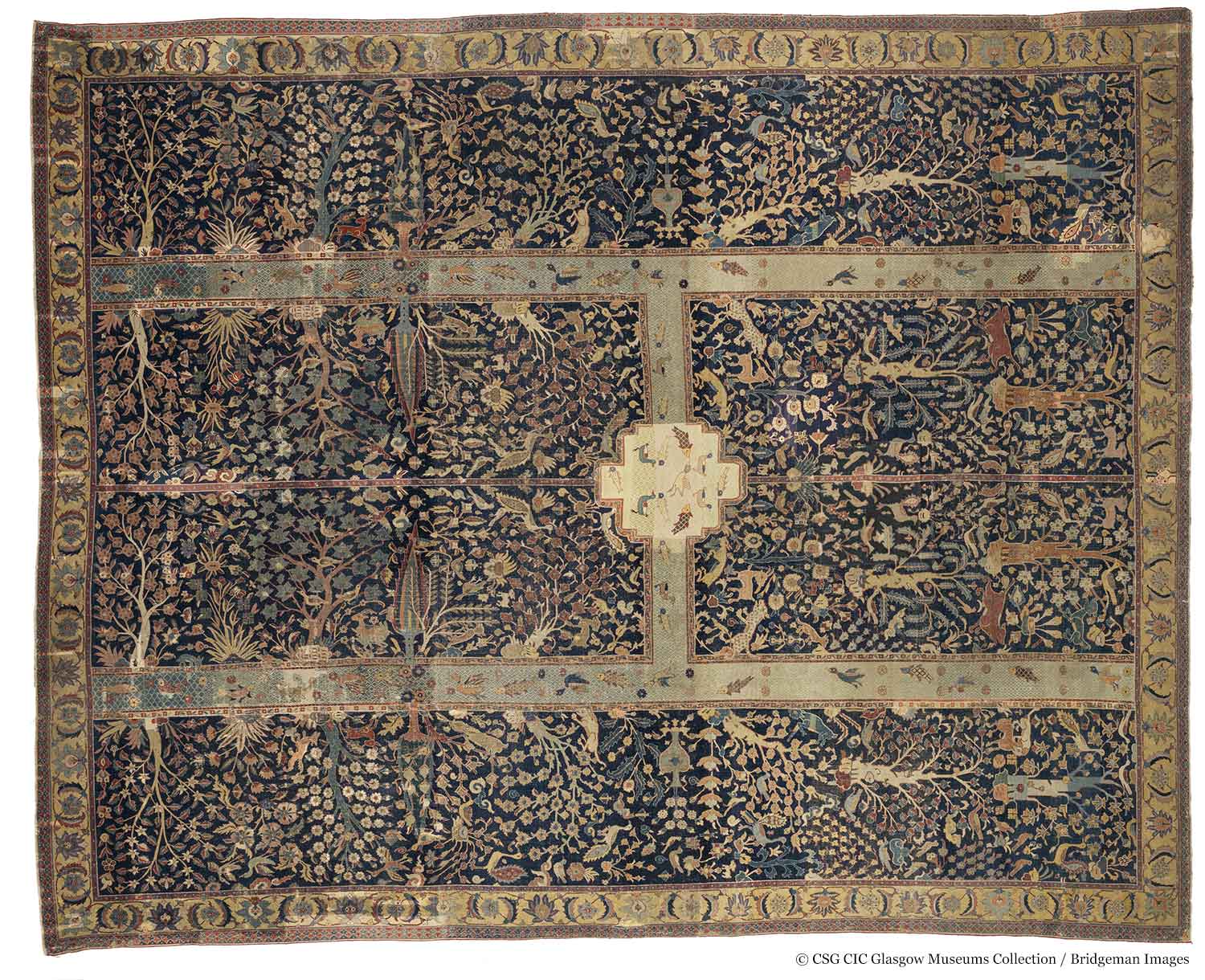
Here we examine an example of just such an enclosed garden made flesh—or at least wool, cotton, and silk: the so-called Wagner Carpet (named after a previous owner) from seventeenthcentury Isphahan (a province in present-day Iran), now part of the Burrell Collection in Glasgow, Scotland (see the inside back cover for a color image of this carpet). Paradise carpets were made for both indoor and outdoor use. The climate in Isphahan ranges from freezing in the winter to the nineties in the height of summer and fall; the carpet is a quest for an eternal spring. It would have been spread in a winter palace (it measures 14 by 17 feet) or in a shaded outdoor pavilion in summer, projecting hopeful images of a fantastical spring.
The imagery it encompasses comes from a common Middle Eastern culture which can cast light on our understanding of the Bible and, save for the constraints set on visual images, might have been a Hebrew illustration of much of Scripture.
The All-Important Watercourses
The carpet’s principal organizing elements are its watercourses, for in desert or steppe climates, water is all-important. In Persia, it was brought from mountain snowmelt through underground channels to feed the princely gardens. A watery garden, like that of Eden, featured in the creation myths of ancient Sumeria as well: without water, life is impossible.
In the mythical Sumerian garden, as in Eden, four rivers flowed outward. Usually a garden carpet has four radiating canals meeting in the center, representing the four rivers, but here they are arranged in an H-shape, perhaps to enhance the long vertical vista, with a pool or pavilion in the center (the carpet has been damaged, so it is not possible to say). And all around it, the waters give life to a profusion of trees, flowers, waterfowl and birds, animals, even snails and insects.
Trees & Peaceable Animals
Trees punctuate both sides of the vertical watercourses. They are shown from shifting points of view: sideways-facing views at the bottom gradually change to an upright orientation at the top. This implies that the carpet was meant to be seen from a single point of view, as if the viewer were sitting at the bottom center and looking upwards into the garden. Possibly this vantage point was the place of honor reserved for the princely patron: he alone would see the carpet as it was meant to be seen.
However we might look at them, all the trees depicted are recognizable species, and all of them carry a symbolic weight (Detail 1). In the center is the cypress, an evergreen that thrives in poor soil and harsh climates. For its hardiness, it has come to represent the Tree of Life, present in the gardens of creation. To its right, with its spreading branches and palmate leaves, is the sycamore, symbol of abundance, and on the left, the willow, which grows with its feet in the stream and flourishes like the righteous man. The flowers and fruits, which fill nearly every remaining inch of the surface, are not so botanically accurate, but convey fragrance, sweetness, lushness, nourishment, delight, and riotous growth.
The garden also provides shelter for an abundance of birds and animals. The Persians made princely hunting carpets, on whose surfaces lions and leopards pounced on deer and antelope and were hunted down by princely protectors on horseback. Here, however, only one pair of beasts attacks another; elsewhere on the carpet the predators and prey live together amicably in a mythical peaceable kingdom. For the most part, discord, disorder, and violence are banished. It even appears that one pair of cheetahs is playing with the ducks in the watercourse (Detail 2).
Birds & the Symbolism of Love
Mary Elizabeth Podles is the retired curator of Renaissance and Baroque art at the Walters Art Museum in Baltimore, Maryland. She is the author of A Thousand Words: Reflections on Art and Christianity (St. James Press, 2023). She and her husband Leon, a Touchstone senior editor, have six children and live in Baltimore, Maryland. She is a contributing editor for Touchstone.
A Journal of Mere Christianity—Delivered to Your Door
- Essays on theology, culture, and the Church
- Contributors from across the Christian traditions

Six print issues (one year) of Touchstone, plus full online access and PDF downloads for only $39.95.

Get a one-year full-access subscription to the Touchstone online archives for only $19.95.
bulk subscriptions
Order Touchstone subscriptions in bulk and save $10 per sub! Each subscription includes 6 issues of Touchstone plus full online access to touchstonemag.com—including archives, videos, and pdf downloads of recent issues for only $29.95 each! Great for churches or study groups.
Transactions will be processed on a secure server.
more on art from the online archives
32.4—July/August 2019
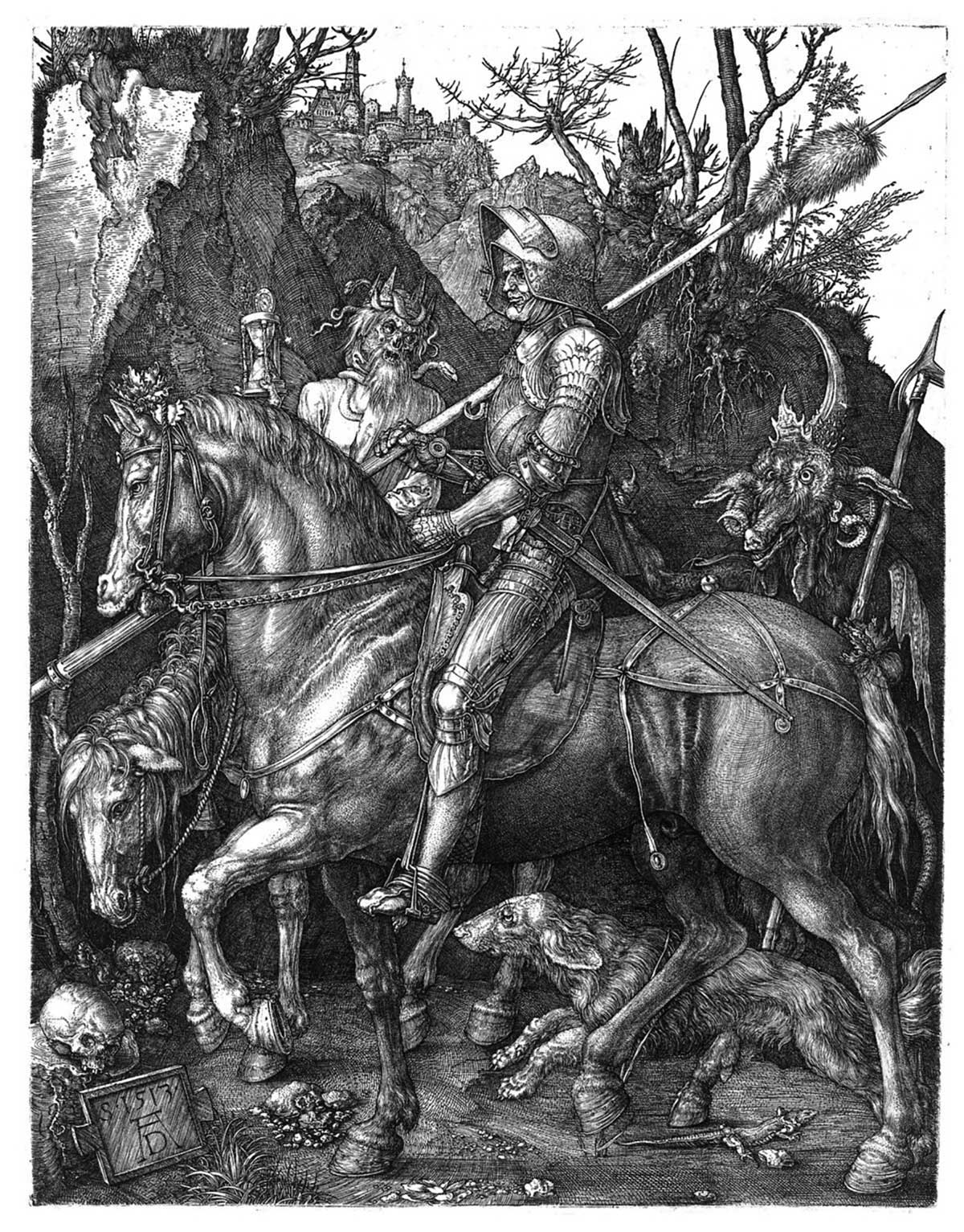
on Single-Mindedness in Durer's Ritter, Tod, und Teufel by Anthony Costello
33.2—March/April 2020
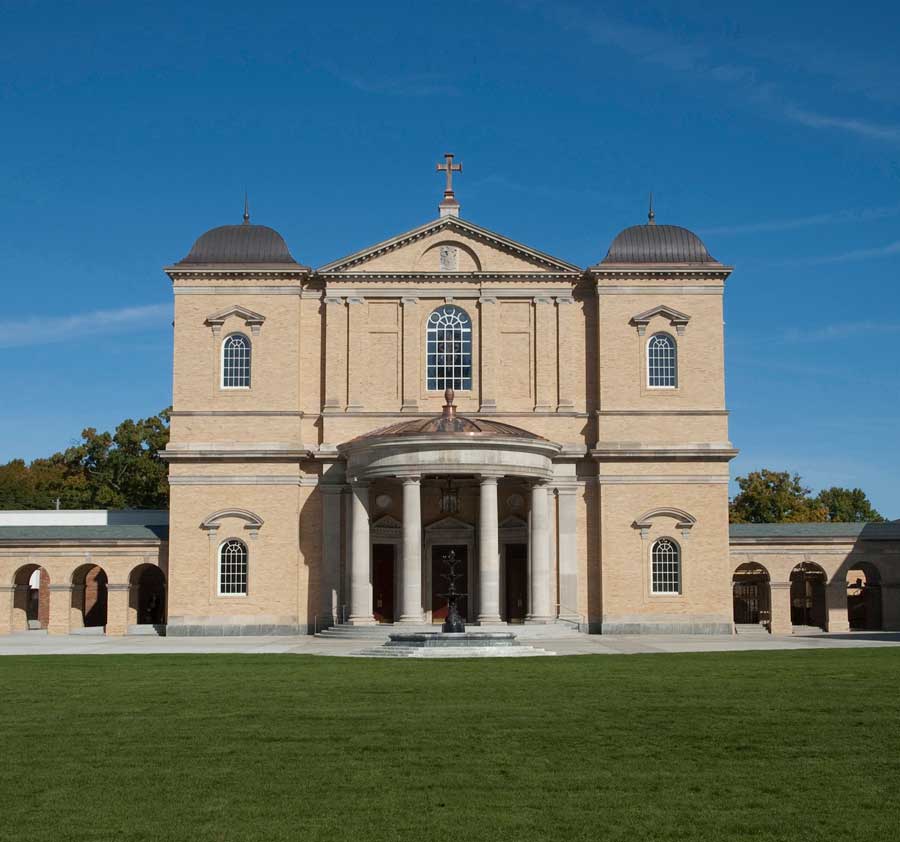
An Architectural Sign of Mere Christianity by Michael Ward
more from the online archives
32.6—November/December 2019
on Taking Heed of the Parallels Between the Crises of Yesterday & Today by Korey D. Maas

30.5—Sept/Oct 2017
on Costly Grace in Breece D'J Pancake's Flyover Country by Casey Chalk
calling all readers
Please Donate
"There are magazines worth reading but few worth saving . . . Touchstone is just such a magazine."
—Alice von Hildebrand
"Here we do not concede one square millimeter of territory to falsehood, folly, contemporary sentimentality, or fashion. We speak the truth, and let God be our judge. . . . Touchstone is the one committedly Christian conservative journal."
—Anthony Esolen, Touchstone senior editor
