




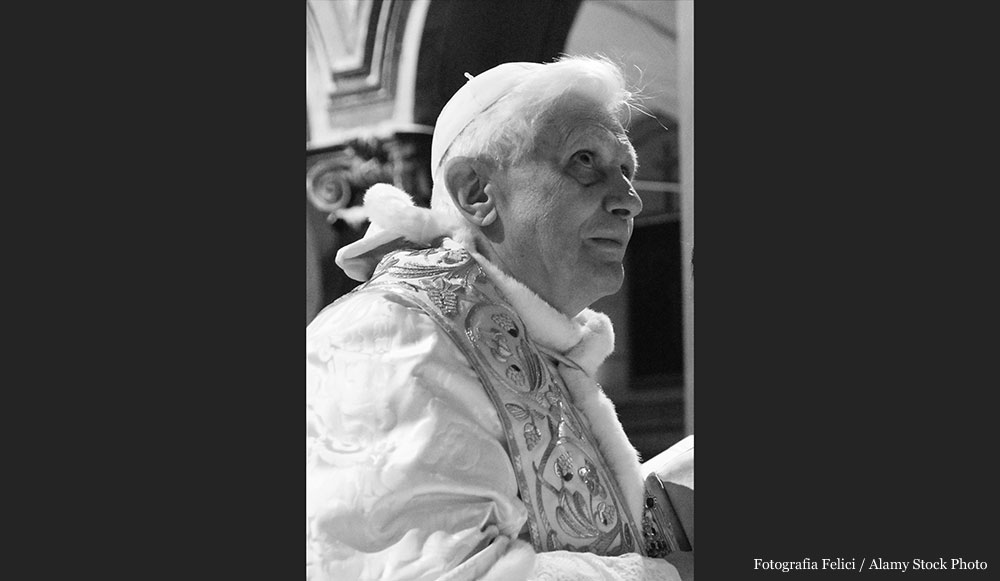
The Quiet Prophet
on Benedict XVI: A Protestant Appreciation
One of the great surprises following the death of Pope John Paul II in 2005 was the accession of Joseph Cardinal Ratzinger to the pontificate. I was one of those (perhaps many) orthodox Protestants who had been indebted to the work of John Paul, having cut my teeth on his important encyclicals during the 1980s and 1990s while teaching at the university and doing public-policy research in Washington, D.C. Following his penultimate encyclical, Fides et Ratio (“Faith and Reason,” 1998), which in many ways seemed the culmination of a remarkable career, I assumed that his vision would cease, or at best be muted. I was wrong. As it happened, in the years ahead, until Benedict XVI’s resignation, there remained a wondrous continuity, to Benedict’s great credit.
Benedict is said to be the first academic theologian (narrowly defined) in two centuries to become pope. This should have come as little surprise to those who knew him, for at a very early age Joseph Ratzinger desired to attend seminary. His father, a policeman, had been anti-Nazi in sentiment and was thus not infrequently demoted or transferred in his work. Joseph would mirror his father’s attitudes in this regard; at age 14 (1941), though legally required to join Hitlerjugend (the Hitler Youth), he refused to attend its meetings. Following the war, he studied theology and was ordained a priest. In 1953 he received his doctorate in theology, with a thesis titled “The People and House of God in Augustine’s Doctrine of the Church.”
THIS ARTICLE ONLY AVAILABLE TO SUBSCRIBERS.
FOR QUICK ACCESS:
J. Daryl Charles is the Acton Institute Affiliated Scholar in Theology & Ethics. He is the author or editor of twenty books, including Retrieving the Natural Law (2008), Natural Law and Religious Freedom (2018), and, most recently, Just War and Christian Traditions (forthcoming). He is also co-editor of Abraham Kuyper, Common Grace: God's Gifts for a Fallen World, Volume 3 (2020). He is a contributing editor to Touchstone.
A Journal of Mere Christianity—Delivered to Your Door
- Essays on theology, culture, and the Church
- Contributors from across the Christian traditions

Six print issues (one year) of Touchstone, plus full online access and PDF downloads for only $39.95.

Get a one-year full-access subscription to the Touchstone online archives for only $19.95.
bulk subscriptions
Order Touchstone subscriptions in bulk and save $10 per sub! Each subscription includes 6 issues of Touchstone plus full online access to touchstonemag.com—including archives, videos, and pdf downloads of recent issues for only $29.95 each! Great for churches or study groups.
Transactions will be processed on a secure server.
more on Catholic from the online archives
32.6—November/December 2019
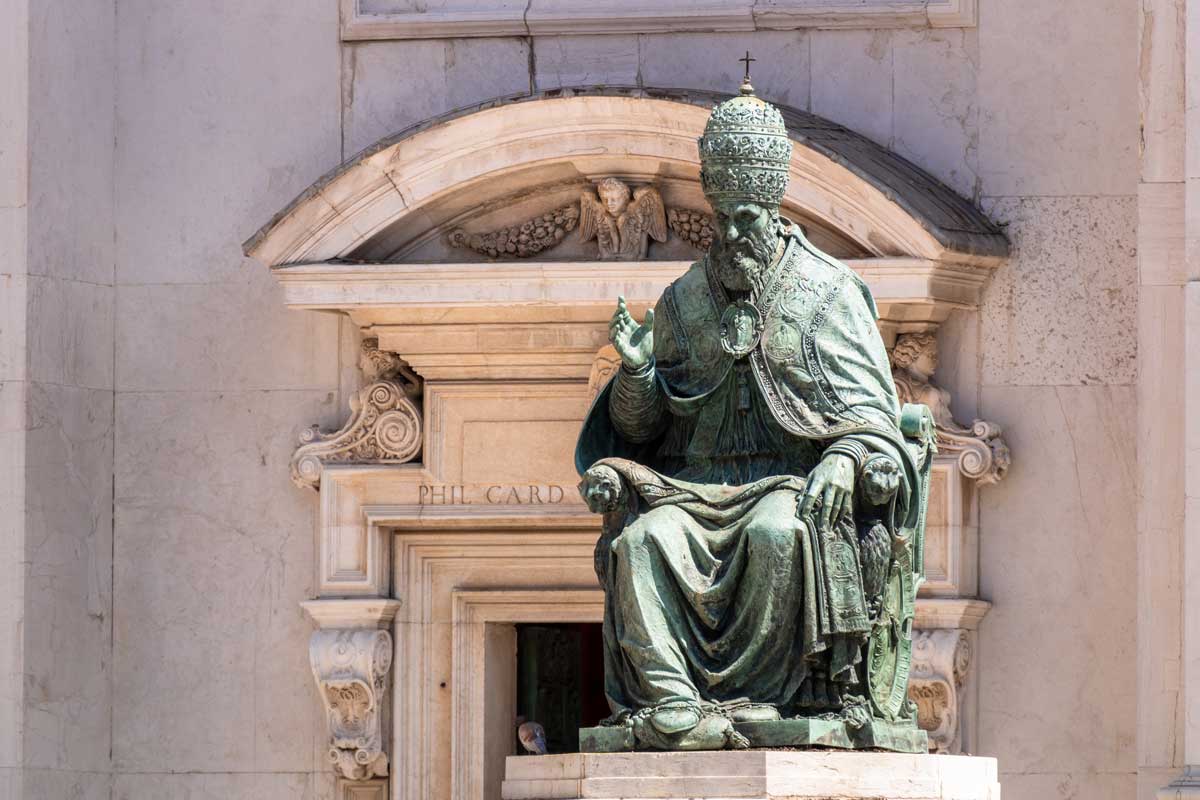
on Taking Heed of the Parallels Between the Crises of Yesterday & Today by Korey D. Maas
31.6—November/December 2018
The Slow Vindication of Leon Podles by S. M. Hutchens
27.5—Sept/Oct 2014
The Culture of Death's Campaign Against the Catholic Church by Brantly Millegan
more from the online archives
32.1—January/February 2019
The Diabolical Failure of Leaders in the Present Crises by James M. Kushiner

32.1—January/February 2019
Answers Secular & Religious by Allan C. Carlson
calling all readers
Please Donate
"There are magazines worth reading but few worth saving . . . Touchstone is just such a magazine."
—Alice von Hildebrand
"Here we do not concede one square millimeter of territory to falsehood, folly, contemporary sentimentality, or fashion. We speak the truth, and let God be our judge. . . . Touchstone is the one committedly Christian conservative journal."
—Anthony Esolen, Touchstone senior editor
