




Poetry & Democracy
Tocqueville & the Sorry State of the Arts
by Anthony Esolen
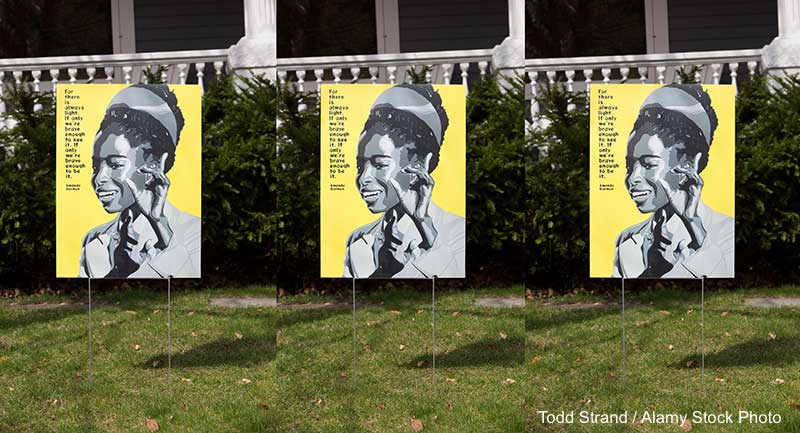
On January 20, 2021, a young woman named Amanda Gorman recited a poem she had written to celebrate the inauguration of Joseph Biden as president of the United States. It was a pretty bad poem, breathlessly vague and full of platitudes about the promise we are going to “glade” [sic], for “when day comes, we step out of the shade, aflame and unafraid.”
I could point out that, if you think about what night and day are, you see that until the day comes, there isn’t any shade to come out of. I could point out that the rhyme in that line I have quoted is sing-song, and it is made worse by the assonance with “day” and “aflame.” I could point out how likely we are to embarrass ourselves when we are all full of how glorious we are. I could point out every cliché, every fuzzy use of a term, every word that shouts, “Hey, look at me; I’m a rhyme!”
THIS ARTICLE ONLY AVAILABLE TO SUBSCRIBERS.
FOR QUICK ACCESS:
Anthony Esolen is Distinguished Professor of Humanities at Thales College and the author of over 30 books, including Real Music: A Guide to the Timeless Hymns of the Church (Tan, with a CD), Out of the Ashes: Rebuilding American Culture (Regnery), and The Hundredfold: Songs for the Lord (Ignatius). He has also translated Dante’s Divine Comedy (Random House) and, with his wife Debra, publishes the web magazine Word and Song (anthonyesolen.substack.com). He is a senior editor of Touchstone.
A Journal of Mere Christianity—Delivered to Your Door
- Essays on theology, culture, and the Church
- Contributors from across the Christian traditions

Six print issues (one year) of Touchstone, plus full online access and PDF downloads for only $39.95.

Get a one-year full-access subscription to the Touchstone online archives for only $19.95.
bulk subscriptions
Order Touchstone subscriptions in bulk and save $10 per sub! Each subscription includes 6 issues of Touchstone plus full online access to touchstonemag.com—including archives, videos, and pdf downloads of recent issues for only $29.95 each! Great for churches or study groups.
Transactions will be processed on a secure server.
more on poetry from the online archives
37.5—Sept/Oct 2024
A Battle Plan for Peace While Growing Old by Anthony Esolen
more from the online archives
5.3—Summer 1992
Everything You Need to Know About Morality & the Bible by David Mills

32.4—July/August 2019
on Probability, Death & the Existence of God by Graeme Hunter

31.4—July/August 2018
Life & Love Are Real Despite Theatrical Illusions by Anthony Esolen
calling all readers
Please Donate
"There are magazines worth reading but few worth saving . . . Touchstone is just such a magazine."
—Alice von Hildebrand
"Here we do not concede one square millimeter of territory to falsehood, folly, contemporary sentimentality, or fashion. We speak the truth, and let God be our judge. . . . Touchstone is the one committedly Christian conservative journal."
—Anthony Esolen, Touchstone senior editor
