




Truth Remembered
Among the many differences between the Gospels and the Epistles, it is possible to overlook what should be, perhaps, the plainest of them all: the significantly greater role of memory in the Gospels. In contrast to the immediacy of the Epistles (especially Paul's), the truth we find in the Gospels is essentially remembered truth.
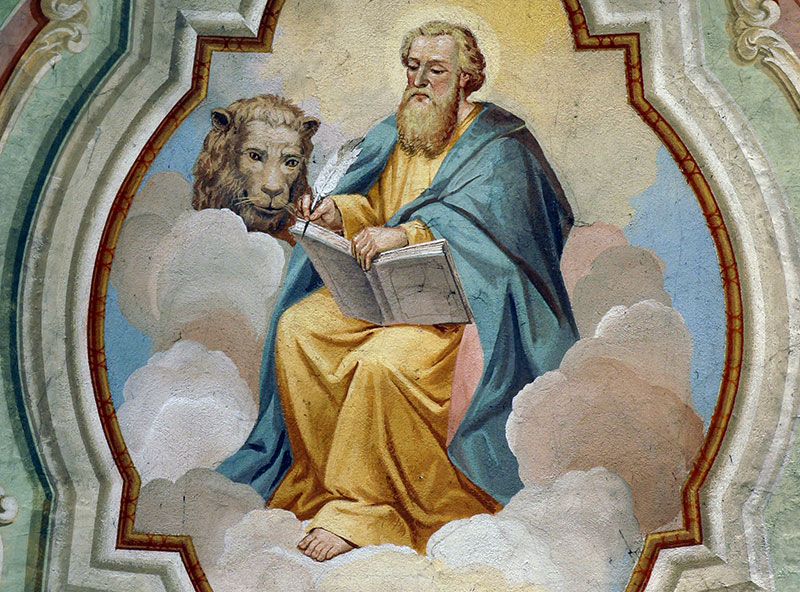
Almost in passing, some Christians commented on this feature early in the second century. In our first extant reference to the Gospels, Papias of Hierapolis observed that the Evangelist Mark, "having become the interpreter of Peter, wrote down accurately, though not in order, whatever he remembered of the things said or done by Christ." A few years later, Justin Martyr described the Gospels as memoirs composed by the apostles.
It is a fact that roughly a generation separated the life of Jesus from the earliest of the Gospels, probably Mark. Now, if we regard Mark's work and the other Gospels as memoirs, this should count for something in how we read them; we should recognize, for instance, that the information they contain was not recent or fresh. If Mark had written thirty years earlier, his work would not be a memoir.
Memoir vs. Martyrion
THIS ARTICLE ONLY AVAILABLE TO SUBSCRIBERS.
FOR QUICK ACCESS:
Patrick Henry Reardon is pastor emeritus of All Saints Antiochian Orthodox Church in Chicago, Illinois, and the author of numerous books, including, most recently, Out of Step with God: Orthodox Christian Reflections on the Book of Numbers (Ancient Faith Publishing, 2019).
A Journal of Mere Christianity—Delivered to Your Door
- Essays on theology, culture, and the Church
- Contributors from across the Christian traditions

Six print issues (one year) of Touchstone, plus full online access and PDF downloads for only $39.95.

Get a one-year full-access subscription to the Touchstone online archives for only $19.95.
bulk subscriptions
Order Touchstone subscriptions in bulk and save $10 per sub! Each subscription includes 6 issues of Touchstone plus full online access to touchstonemag.com—including archives, videos, and pdf downloads of recent issues for only $29.95 each! Great for churches or study groups.
Transactions will be processed on a secure server.
more on bible from the online archives
5.3—Summer 1992
Everything You Need to Know About Morality & the Bible by David Mills
31.4—July/August 2018
on the Brevity & Theology of Her Recorded Words by Judith Anderson
27.4—July/August 2014
The Bible, Sacred Theology & the Mind of Christ by Patrick Henry Reardon
more from the online archives
5.3—Summer 1992
Everything You Need to Know About Morality & the Bible by David Mills

27.6—Nov/Dec 2014
Tales of Forbidden Stereotypes
Real-Life Men & Women & the Tragic Loss of Human Comedy by Anthony Esolen

27.2—March/April 2014
Higher Education Should Advance the Glorious Liberty of the Sons of God by Anthony Esolen
calling all readers
Please Donate
"There are magazines worth reading but few worth saving . . . Touchstone is just such a magazine."
—Alice von Hildebrand
"Here we do not concede one square millimeter of territory to falsehood, folly, contemporary sentimentality, or fashion. We speak the truth, and let God be our judge. . . . Touchstone is the one committedly Christian conservative journal."
—Anthony Esolen, Touchstone senior editor
