




Marching Together
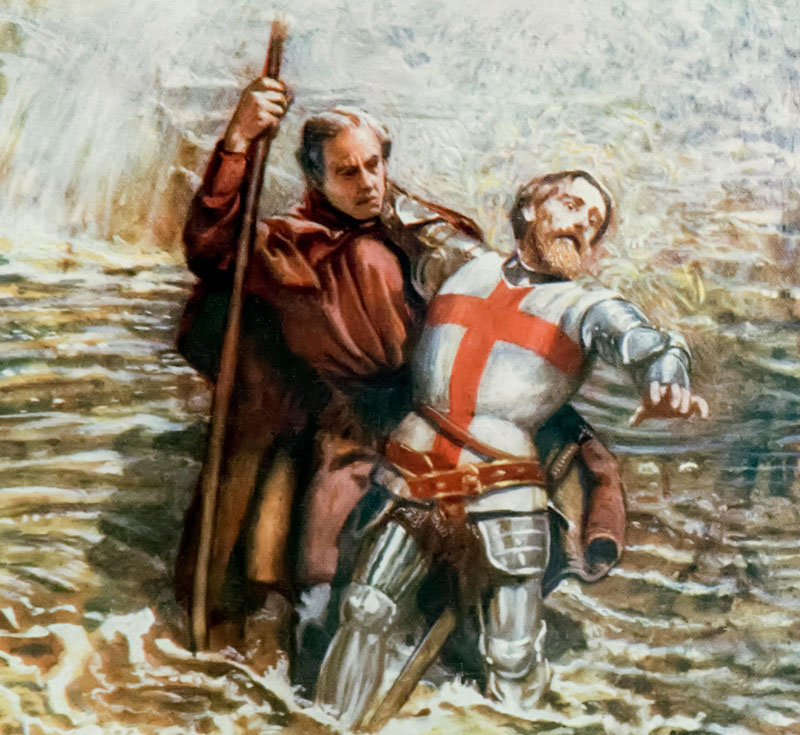
There is a moment in John Ford's heartfelt tribute to West Point, The Long Gray Line, that for its manly power and decorous simplicity is probably unlike anything you will have seen or heard in church in the last fifty years. The men are at chapel, and the news has just broken that the Japanese have bombed Pearl Harbor. They all stand, and they sing out the great verse from the song we have known simply as "America":
Our fathers' God, to Thee,
Author of liberty,
To Thee we sing.
Long may our land be bright
With freedom's holy light;
Protect us by Thy might,
Great God, our King!
Ford did not have to think of it, because he and everyone else took it mainly for granted, that men are made one not by politics or by education, but by a common love for what transcends the individual person. And that is how the love we owe to our homeland, what the old Romans meant by pietas, can be brought into harmony with our love of God.
A Hymn for a Marching Faith
THIS ARTICLE ONLY AVAILABLE TO SUBSCRIBERS.
FOR QUICK ACCESS:
Anthony Esolen is Distinguished Professor of Humanities at Thales College and the author of over 30 books, including Real Music: A Guide to the Timeless Hymns of the Church (Tan, with a CD), Out of the Ashes: Rebuilding American Culture (Regnery), and The Hundredfold: Songs for the Lord (Ignatius). He has also translated Dante’s Divine Comedy (Random House) and, with his wife Debra, publishes the web magazine Word and Song (anthonyesolen.substack.com). He is a senior editor of Touchstone.
A Journal of Mere Christianity—Delivered to Your Door
- Essays on theology, culture, and the Church
- Contributors from across the Christian traditions

Six print issues (one year) of Touchstone, plus full online access and PDF downloads for only $39.95.

Get a one-year full-access subscription to the Touchstone online archives for only $19.95.
bulk subscriptions
Order Touchstone subscriptions in bulk and save $10 per sub! Each subscription includes 6 issues of Touchstone plus full online access to touchstonemag.com—including archives, videos, and pdf downloads of recent issues for only $29.95 each! Great for churches or study groups.
Transactions will be processed on a secure server.
more on music from the online archives
33.3—May/June 2020
Bach's Cantata BWV 106, Gottes Zeit ist die allerbesteZeit (God's time is the very best time) by Ken Myers
more from the online archives
33.3—May/June 2020
Human & Divine Societies Require Careful Thought & Discourse by Anthony Esolen
27.3—May/June 2014
Facts versus Stereotypes About Love & Marriage in the Land of the Free by Allan C. Carlson
calling all readers
Please Donate
"There are magazines worth reading but few worth saving . . . Touchstone is just such a magazine."
—Alice von Hildebrand
"Here we do not concede one square millimeter of territory to falsehood, folly, contemporary sentimentality, or fashion. We speak the truth, and let God be our judge. . . . Touchstone is the one committedly Christian conservative journal."
—Anthony Esolen, Touchstone senior editor
