The Old Testaments
Prior to listing the generations of Adam in Genesis 5, Holy Scripture makes a special note relative to his grandson, Enosh, at the end of the previous chapter. I believe the text of this note, which is obscure and uncertain, is worth extra attention.
The traditional Hebrew of the second half of Genesis 4:26—the Masoretic text—is 'az huchal liqero' beshem Adonai, which may be literally translated, "Then it was begun to call on the name of the Lord." Although a bit awkward, the sense of the statement is at least intelligible. The King James Version paraphrases it: "Then began men to call upon the name of the Lord," and many translations provide a variant of that rendering. The curious thing about this reading is that the invocation of the Lord's name is not ascribed to Enosh himself.
St. Jerome's Latin version (Vulgate) of the first two words—iste coepit—presupposes a different underlying Hebrew reading: ze' hechel, meaning "He began [to call on the Lord's name]." The merit of this reading, surely, is that it ascribes to Enosh himself the invocation of the Lord's name.
This is partly true of the classical Greek version from the third century before Christ (Septuagint), which says: houtos elpisen epikaleisthai to onoma Kyriou tou Theou—literally rendered as, "He hoped to call on the name of the Lord God." Here we have yet another underlying Hebrew wording: ze' hochil—"he hoped."
Questions & Preferences
The three variants of these two words of Holy Scripture, all of them plausible, prompt an interesting and more general inquiry. A modern reader is disposed to ask, Which of these readings is correct, in the sense of divinely inspired? I want to argue here that this search for an original reading of the passage—ideally, an autograph—reflects a relatively recent concern, not shared by either the Bible's most ancient copyists or its earliest translators.
This point especially needs to be made, I believe, with respect to the canonical status of the Septuagint in the Orthodox Church, where there commonly prevails an assumption that this status implies a more accurate, a more "original," meaning in the Greek text. Now, with respect to particular passages of the Old Testament, this certainly does appear to be the case, but a greater "originality" is not a thing implied by the Septuagint's canonical status. That status means, rather, that the Septuagint expresses (usually and as a general rule) the form of the text prevalent in the New Testament and preserved in the earliest Christian manuscripts. Nothing more.
St. Augustine of Hippo best expressed, I believe, the traditional view of this question. As he worked his way through Genesis, comparing the Vetus Latina (translated from the Septuagint) to the "new" Vulgate translation (made by St. Jerome directly from the Hebrew text), Augustine worked very hard trying to reconcile the relative ages of the patriarchs in these two versions of Genesis 5. He observed that the ages of these patriarchs, particularly when they fathered their sons, are different in the two versions. Moreover, he noted they are different in consistent and manifestly intentional ways, impossible to attribute to scribal error.
For modern readers who think it important to get to the "original" text, this phenomenon represents an either-or. Most Protestant readers, unless I am mistaken, faced with a choice between the Masoretic Text and the Septuagint on a specific biblical passage—and suspecting no scribal error—readily reject the latter in favor of the former. That is to say, they prefer the medieval Jewish manuscripts of Holy Scripture to the much more ancient manuscripts transcribed exclusively by Christians. I have always found curious this Protestant preference for Jewish scribes over Christian scribes. I suspect it has something to do with the sola Scriptura theory.
Roman Catholics, in general, likewise favor the Hebrew Old Testament over the Greek. Indeed, this preference goes back to St. Jerome himself, who spoke of the "Hebrew truth"—hebraica veritas—of the Scriptures. Such a view was strengthened more recently by Vatican II, which declared that the biblical exegete, in determining the meaning of the Sacred Text, must consult the "intention" of the authors; in other words, an "original." Nonetheless, there are weighty Roman Catholic scholars (Benoit and Ratzinger, for instance) who treat the Septuagint as also divinely inspired, and one does observe, in general, a greater respect for this version among Roman Catholic commentators.
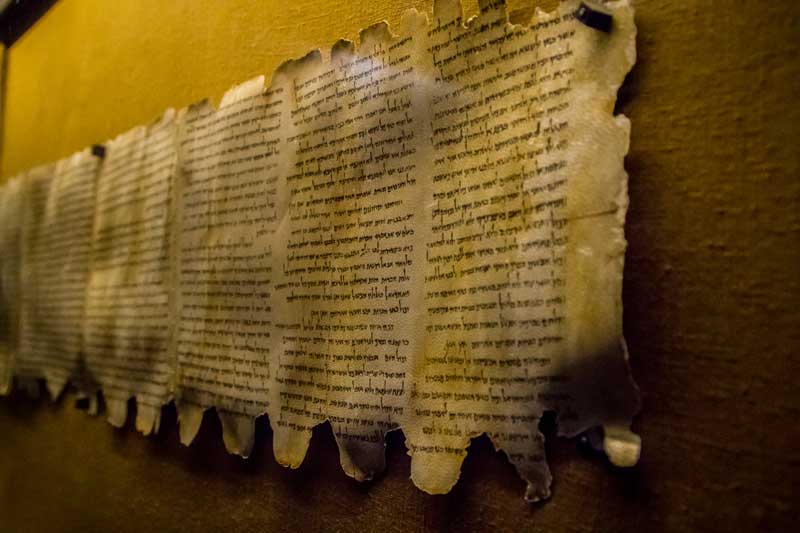
Many Eastern Orthodox Christians, on the other hand, because of the canonical status of the Septuagint, seem always to insist on a greater authority for the Greek text. Indeed, beginning with St. Justin Martyr in the second century, there were Greek Fathers who ascribed the variations of the Hebrew text to deliberate corruptions made by Jewish scribes and copyists. Such a notion, it seems to me, is deplorable. I cannot imagine a Jewish copyist deliberately altering the Sacred Text once it had reached canonical status. Moreover, the publication of the Dead Sea Scrolls, beginning in the 1950s, demonstrates how faithfully the Jewish scribes transmitted the Bible through the centuries. (For clarity and honesty on this point, the burning of synagogues by Christians goes a long way towards explaining the absence of Hebrew biblical manuscripts for almost a millennium.)
Patrick Henry Reardon is pastor emeritus of All Saints Antiochian Orthodox Church in Chicago, Illinois, and the author of numerous books, including, most recently, Out of Step with God: Orthodox Christian Reflections on the Book of Numbers (Ancient Faith Publishing, 2019).
A Journal of Mere Christianity—Delivered to Your Door
- Essays on theology, culture, and the Church
- Contributors from across the Christian traditions

Six print issues (one year) of Touchstone, plus full online access and PDF downloads for only $39.95.

Get a one-year full-access subscription to the Touchstone online archives for only $19.95.
bulk subscriptions
Order Touchstone subscriptions in bulk and save $10 per sub! Each subscription includes 6 issues of Touchstone plus full online access to touchstonemag.com—including archives, videos, and pdf downloads of recent issues for only $29.95 each! Great for churches or study groups.
Transactions will be processed on a secure server.
more on bible from the online archives

more from the online archives
calling all readers
Please Donate
"There are magazines worth reading but few worth saving . . . Touchstone is just such a magazine."
—Alice von Hildebrand
"Here we do not concede one square millimeter of territory to falsehood, folly, contemporary sentimentality, or fashion. We speak the truth, and let God be our judge. . . . Touchstone is the one committedly Christian conservative journal."
—Anthony Esolen, Touchstone senior editor