




Esther's Dilemma
Her Wise Strategy in Response to Slavery, Racial Hatred & Genocide
by Stephen Noll
At a pivotal moment in the build-up to the American Revolution, Patrick -Henry famously declared, holding his wrists together in imaginary manacles: "Is life so dear, or peace so sweet, as to be purchased at the price of chains and slavery?" Then dramatically bursting his "bonds," he cried: "Forbid it, Almighty God! I know not what course others may take; but as for me, give me liberty or give me death."
But what if Henry had been an African slave in Virginia, consigned by Almighty God to perpetual bondage? What if his choice then had been slavery or death? There is biblical precedent for this dilemma.
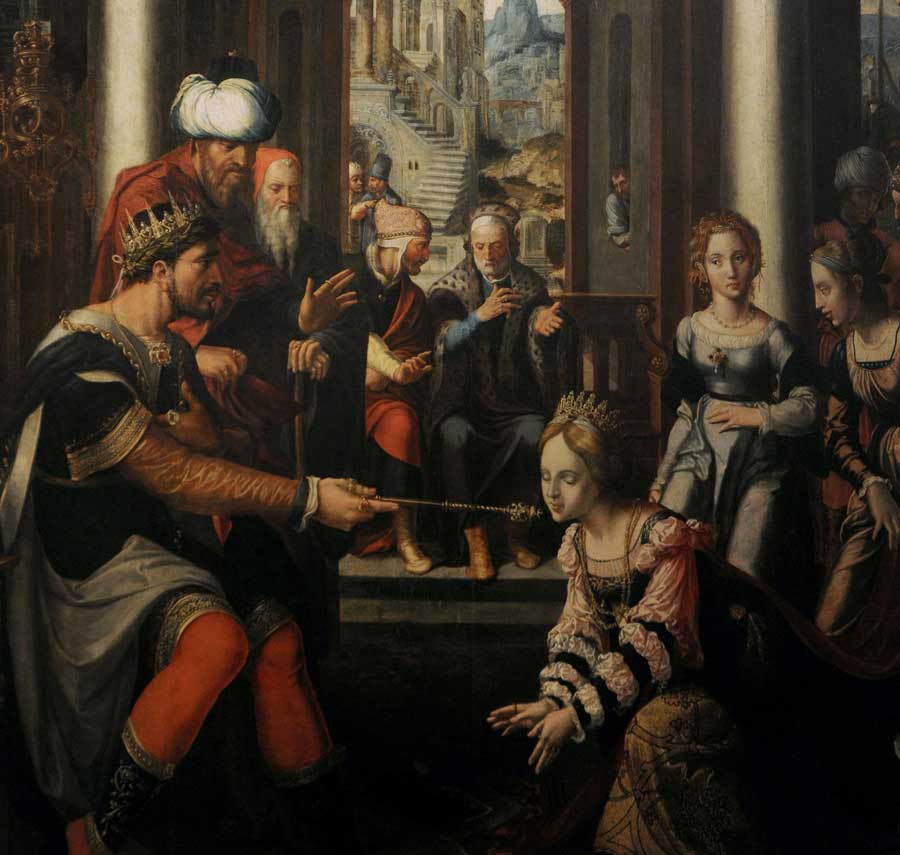
At the climactic moment of the book named after her, Queen Esther approaches the Persian King Ahasuerus (the mighty Xerxes I), informs him of a deadly edict against the Jews, and pleads:
If I have found favor in your sight, O king, and if it please the king, let my life be granted me for my wish, and my people for my request. For we have been sold, I and my people, to be destroyed, to be killed, and to be annihilated. If we had been sold merely as slaves, men and women, I would have been silent, for our affliction is not to be compared with the loss to the king. (Est. 7:3–4; emphasis added)
The King is taken aback: "Who is he, and where is he, who has dared to do this?" Esther's answer is, "This wicked Haman!" Haman, your prime minister! Esther's exposure of Haman leads to his being hoisted on his own gibbet.
But a conundrum remains. Why did the king not know about this deadly edict, and why did Esther argue that her people would not have objected to being sold into slavery? To answer that, we need to go back to the issuing of the decree.
Hoodwinked with a Homonym
Haman the Agagite, it seems, was a descendent of Israel's inveterate enemy the Amalekites, who had attacked Moses and the people of Israel without cause, with dire consequences to themselves (Ex. 17:8–14; cf. the fate of King Agag in 1 Sam. 15). Hence, Haman's instinctive hatred of the Jew Mordecai, heightened by the latter's refusal to bow to him (Est. 3:1–5), morphs into a genocidal plot against the whole Jewish people. Since the Persians did not share Haman's hatred, he ensnares the king by means of a matter of imperial pride: the ironclad law of the Medes and the Persians (cf. Dan. 6:8).
Then Haman said to King Ahasuerus, "There is a certain people scattered abroad and dispersed among the peoples in all the provinces of your kingdom. Their statutes are different from those of every other people, and they do not keep the king's statutes, so that it is not to the king's profit to tolerate them. If it please the king, let it be decreed that they be destroyed, and I will pay 10,000 talents of silver into the hands of those who have charge of the king's business, that they may put it into the king's treasuries." (Est. 3:8–9)
Haman insinuates that Jews, in following their own "statutes," necessarily disobey the royal statutes. Haman uses the Persian word dat for particular "statutes," whereas the Hebrew Torah includes a wider sense of moral instruction, divinely revealed. Jews in exile, like Daniel, were more than willing to observe imperial law so long as it did not violate the first principle of Torah, honoring God alone. Mordecai's refusal to bow to Haman, a conscientious protest against the king's appointing a diabolical Jew-hater as his plenipotentiary, is an extension of this principle.
Stephen Noll is Professor Emeritus of Biblical Studies at Trinity School for Ministry in Ambridge, Pennsylvania, and former Vice Chancellor of Uganda Christian University. He wrote the commentary on the Book of Esther in the Evangelical Commentary on the Bible (Baker, 1989).
A Journal of Mere Christianity—Delivered to Your Door
- Essays on theology, culture, and the Church
- Contributors from across the Christian traditions

Six print issues (one year) of Touchstone, plus full online access and PDF downloads for only $39.95.

Get a one-year full-access subscription to the Touchstone online archives for only $19.95.
bulk subscriptions
Order Touchstone subscriptions in bulk and save $10 per sub! Each subscription includes 6 issues of Touchstone plus full online access to touchstonemag.com—including archives, videos, and pdf downloads of recent issues for only $29.95 each! Great for churches or study groups.
Transactions will be processed on a secure server.
more on bible from the online archives
32.2—March/April 2019
on Preserving Physical & Spiritual Nourishment by Nathanael Devlin
31.4—July/August 2018
on the Brevity & Theology of Her Recorded Words by Judith Anderson
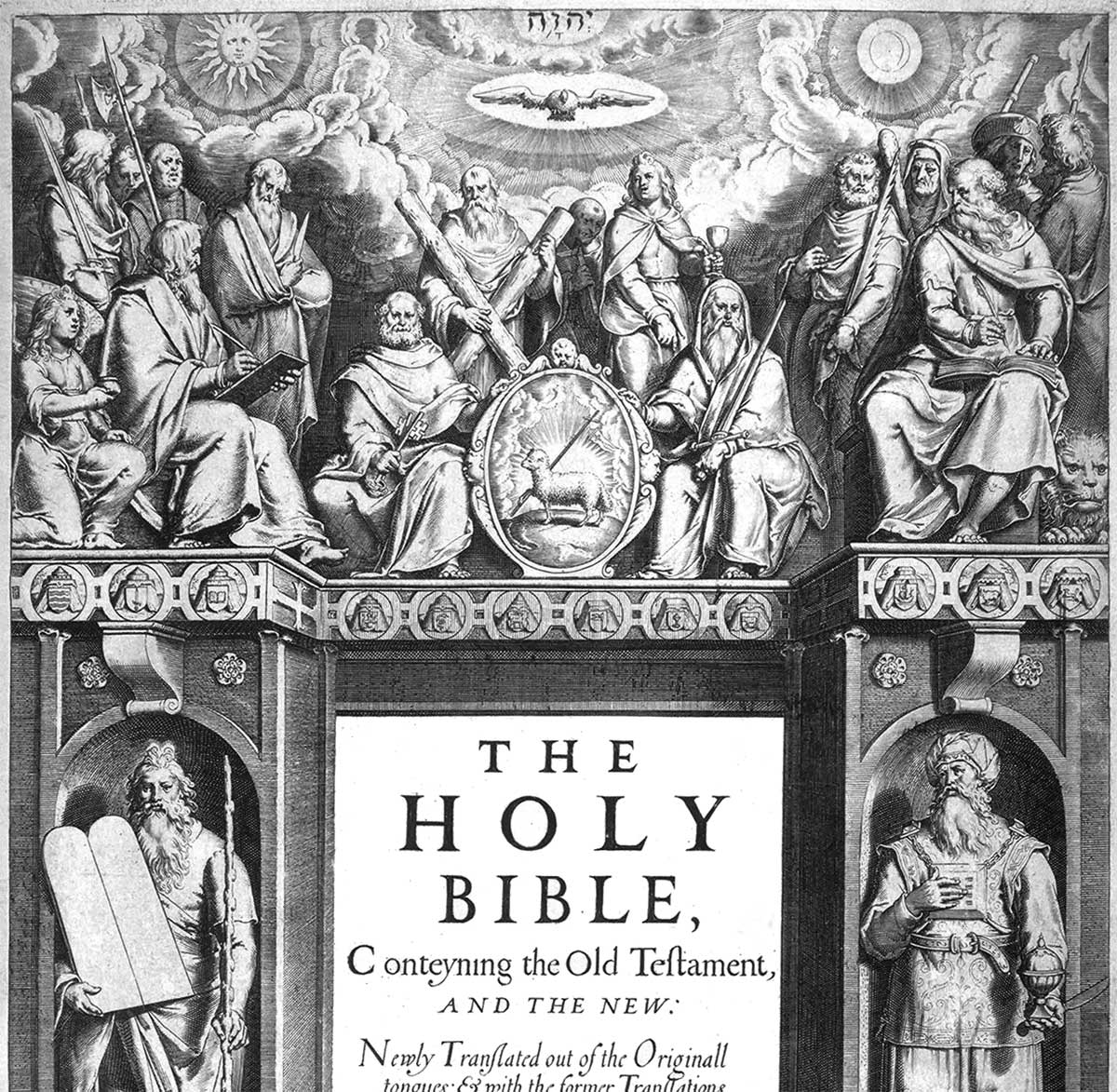
24.3—May/June 2011
The Making & Endurance of the King James Bible, 1611-2011 by Barton Swaim
more from the online archives
19.8—October 2006
on the Good Father’s Quiet Desperation by Russell D. Moore

32.2—March/April 2019
Flight from the Absolute: Cynical Observations on the Postmodern West, Volume II by Paul Gosselin by Louis Markos

calling all readers
Please Donate
"There are magazines worth reading but few worth saving . . . Touchstone is just such a magazine."
—Alice von Hildebrand
"Here we do not concede one square millimeter of territory to falsehood, folly, contemporary sentimentality, or fashion. We speak the truth, and let God be our judge. . . . Touchstone is the one committedly Christian conservative journal."
—Anthony Esolen, Touchstone senior editor
