


View
Tolerant Conquerors
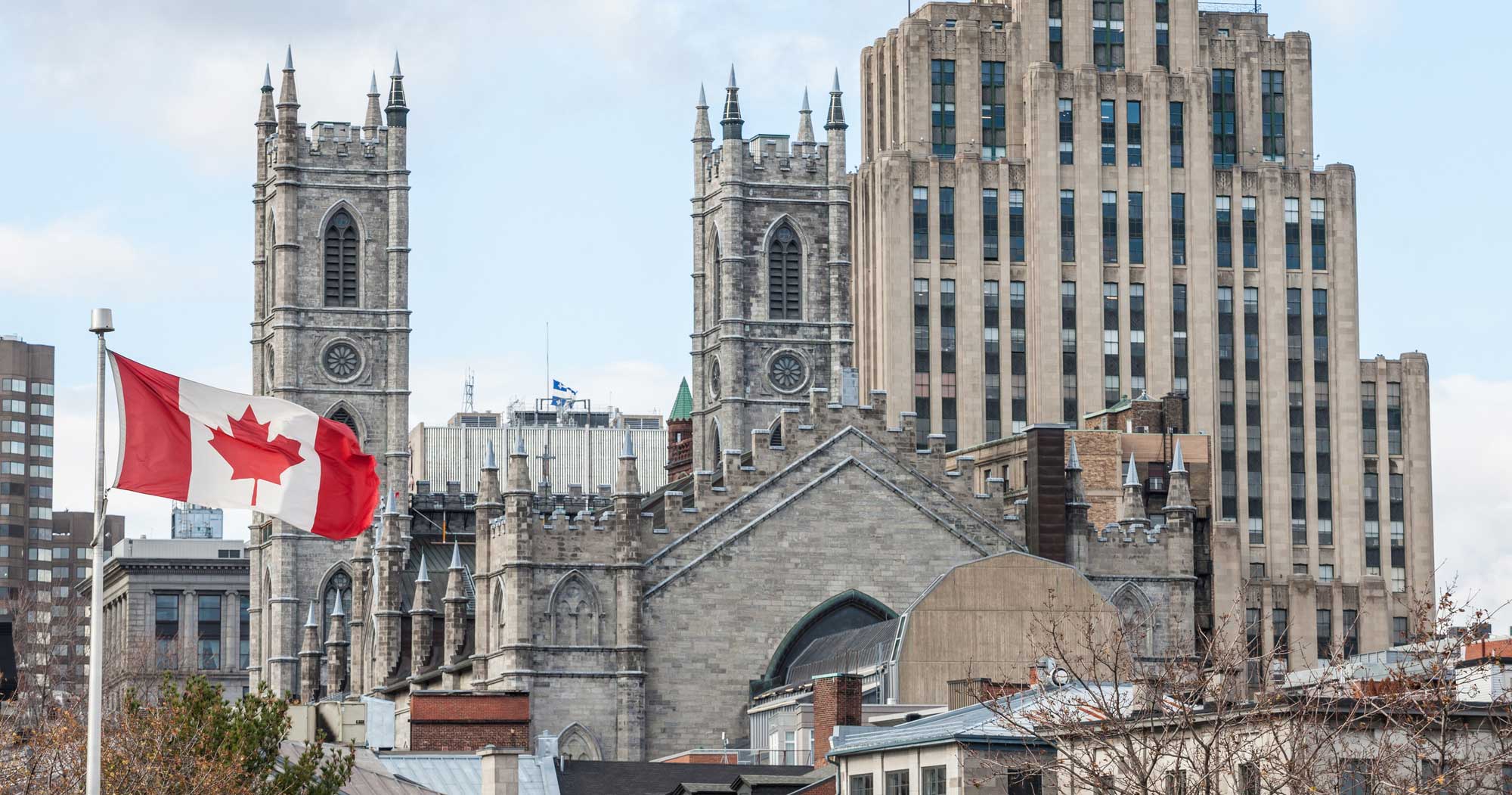
A handful of Protestant aristocrats in the eighteenth century launched the Anglosphere's slow waning in anti-Catholic zealotry. The key breakthrough came in Canada, before the birth of the United States.
Having helped to conquer a French colony, Quebec's first British governor, James Murray (1760–1768), had a golden opportunity to strangle its Roman Catholic institutions. Many Britons and Americans wanted just that. The British Empire had long oppressed Catholics, whose status actually deteriorated during the first half of that century.
Even Pennsylvania and Rhode Island, at first islands of tolerance, whittled away rights for Catholics after the so-called "glorious revolution" in 1688. Boston celebrated a specifically anti-Catholic holiday, which included the burning of papal effigies. Christians loyal to the pope suffered in England only a bit less than in London-ruled Ireland. They were forbidden to participate in Catholic worship services or even to buy real estate. They were required to pay higher taxes. For Ireland's Catholics it became harder to serve in a jury, work as a lawyer, bear arms, or vote in parliamentary elections.
The French Canadians had good reason to fear their new British rulers. During the 1750s the redcoats had conducted an anti-French ethnic cleansing: the expulsion of thousands of Catholic Acadians from Nova Scotia. (Some became Louisiana's Cajuns.) Earlier, a Catholic bishop of Quebec had spent five years under house arrest in England, after being captured by the Royal Navy.
With unfortunate timing, a later bishop in Quebec happened to die in 1760, the last year of France's rule in North America. His flock had to wonder: would they even have a successor? None of the British colonies, from Nova Scotia to Georgia, had even an Anglican bishop. London could veto any new Roman Catholic bishop in newly British-ruled Quebec. Thus it could block ordinations for young clerics, gradually obliterating parishes under aging priests.
Hope for the Catholics
There was one hopeful development, unknown to the French Canadians: in 1759 key officers in the British army secretly expressed disgust with their own commander's atrocities against the Canadians. Major General James Wolfe had ordered the destruction of hundreds of farms: crops, livestock, barns, and houses. Brigadier General James Murray (Quebec's future governor) and at least one other brigadier then prepared a formal accusation against Wolfe, to be heard after the war. Their potential lawsuit became moot after Wolfe died in battle when the British were seizing the city of Quebec.
Murray became the city's martial governor and immediately ordered the end of all ransacking by his redcoats. He also required them to avoid explicit anti-Catholic insults against Quebec's frequent religious processions. He began official subsidies for the nuns who ran the hospitals and for parish priests whose church buildings had been demolished in the war. He even gave a stipend to the vicar general of Quebec (Mgr. Jean-Olivier Briand), its ecclesiastical head in the absence of a bishop.
Was Murray a secret Roman Catholic? Definitely not. His aristocratic family had long been Anglican; a brother was a cleric. At first, the new governor quietly expressed mistrust of French Canadians' oaths, since "the Conscience can be so easily quieted by the absolution of a Priest"; his words were typical for an eighteenth-century Protestant. Nevertheless, after the hostilities, Murray was eager to see England's former foes in America become loyal to their new sovereign. In a 1762 report to London he emphasized that since Quebec's peasants "are very ignorant and extremely tenacious of their religion, nothing can contribute so much to make them staunch subjects to his Majesty as the new Government giving them every reason to imagine no alteration is to be attempted in that point."
Two Tolerant Governors
Unfortunately, some leaders in London tried to make Anglicanism the sole state church in Quebec. As one twentieth-century historian found, "England intended to anglicize her new subjects in language and religion, not by open violence, indeed, but at least by disguised persecution." London's formal instructions to Murray in 1763 stated that "the Church of England may be established both in Principles and Practice, and . . . the said inhabitants may by degrees be induced to embrace the Protestant religion, and their Children be brought up in the Principles of it." He was to forbid any authority of the papacy over Canadian clergy. He was advised that all Roman Catholic missionary activities with the Indians should be "instantly" replaced by Anglican work.
Lawrence A. Uzzell is a retired journalist, having published in periodicals ranging from the Moscow Times to the Catholic Historical Journal. He headed International Religious Freedom Watch, and has specialized in religious freedom in Russia since the 1980s. He and his wife Lynn are members of St. Nicholas Ukrainian Orthodox Church in Charlottesville, Virginia.
A Journal of Mere Christianity—Delivered to Your Door
- Essays on theology, culture, and the Church
- Contributors from across the Christian traditions
Six print issues (one year) of Touchstone, plus full online access and PDF downloads for only $39.95.
Get a one-year full-access subscription to the Touchstone online archives for only $19.95.
bulk subscriptions
Order Touchstone subscriptions in bulk and save $10 per sub! Each subscription includes 6 issues of Touchstone plus full online access to touchstonemag.com—including archives, videos, and pdf downloads of recent issues for only $29.95 each! Great for churches or study groups.
Transactions will be processed on a secure server.
more on religious liberty from the online archives
24.6—Nov/Dec 2011
Liberty, Conscience & Autonomy
How the Culture War of the Roaring Twenties Set the Stage for Today’s Catholic & Evangelical Alliance by Barry Hankins
25.3—May/Jun 2012
Calls for Freedom, Democracy & Secularism End Up with None of the Above by Hunter Baker
27.3—May/June 2014
Religious Freedom & Why It Matters
Working in the Spirit of John Leland by Robert P. George
more from the online archives

29.5—Sept/Oct 2016
on Past & Present Atheism & the Invention of Happiness by Jordan Bissell
32.4—July/August 2019
Does Biblical Language for Man Matter? by Stephen F. Noll
37.5—Sept/Oct 2024
A Battle Plan for Peace While Growing Old by Anthony Esolen
calling all readers
Please Donate
"There are magazines worth reading but few worth saving . . . Touchstone is just such a magazine."
—Alice von Hildebrand
"Here we do not concede one square millimeter of territory to falsehood, folly, contemporary sentimentality, or fashion. We speak the truth, and let God be our judge. . . . Touchstone is the one committedly Christian conservative journal."
—Anthony Esolen, Touchstone senior editor