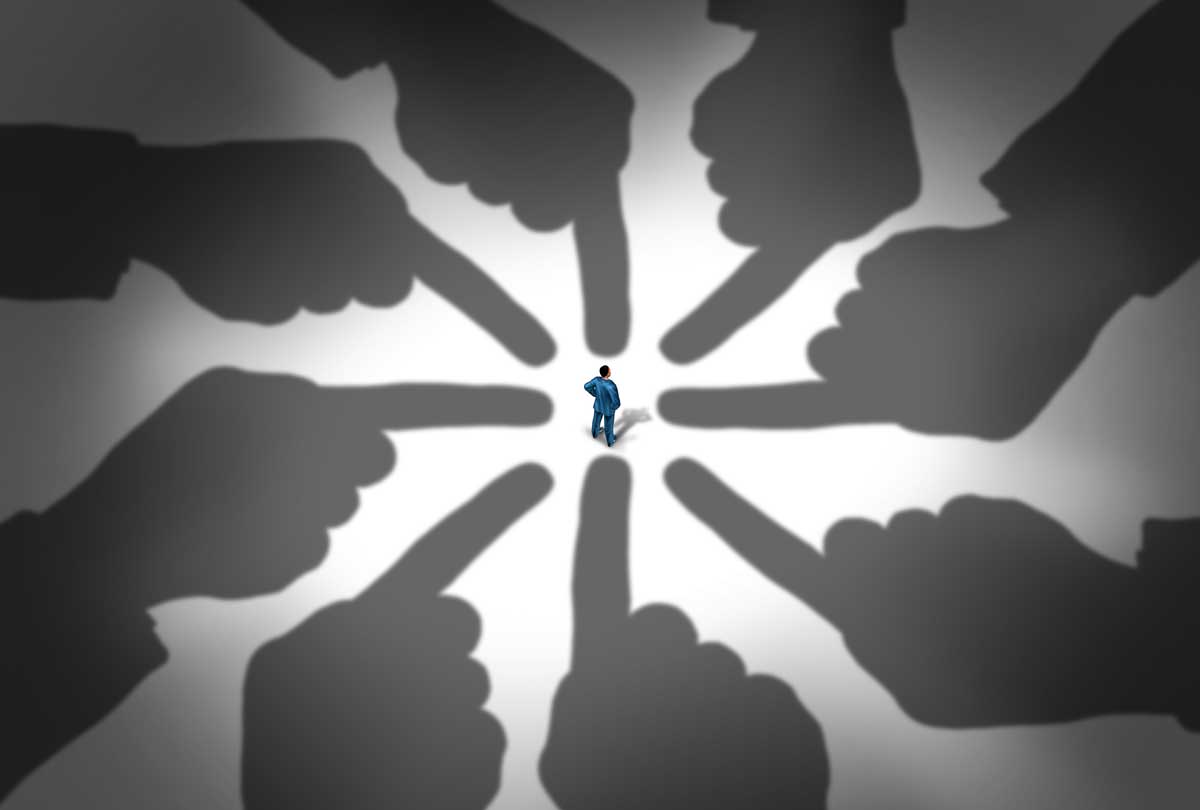
Sin & Psyche by S. M. Hutchens

Mortal Remains

Sin & Psyche

by S. M. Hutchens

In the February 6, 2018 issue of Public Discourse, the website of the Witherspoon Institute, Jose A. Bufill, M.D., wrote:

. . . increasing evidence suggests that a small fraction of human beings are, in fact, morally incapacitated. From an early age, nothing restrains them from engaging in deceit, manipulation, and violence.

These conscience-free individuals first came to the attention of psychologists studying hardened criminals, but it's become increasingly apparent that many—perhaps most—remain in society. And they extract a toll of conflict and suffering disproportionate to their numbers. Only now are psychologists beginning to realize who they are and how they operate.

One might call the condition described by Dr. Bufill as a process of daimonosis, the movement of the will into irreversible enmity with God, begun in this life just as theosis is in the lives of the blessed. Lack of empathy is a distinctly—perhaps the definitive—demonic trait, for empathy is the capacity to identify with another unselfishly, a necessary and critical aspect of charity. In The Screwtape Letters Lewis presents disinterested generosity as one of the great unsolved intellectual problems of the demonic world: What do these people expect to get out of each other in what goes by the name of "love"?

Sane & Evil

It is an ironic defect in sciences of the mind that they are only now beginning, in limited quarters and with great resistance within these professions, a purblind and stumbling approach to the moral incapacitation from which arises chronic engagement in deceit, manipulation, and violence. M. Scott Peck, M.D.'s People of the Lie was very helpful to me at the stage of life when I read it, and one of Peck's best observations was that there are people who are perfectly sane by his profession's diagnostic categories who are evil; for this assessment, he observes in Glimpses of the Devil, one's professional credentials are likely to become forfeit. Peck's (initially non-religious) clinical experience brought him to believe that the failure to make this assessment is due to the profession's self-imposed blindness regarding the origin and development of certain mental conditions, and leads to its inability to respond to them appropriately.

This is why I thought Jay Adams's books on "nouthetic" Christian counseling were good, despite the heavy criticism they received from both secular and religious sources—Adams did not make this mistake. (Neither did Paul Tournier, nor does any worthy priest or pastor.) The acknowledgment of sin transforms the counseling paradigm and makes it something very different from what is being taught in the counseling departments of most seminaries, which is likely to be a lightly baptized but fundamentally secular approach, in which sin is not an analytic classification. The end of this was demonstrated at one Evangelical school "taken over" by conservatives, where the whole pastoral counseling department was summarily fired—for sin, according to Christian teaching, is at the base of whatever may go wrong with the human psyche.

When I was in seminary, a group of us students invited one of the most popular members of that department to have dinner with us and afterwards join us for a discussion of certain topics psychological. He was candid, and we were rather shocked at how little informed his views were by Christianity. One memorable statement was that the great turning point in his own life was when he began taking lithium, which had been his "salvation." (In case the reader might wonder: it was a gathering of Evangelicals, and the man had not been drinking.) Now that gave us something to chew on. I have wondered many times what an appropriate thanksgiving hymn for this benefit would sound like.  

S. M. Hutchens is a senior editor and longtime writer for Touchstone.

A Journal of Mere Christianity—Delivered to Your Door

  • Essays on theology, culture, and the Church
  • Contributors from across the Christian traditions

Subscribe (Print + Online)

Six print issues (one year) of Touchstone, plus full online access and PDF downloads for only $39.95.

Subscribe (Online Only)

Get a one-year full-access subscription to the Touchstone online archives for only $19.95.


bulk subscriptions

Order Touchstone subscriptions in bulk and save $10 per sub! Each subscription includes 6 issues of Touchstone plus full online access to touchstonemag.com—including archives, videos, and pdf downloads of recent issues for only $29.95 each! Great for churches or study groups.

Transactions will be processed on a secure server.


more from the online archives
18.4—May 2005

Of Weeds & Fairy Tales

The Idylls, Idols & Devils That Corrupt the Moral Imagination by Vigen Guroian

28.2—March/April 2015

As Goes Sweden

Neo-Pagan Family Policies Doom Any Recovery by Allan C. Carlson

32.1—January/February 2019

Surprised by Delight

Divine Love & the Love of Man & Woman Surpass Mere Consent by Anthony Esolen

calling all readers

Please Donate

"There are magazines worth reading but few worth saving . . . Touchstone is just such a magazine."
—Alice von Hildebrand

"Here we do not concede one square millimeter of territory to falsehood, folly, contemporary sentimentality, or fashion. We speak the truth, and let God be our judge. . . . Touchstone is the one committedly Christian conservative journal."
—Anthony Esolen, Touchstone senior editor

Support Touchstone

00