





View
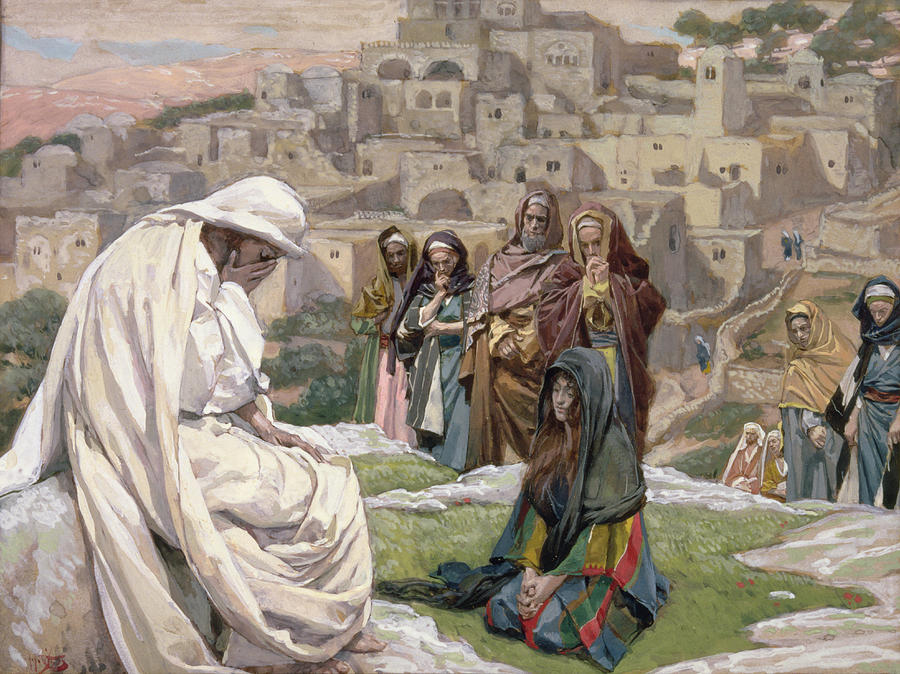
The Tears of Jesus
Kevin Raedy on Augustine & Refusing to Grieve As Others Do
As Christians, how should we respond to the death of someone we love? Should we grieve openly or privately? A little or a lot? In defending the truth of Christ's Resurrection and articulating a theology of bodily resurrection, St. Paul exclaims to the church at Corinth that death has been "swallowed up in victory" (1 Cor. 15:54). To the church at Thessalonica, where some were worried about the fate of those who died before the return of Christ, Paul explains that the righteous dead will be raised at Jesus' second coming and gathered up into heaven, so that those still alive should not "grieve as others do who have no hope" (1 Thes. 4:13).
Paul's words suggest that our grieving should be attenuated, although in what way or to what extent is unclear. St. Augustine, ever immersed in Scripture, seems to have found little maneuvering room in Paul's words, as we learn in his recounting of the death of his mother, Monica, in Book IX of The Confessions. When Augustine's son Adeodatus erupted into tears at Monica's death, Augustine swiftly subdued him into emotional restraint, and he suppressed his own weeping by sheer force of will.
THIS ARTICLE ONLY AVAILABLE TO SUBSCRIBERS.
FOR QUICK ACCESS:
Kevin Raedy holds MTS and ThM degrees and writes from Hillsborough, North Carolina, where he lives with his wife and two children. He has published in the journal Nova et Vetera and at Aleteia.org.
A Journal of Mere Christianity—Delivered to Your Door
- Essays on theology, culture, and the Church
- Contributors from across the Christian traditions

Six print issues (one year) of Touchstone, plus full online access and PDF downloads for only $39.95.

Get a one-year full-access subscription to the Touchstone online archives for only $19.95.
bulk subscriptions
Order Touchstone subscriptions in bulk and save $10 per sub! Each subscription includes 6 issues of Touchstone plus full online access to touchstonemag.com—including archives, videos, and pdf downloads of recent issues for only $29.95 each! Great for churches or study groups.
Transactions will be processed on a secure server.
more on bible from the online archives

31.4—July/August 2018
on the Brevity & Theology of Her Recorded Words by Judith Anderson
24.3—May/June 2011
The Making & Endurance of the King James Bible, 1611-2011 by Barton Swaim
more from the online archives

29.4—July/August 2016
Russell Kirk: American Conservative by Bradley J. Birzer by Hunter Baker

28.3—May/June 2015
Whittaker Chambers's Lonely War Against Godless Collectivism by Hunter Baker

33.3—May/June 2020
Maternal Body: A Theology of Incarnation from the Christian East by Carrie Frederick Frost
Fertile Ground: A Pilgrimage Through Pregnancy by Laura S. Jansson by Agnes R. Howard
calling all readers
Please Donate
"There are magazines worth reading but few worth saving . . . Touchstone is just such a magazine."
—Alice von Hildebrand
"Here we do not concede one square millimeter of territory to falsehood, folly, contemporary sentimentality, or fashion. We speak the truth, and let God be our judge. . . . Touchstone is the one committedly Christian conservative journal."
—Anthony Esolen, Touchstone senior editor
