


A Thousand Words
Johannes Vermeer's A Woman Holding a Balance
by Mary Elizabeth Podles
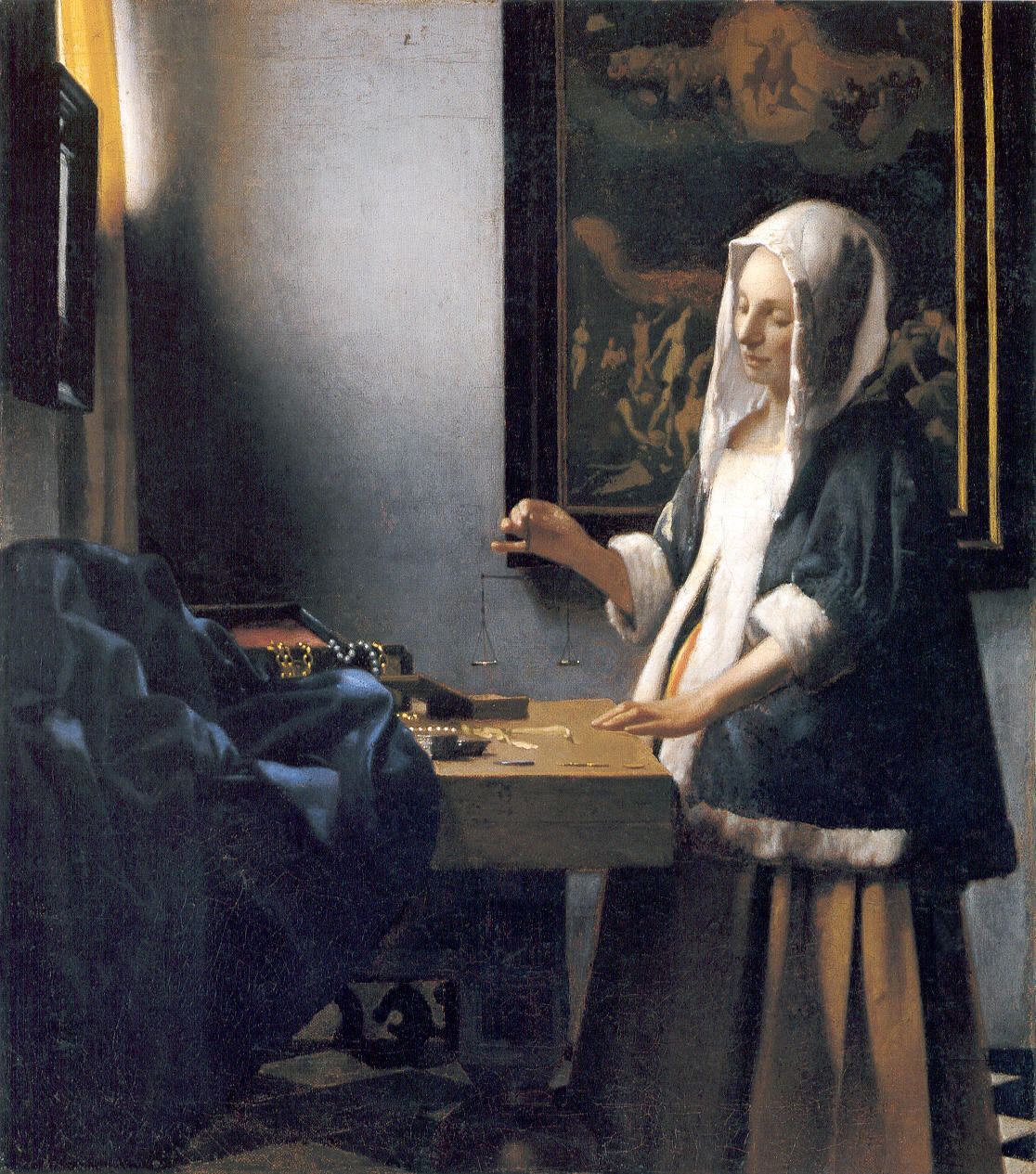
Vermeer's small canvas (c. 1662–1664) depicts a woman in informal dress, morning jacket, and untied linen cap, standing at a table in the corner of a room. On the wall in front of her are a curtained window and a mirror, and on the wall behind her hangs a painting. She rests one hand on a table; the tabletop supports a rumpled cover and a jewelry box, out of which spill strings of pearls and gold. In her right hand she holds a pair of scales.
All the compositional elements of the picture direct our attention to that hand: it is at the geometrical center of the picture; the perspective lines perpendicular to the picture plane (the top of the mirror, the table edge) converge at her hand, while the curved lines of the table cover and of her left arm make a semicircle around it. Light falling from the window picks out the placement of her hand, the little finger upraised as she balances the scale. The corner of the painting's frame sets off that hand, too; notice that the painter has raised the frame slightly (compared to the right-hand side) to leave a plain background behind the scales.
The painting on the rear wall is a Last Judgment, based on a specific one by Jacob de Backer which Vermeer himself had owned. In addition to painting, Vermeer also acted as an art dealer, buying and selling the paintings of others. In De Backer's picture, Christ sits in majesty with his arms outstretched above the souls rising to their reward. That, combined with the scales, suggests that there is something here beyond a simple domestic scene. Various symbolic interpretations have been suggested. It is not easy to pin down Vermeer's intended meaning and the way such a painting would have been read in its own time. The best we can do is speculate.
Allegorical Possibilities
Originally, the painting was called A Woman Weighing Gold or A Woman Weighing Pearls, and was thought to be a Vanitas, an allegory of the vanity and transience of earthly goods, in which the woman represented Worldly Vanity. This was a common theme in Dutch painting at the time, but in such Vanitas paintings, the allegorical woman was generally more fancily dressed, with an elaborate, beribboned coiffure and a considerable freight of jewelry. Her mirror was more prominently placed; she often glanced boldly outward, and clearly chose the glittering goods of this world over those of the spirit. Often, over her head hung a map of the world, representing, naturally enough, worldly things.
If this is a Vanitas, it is a subtle one: this woman's serene countenance and gentle grace, as well as the scene of judgment, suggest that she is weighing the choice between the vanity of the world and the rewards of the eternal. Recent examinations under the microscope revealed that the pans of the balance are in fact empty; she is not weighing treasure but steadying the scales, balancing them for use.
Even if she is not Lady World, the woman might be a veiled personification in contemporary dress, an allegorical figure such as Justice. Vermeer did paint one such figure, an Allegory of the Faith (Figure 1), in which a young woman in fancy dress stands for the Church and is surrounded by a wealth of symbolic objects. It has been suggested that other of Vermeer's apparently secular scenes, such as The Woman with a Water Jug (Figure 2), might have allegorical overtones: the figure of Grammatica is traditionally a woman with a jug watering a plant. So to read this as a figure of Justice, minus the sword and the blindfold, is not implausible. Vermeer has pared away the symbolic apparatus to a single object, the balance in which souls are weighed, which represents the eventual triumph of divine justice.
Still others have suggested that this might be an actual saint or holy person shown in modern dress. The theme of the Penitent Magdalene was popular at the time, but was more generally shown as a dramatic moment of personal conversion, in which the Magdalene rejects her pearls and finery and turns in tears to the life of virtue. Further afield, it has been hinted that this is the Virgin Mary, symbolically weighing the souls of the yet unborn, for whom she will intercede in the end times. Or, she may be contemplating the shift in the balance of human history at the Incarnation. Vermeer was a Catholic in largely Protestant Holland, so he would not have found a Marian subject out of order; still, the subject is rather obscure. It does, however, tie in with the Counter-Reformation emphasis on Mary as the model of domestic virtue, a concept dear to the seventeenth-century Dutch heart.
A Contemplative Moment
Or she might simply be a woman contemplating the issues of her own day. In his Spiritual Exercises, St. Ignatius urges the faithful to begin each period of prayer with an examination of conscience, to weigh their sins as if each day were their last. This emphasis on self-examination gives the mirror a possible new interpretation, quite opposite to the one it would assume in a Vanitas painting. By way of such spiritual introspection, says St. Ignatius, we can weigh our worldly choices and choose the path of balance, moderation, and virtue that will bring us to the arms of a welcoming Savior on the last day.
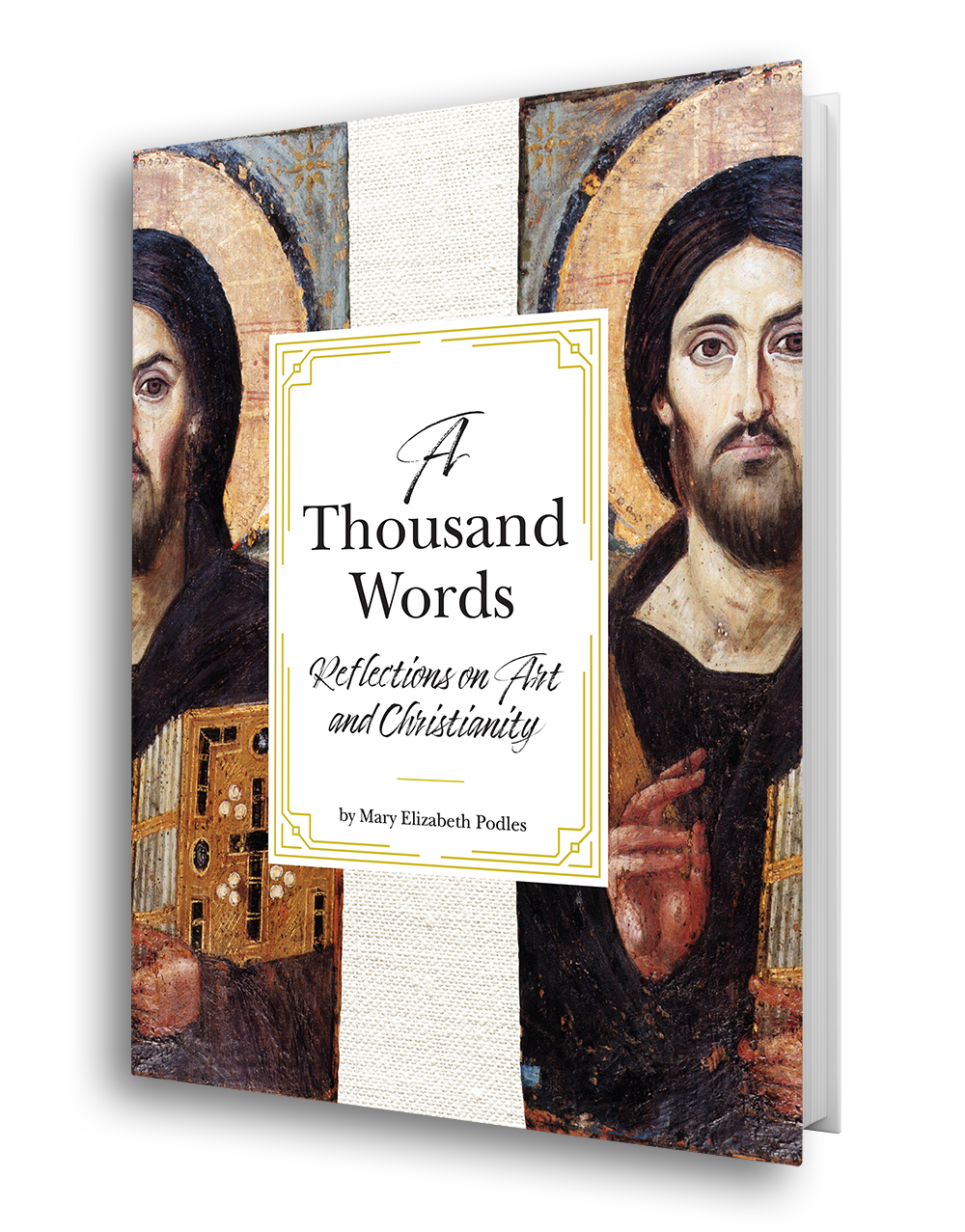
Mary Elizabeth Podles is the retired curator of Renaissance and Baroque art at the Walters Art Museum in Baltimore, Maryland. She is the author of A Thousand Words: Reflections on Art and Christianity (St. James Press, 2023). She and her husband Leon, a Touchstone senior editor, have six children and live in Baltimore, Maryland. She is a contributing editor for Touchstone.
A Journal of Mere Christianity—Delivered to Your Door
- Essays on theology, culture, and the Church
- Contributors from across the Christian traditions
Six print issues (one year) of Touchstone, plus full online access and PDF downloads for only $39.95.
Get a one-year full-access subscription to the Touchstone online archives for only $19.95.
bulk subscriptions
Order Touchstone subscriptions in bulk and save $10 per sub! Each subscription includes 6 issues of Touchstone plus full online access to touchstonemag.com—including archives, videos, and pdf downloads of recent issues for only $29.95 each! Great for churches or study groups.
Transactions will be processed on a secure server.
more on art from the online archives
33.2—March/April 2020
An Architectural Sign of Mere Christianity by Michael Ward
32.4—July/August 2019
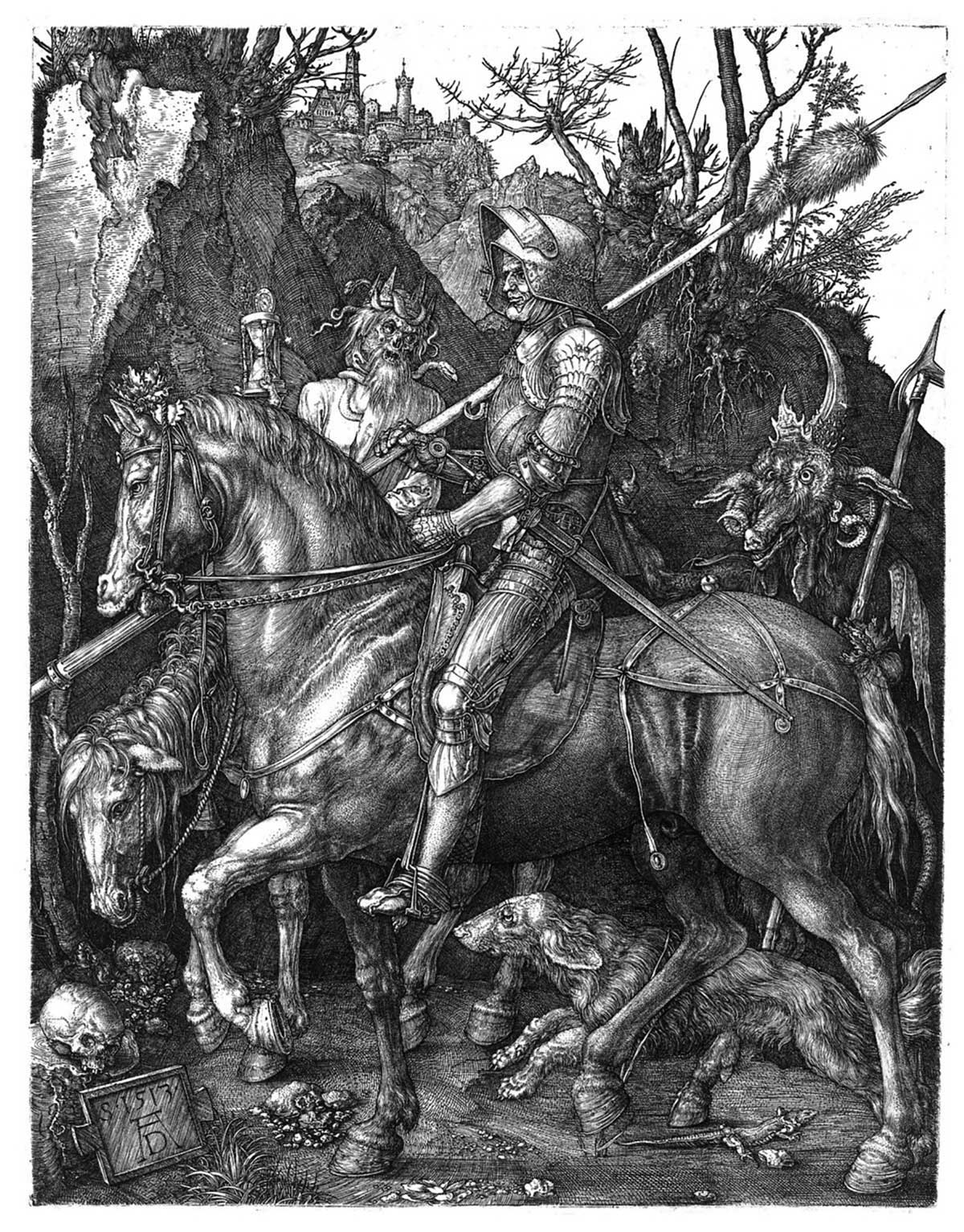
on Single-Mindedness in Durer's Ritter, Tod, und Teufel by Anthony Costello
more from the online archives

31.2—March/April 2018
The Transmission of Christianity Is Not a New Task by Nathanael Devlin
32.3—May/June 2019
on the Implications of Changing the Pater Noster by John M. McCarthy
37.5—Sept/Oct 2024
An Abandoned Ruling Principle & How to Get It Back by Adam MacLeod
calling all readers
Please Donate
"There are magazines worth reading but few worth saving . . . Touchstone is just such a magazine."
—Alice von Hildebrand
"Here we do not concede one square millimeter of territory to falsehood, folly, contemporary sentimentality, or fashion. We speak the truth, and let God be our judge. . . . Touchstone is the one committedly Christian conservative journal."
—Anthony Esolen, Touchstone senior editor