




As It Is Written . . .
Pharaoh's Darkness
by Patrick Henry Reardon
As the Book of Exodus begins, the Israelites in Egypt are living an idyllic existence: "But the children of Israel were fruitful (paru) and increased abundantly, multiplied (vayirbu), and grew exceedingly mighty; and the land was filled (vatimmle' ha'arets) with them." (1:7).
This description makes it clear that the Israelites were following the initial Law God gave the human race: "Be fruitful and multiply (p-ru vurbu), fill the earth (v-mil'u 'eth ha'arets) and subdue it" (Gen. 1:28). In this respect the initial condition of the Israelites in Egypt resembled the state of Adam prior to the Fall: "Then the Lord God took the man and put him in the garden of Eden to cultivate and keep it" (2:15).
This resemblance of the Israelites to our first parents is more than a literary parallel. The narrative structure of Exodus, based on the gift of the Torah, continues the account of God's endeavor to restore humanity to its original state, in which Adam and Eve, prior to the Fall, enjoyed great prosperity, including intimacy and friendship with the Creator. As though to foreshadow that blessing, the Israelites in Egypt are described as living in the grace of God's first command, the injunction to prosper, multiply, and fill the earth.
Israel's Edenic life in Egypt, however, comes to an end with the accession of a new pharaoh, "who did not know Joseph." This new pharaoh is described as an individual of great cunning. "Come," he says, with respect to the children of Israel, "Let's act shrewdly with them." This again calls to mind the account of our first parents, whose Fall begins with the abrupt appearance of a shrewd and cruel enemy: "Now the serpent was more cunning than any beast of the field which the Lord God had made" (Gen. 3:1). This new pharaoh is the literary parallel to "that ancient serpent, called the Devil and Satan, who deceives the whole world" (Rev. 12:9). Thus, both Genesis and Exodus introduce very early a wily enemy who endeavors to oppress and destroy God's people.
These references to Genesis set the context for the account of the plagues of Egypt and the hardening of Pharaoh's heart. What the reader witnesses in the unfolding of those plagues is a step-by-step undoing of the created order. Thus, the Nile River, identified by Josephus (Antiquities 1.39) as the Gihon, one of the four rivers of Paradise, is turned into blood. First to die are the aquatic animals (fish and frogs) created on the fourth day. Subsequent plagues destroy the land's vegetation and livestock. The penultimate plague is a return to the primeval darkness, the nothingness before the creation of light. Last of all comes the death of the Egyptian first-born sons. The Eden of the opening chapter is deconstructed, plague by plague.
Vessel of Wrath
This systematic destruction is related to the hardening heart of Pharaoh, who boasts that he does not know the true God (Ex. 5:2). But how does he not know? The purpose of the plagues was revelatory: "The Egyptians shall know that I am the Lord, when I stretch out my hand on Egypt" (7:5); "I will send all my plagues on you and your servants and your people, so that you may know that there is no one like me in all the earth" (9:14). Even Pharaoh's sorcerers, stymied at the third plague, declare, "This is the finger of God" (8:19).
The whole point of this hardness of heart is that Pharaoh had to know. This is explained in the Epistle to the Romans, which speaks of God's wrath as "revealed from heaven against all ungodliness and unrighteousness of men, who suppress the truth in unrighteousness . . . so that they are without excuse, because, although they knew God, they did not glorify him as God, nor did they give thanks, but became futile in their thoughts, and their foolish hearts were darkened" (1:18–21).
Pharaoh had to know, but he stubbornly refused to know, and his resistance to God's self-revelation brings about the undoing of the created order. Egypt, portrayed as a paradise at the book's beginning, is now degraded to a land—an 'erets—of chaos, corruption, and confusion. The king's resistance to the light becomes the occasion for God to demonstrate what he thinks of those "who suppress the truth in unrighteousness." The Lord makes of Pharaoh what St. Paul calls a "vessel of wrath."
Such was this man, who obliged the Almighty to reveal his anger against idolatrous Egypt. "With this intent," God tells him, "I have raised you up, that I may show my power in you, and that my name may be declared in all the earth" (9:16). Paul quotes this very verse (Rom. 9:17) by way of demonstrating what he means by "vessels of wrath prepared for destruction" (9:22).
Patrick Henry Reardon is pastor emeritus of All Saints Antiochian Orthodox Church in Chicago, Illinois, and the author of numerous books, including, most recently, Out of Step with God: Orthodox Christian Reflections on the Book of Numbers (Ancient Faith Publishing, 2019).
A Journal of Mere Christianity—Delivered to Your Door
- Essays on theology, culture, and the Church
- Contributors from across the Christian traditions

Six print issues (one year) of Touchstone, plus full online access and PDF downloads for only $39.95.

Get a one-year full-access subscription to the Touchstone online archives for only $19.95.
bulk subscriptions
Order Touchstone subscriptions in bulk and save $10 per sub! Each subscription includes 6 issues of Touchstone plus full online access to touchstonemag.com—including archives, videos, and pdf downloads of recent issues for only $29.95 each! Great for churches or study groups.
Transactions will be processed on a secure server.
more from the online archives
24.3—May/June 2011
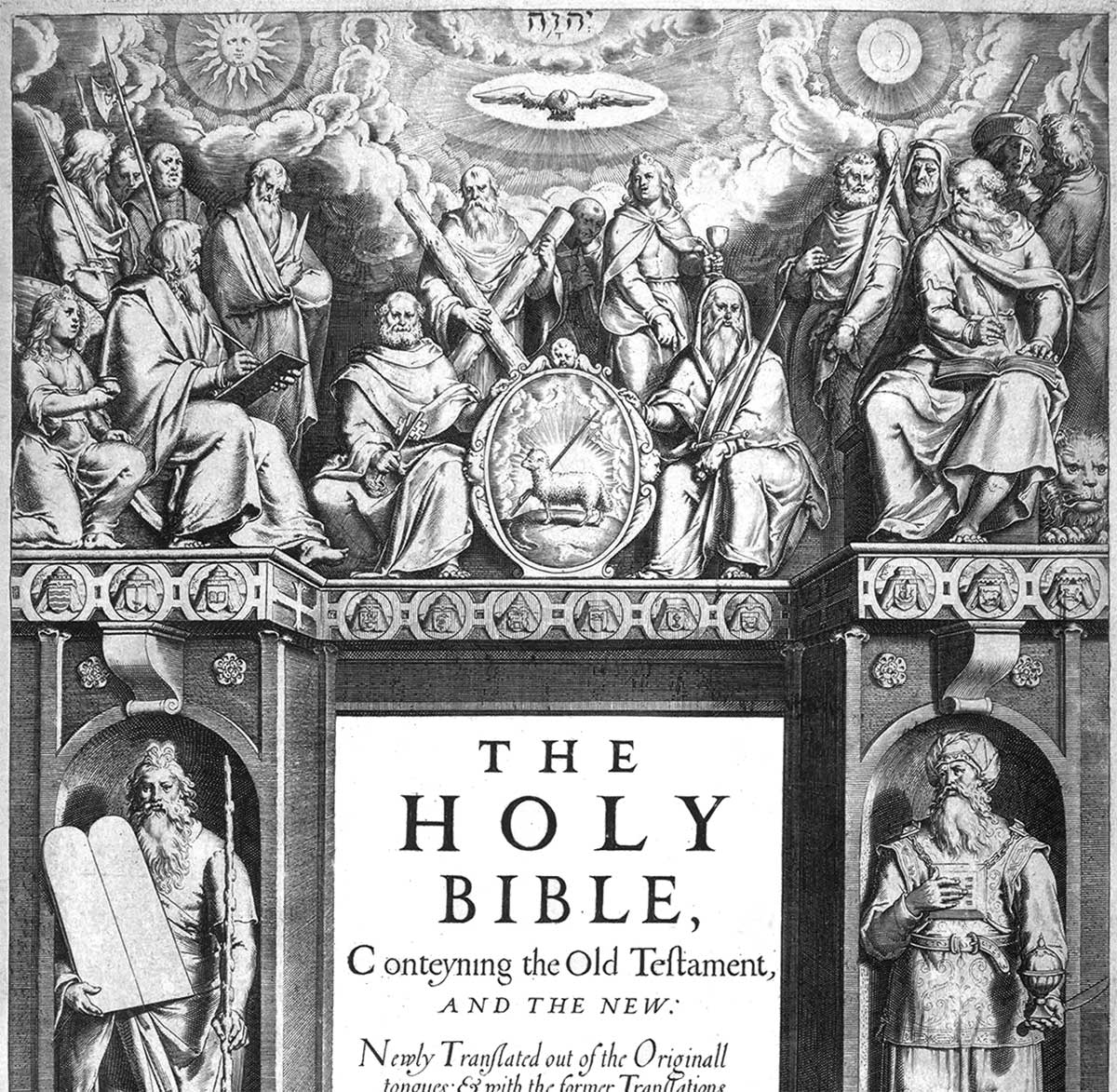
The Making & Endurance of the King James Bible, 1611-2011 by Barton Swaim

33.1—January/February 2020
on the Consequences of One Birth Before Roe v. Wade by Craig Kellogg Galer
calling all readers
Please Donate
"There are magazines worth reading but few worth saving . . . Touchstone is just such a magazine."
—Alice von Hildebrand
"Here we do not concede one square millimeter of territory to falsehood, folly, contemporary sentimentality, or fashion. We speak the truth, and let God be our judge. . . . Touchstone is the one committedly Christian conservative journal."
—Anthony Esolen, Touchstone senior editor
