





Feature
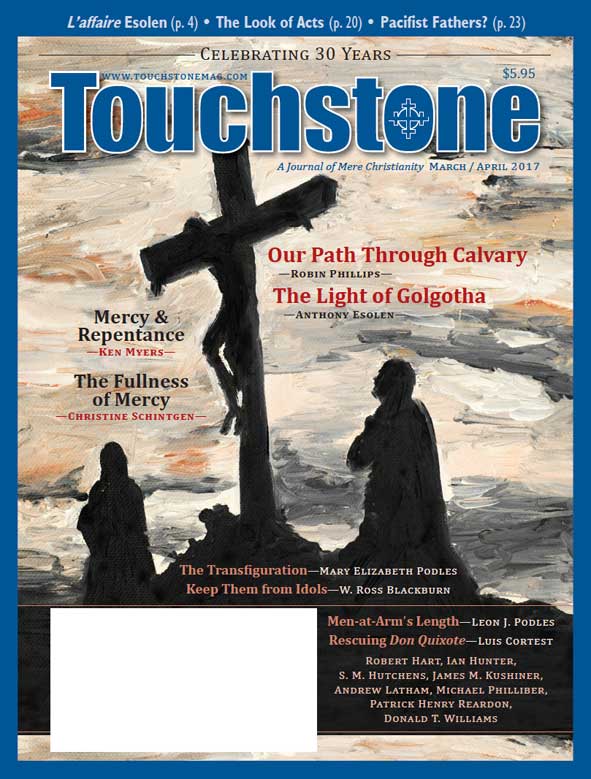
The Fullness of Mercy
Western Literature & the Illumination of a Divine Attribute
by Christine Schintgen
The treatment of the theme of mercy in Western Literature confirms what Shakespeare wrote in The Merchant of Venice—namely, that "it blesseth him that gives and him that takes." In other words, mercy benefits not just the one on whom it is bestowed, but also—just as much, if not more—the one who bestows it. Mercy is the decision, on the part of a person who has the power to exact retribution or just payment from another, not to demand this payment or retribution. Properly understood, mercy does not conflict with justice; rather, it constitutes a deeperform of justice, one that recognizes that although the other has sinned against me, I have sinned many times as well. The fact that God has forgiven me prompts me to understand that everything I have has not been earned but freely given to me by God; and so, in justice to God, I should try to give to others and to forgive them as freely as God has given to me.
In what follows I would like to consider some notable situations involving mercy in Western literature and observe the movement from a suspicion of the value of mercy to a recognition of its benefits. For we find that in the literature of the ancient world, mercy is not particularly prized, but in that of the Christian world, it is valued greatly, both for what it can give to others, and for what it does for oneself—namely, keep one in right relationship with God.
THIS ARTICLE ONLY AVAILABLE TO SUBSCRIBERS.
FOR QUICK ACCESS:
A Journal of Mere Christianity—Delivered to Your Door
- Essays on theology, culture, and the Church
- Contributors from across the Christian traditions

Six print issues (one year) of Touchstone, plus full online access and PDF downloads for only $39.95.

Get a one-year full-access subscription to the Touchstone online archives for only $19.95.
bulk subscriptions
Order Touchstone subscriptions in bulk and save $10 per sub! Each subscription includes 6 issues of Touchstone plus full online access to touchstonemag.com—including archives, videos, and pdf downloads of recent issues for only $29.95 each! Great for churches or study groups.
Transactions will be processed on a secure server.
more on literature from the online archives
32.2—March/April 2019
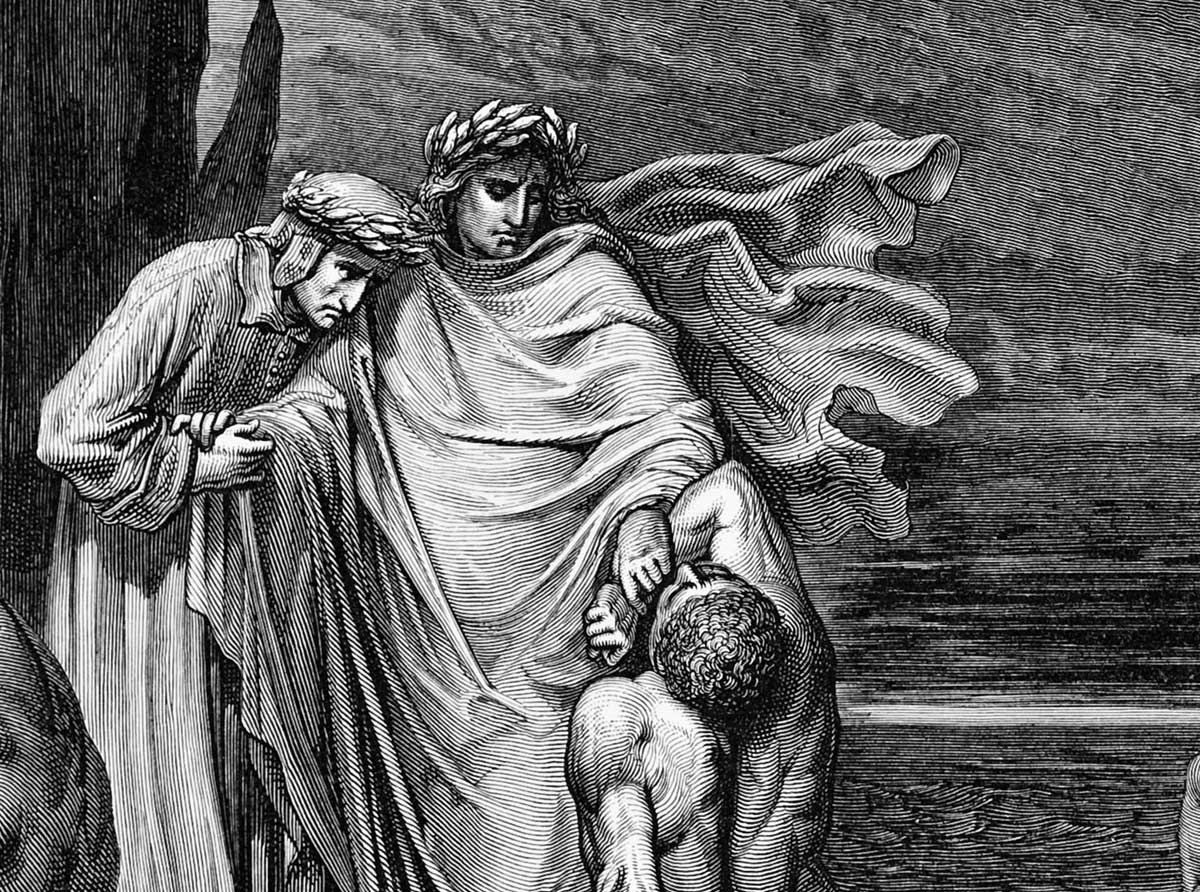
Misguided Mercy & Dante's Infernal Purgation by Joshua Hren

30.2—March/April 2017
on Reading Don Quixote in Its Original Christian Context by Luis Cortest

more from the online archives

30.3—May/June 2017
C. S. Lewis Assesses the Religion of Mohammed by Jacob Fareed Imam
35.2—Mar/Apr 2022
on Fatigued Christians Deciding to Engage the Culture by Keith Lowery

calling all readers
Please Donate
"There are magazines worth reading but few worth saving . . . Touchstone is just such a magazine."
—Alice von Hildebrand
"Here we do not concede one square millimeter of territory to falsehood, folly, contemporary sentimentality, or fashion. We speak the truth, and let God be our judge. . . . Touchstone is the one committedly Christian conservative journal."
—Anthony Esolen, Touchstone senior editor
