




Column: Mortal Remains
Christology & Bible Translation
by S. M. Hutchens
No one has at any time seen God; the only Son who is in the bosom of the Father, he has made him known. You search the Scriptures because you think that in them you have eternal life; and it is they that bear witness to me. And beginning with Moses and all the prophets, he interpreted to them in all the Scriptures the things concerning himself.
Islam believes its scriptures to be pure and authentic only as transmitted to Mohammed in Arabic. All translations have the status of commentaries and lack the authority of the autographs. As such, the Koran reflects the attributes of God as Muslims believe him to be, wholly uncorrupted by concourse with creation. The Koran is by nature untranslatable because its Giver himself is above nature in such a way that to bring him into it in any way that would compromise his transcendence would be blasphemous, and this blasphemy includes representing as holy any alleged scripture that did not bear these marks of his person. (The angel of transmission must bear the metaphysical weight of mediation that Christians believe can only be borne by the Incarnate God.)
The Koran reflects Islam's beliefs about God as the Christian Scriptures reflect the Church's teaching about him. Those Scriptures are by nature translatable because they are sacramental, for to partake of them in faith is to partake, in a mystery, in the Real Presence, the very being of God in the Son who is himself God perfectly translated into nature and humanity, so that which speaks of him also bears his character of translatability. As Christ is God translated into humanity, so his Scriptures reflect his character in a way proper to themselves, and so in this character are the Word of God.
Upon entering a human language—none are perfectly adequate—the Scriptures tend to change, enlarge, and re-form it, but every human language is a fitting receptacle for the same reason that by the grace of God in Christ a sinful and imperfect man may also receive him to be changed, enlarged, and reformed. As C. S. Lewis pointed out, Bible translation is necessarily an ongoing project because language changes. But the Bible also has become part of this change wherever it has been received, because once taken in, it has an infectious quality; it makes each of its new languages ever more suited to its use until an eschaton when those languages will not (I think, because it appears to me to be God's way of doing things) disappear, but will take their places as, let us say, meaningful and euphonic accents in the common tongue of heaven.
Mandate for Translation
The Christological imperative in Bible translation includes a mandate, not for the immediate achievement of Koranic perfection, but against deliberate and programmatic mistranslation. Because the Bible is in essence a Christology, its theology being controlled by the doctrine of Christ, in and by which it came into being (Luther: Was Christum treibet), this kind of error in translation (which should be distinguished from the inevitable, innocent, and corrigible imperfection incurred in the transfer from donor to receptor languages)—and indeed, in human language itself—is an error in the doctrine of Christ and bears the character of heresy.
It is just this that Christians hold against "inclusive language" Bibles, for in removing the distinctive grounding element of maleness from a Christic Bible in favor of some principle of sexual equality, the translators attempt to set at naught the Scriptures' real and pervasive analogia Christi, and, like the inevitable and ideologically necessary egalitarian argument that the Lord's maleness is incidental, lacking cosmic significance, they mistranslate purposely after the same manner. The same may be said of a translation that attempts to remove the deity of Christ, or the theologically grounded order in the sexes of man, or the order of persons in the Holy Trinity.
No Common Text
It is not that the idea of scriptural perfection has no place in Christianity, but that perfection, like the grace of God, cannot be contained or controlled mechanically; it rests not in leaving an authoritative original untranslated, but in the mediation of God himself. This must be the meaning of the adjective theopneustos—"inspired by God": occupied by him as its breath of life, in his perfect control, and accessible at his direction and discretion.
In the Temple, the orientation of the whole and of every part to the person and worship of God by his people was provided by the indwelling God, who in his sovereignty was also free to depart. So it is with the Bible, which can be given over grammatically, but not existentially, kairoticly, to use by Satan—in brief, to become his word. The holiness of Scripture is not a fixed quality apart from the inspiration of God, as though that Spirit who blows where he will could be captured and confined like a genie in a bottle, there to be conjured with text-scientific and exegetical incantations and anatomized in theological systems. The Scriptures are no common text.
S. M. Hutchens is a senior editor and longtime writer for Touchstone.
A Journal of Mere Christianity—Delivered to Your Door
- Essays on theology, culture, and the Church
- Contributors from across the Christian traditions

Six print issues (one year) of Touchstone, plus full online access and PDF downloads for only $39.95.

Get a one-year full-access subscription to the Touchstone online archives for only $19.95.
bulk subscriptions
Order Touchstone subscriptions in bulk and save $10 per sub! Each subscription includes 6 issues of Touchstone plus full online access to touchstonemag.com—including archives, videos, and pdf downloads of recent issues for only $29.95 each! Great for churches or study groups.
Transactions will be processed on a secure server.
more from the online archives
33.4—July/August 2020
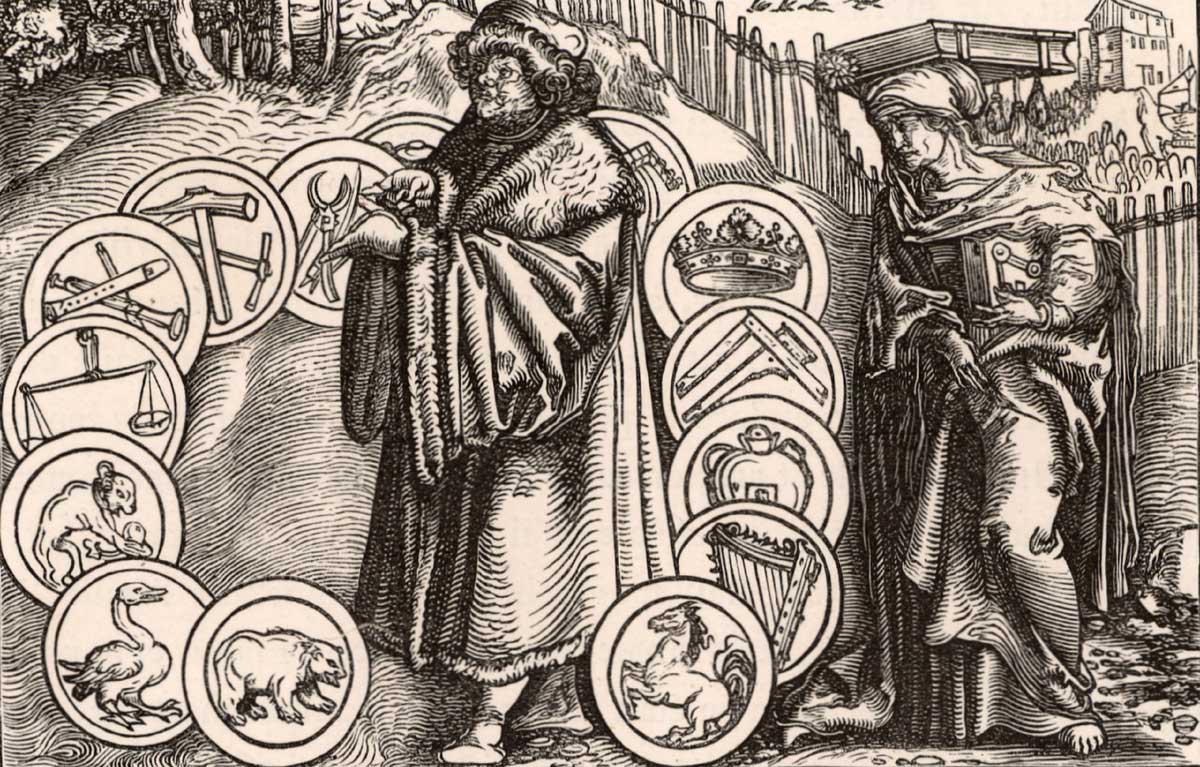
on Boethius's Consolation in a Time of Plague by Thomas Albert Howard


calling all readers
Please Donate
"There are magazines worth reading but few worth saving . . . Touchstone is just such a magazine."
—Alice von Hildebrand
"Here we do not concede one square millimeter of territory to falsehood, folly, contemporary sentimentality, or fashion. We speak the truth, and let God be our judge. . . . Touchstone is the one committedly Christian conservative journal."
—Anthony Esolen, Touchstone senior editor
