




The Paschal Comedy
Long before the medieval theories of soteriology, Christian art and hymnography described our Lord's descent into hell as a sort of "surprise attack" on the realm of death. According to this imagery, the soul of Christ descended into the netherworld even as his body was placed in the tomb. Neither place, however, was able to hold him.
According to the prophet David, Christ was victorious over death both in the grave and in the netherworld: "For you will not leave my soul in hell, / Nor will you allow your Holy One to see corruption" (Psalm 16[15]:10). The Apostle Peter commented on this text: "His soul was not left in Hades, nor did his flesh see corruption. This Jesus God has raised up, of which we are all witnesses" (Acts 2:31–32).
There was no way for the realm of death to prepare for the dramatic appearance of Jesus, whom it was unable to hold. Death had swallowed what it could not digest. St. John Chrysostom said it best:
The Savior's death has set us free. He that was held prisoner of it has annihilated it. By descending into Hades, he made Hades captive. He embittered it when it tasted of his flesh. . . . It took a body, and met God face to face. It took earth, and encountered heaven.
A special foreshadowing of that event in the netherworld, surely, was the Ark of the Covenant, when the apparently victorious Philistines rashly seized it. They first took the Ark, we recall, to the temple of their own god, Dagon, as a trophy of combat. The trouble began right away: after the first night, Dagon was found lying prone before the Ark; after the second night, he was reduced to a stump (1 Sam. 5:3–4).
The Lord of the Ark, having disposed of the Philistine god, then turned to deal with the Philistines, wreaking havoc in three cities of their pentapolis (5:8–12). The reader is reminded of the plagues visited on Egypt—both animal pests (Ex. 8:1–24; 10:1–15) and bodily afflictions (Ex. 9:8–12), including death (Ex. 12:29–30).
As the Ark was moved from city to city, Philistine panic intensified. Its mere arrival at Ekron was sufficient to cause consternation, prior to any actual damage! In these descriptions, the biblical author is enjoying himself immensely. It is important to read this story as undiluted comedy.
Historians have variously identified the Philistine pestilence, the most severe suggestion being bubonic plague. Although that interpretation would account for the rodents and the physical symptoms (buboes or glandular swellings), we should not permit a preoccupation with diagnosis to obscure the author's literary and rhetorical intention—to portray the affliction in terms of extreme discomfort and even embarrassment. The King James Version, sensing this intention, identified the swellings as hemorrhoids.
That is to say, the emphasis in this account is on anal distress. Our earliest commentator on the story, Josephus (Antiquities 6.1.3), believed that death came from "dysentery." (I forego his description!)
Hades Mocked
The theological message of this account rests on the biblical theme of victory arising out of defeat. The Philistines had barely time to celebrate their supposed triumph when they began to suspect their mistake: they had swallowed what they could not digest. The tables were turned. Instead of the Ark borne as the spoils in a victory parade, its transport became the Lord's own victory march. The Philistines began to know how ancient Pharaoh felt when the full force of the ten plagues made him eager for Israel to leave Egypt.
Patrick Henry Reardon is pastor emeritus of All Saints Antiochian Orthodox Church in Chicago, Illinois, and the author of numerous books, including, most recently, Out of Step with God: Orthodox Christian Reflections on the Book of Numbers (Ancient Faith Publishing, 2019).
A Journal of Mere Christianity—Delivered to Your Door
- Essays on theology, culture, and the Church
- Contributors from across the Christian traditions

Six print issues (one year) of Touchstone, plus full online access and PDF downloads for only $39.95.

Get a one-year full-access subscription to the Touchstone online archives for only $19.95.
bulk subscriptions
Order Touchstone subscriptions in bulk and save $10 per sub! Each subscription includes 6 issues of Touchstone plus full online access to touchstonemag.com—including archives, videos, and pdf downloads of recent issues for only $29.95 each! Great for churches or study groups.
Transactions will be processed on a secure server.
more from the online archives
33.2—March/April 2020
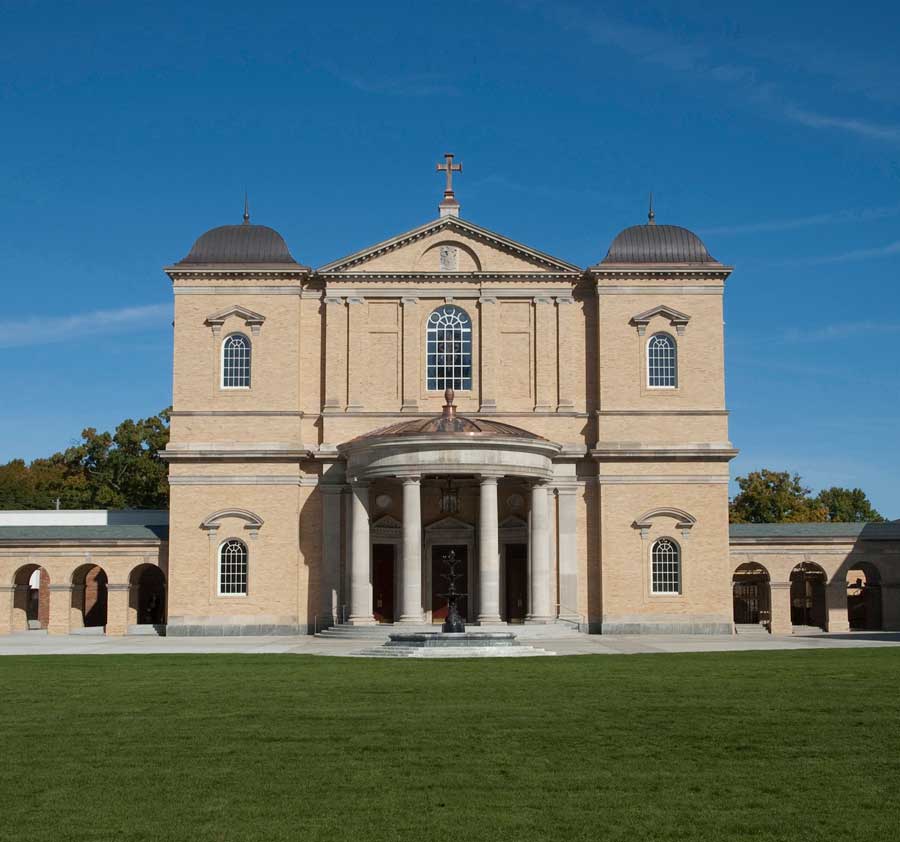
An Architectural Sign of Mere Christianity by Michael Ward

28.3—May/June 2015
Of Bicycles, Sex, & Natural Law
Describing Human Ends & Our Limitations Is Neither Futile Nor Unloving by R. V. Young
calling all readers
Please Donate
"There are magazines worth reading but few worth saving . . . Touchstone is just such a magazine."
—Alice von Hildebrand
"Here we do not concede one square millimeter of territory to falsehood, folly, contemporary sentimentality, or fashion. We speak the truth, and let God be our judge. . . . Touchstone is the one committedly Christian conservative journal."
—Anthony Esolen, Touchstone senior editor
