View
The Logos of Beauty
Steve Baarendse on the Eyes of the Heart & the Glory of God
What is the end, the telos, of beauty, imagination, and creativity? Some have said that beauty is its own end; in the arts, this was called "art for art's sake." You can see it recited as catechism in John Keats's famous epigram about the Grecian urn: "Beauty is truth, truth beauty,—That is all / Ye know on earth, and all ye need to know."
But the Christian knows that this Romantic creed is only a tragic half-truth. Even artistic beauty is not big enough to be its own end; and art, severed from its transcendent source, is powerless to save. Keats died appealing to the beauty of poetry, but coughing up blood. He did not acknowledge the One to whom beauty points, who bled and died for sinners, the One who alone has the power over death.
Christians have the answer to the riddle of beauty, though it doesn't diminish its mystery: beauty is not a thing, but a Person. We can't analyze beauty; it is Someone we come to know. Just as beauty can't be separated from truth and goodness, they all come together in the Person of the God-Man Jesus Christ, who created all things and in whom all things subsist. Jesus is the end of beauty, which means that beauty, wherever we find it, always points to him. He himself formed our imaginations with one great object: that even though now we look through a glass darkly, we would come to see him better and better, and to long more and more for the glory of his appearing.

The Beauty of the Son
Union with Christ is the ground of beauty's apprehension. People catch glimpses of beauty all around, because the world, in spite of sin's degradation, is still charged with the grandeur of God. But a real, grateful appreciation of the beautiful can only be fostered in relationship with this God, who made us and redeemed us, and we can come to know him only through the person and work of his Son. If beauty is difficult to define, it's because our Lord Jesus shines as a many-splendored diamond with unnumbered facets, the radiance of the Father's glory (Heb. 1:3). We who have come to him have only just matriculated in the school of his beauty. We will never graduate, nor will we want to.
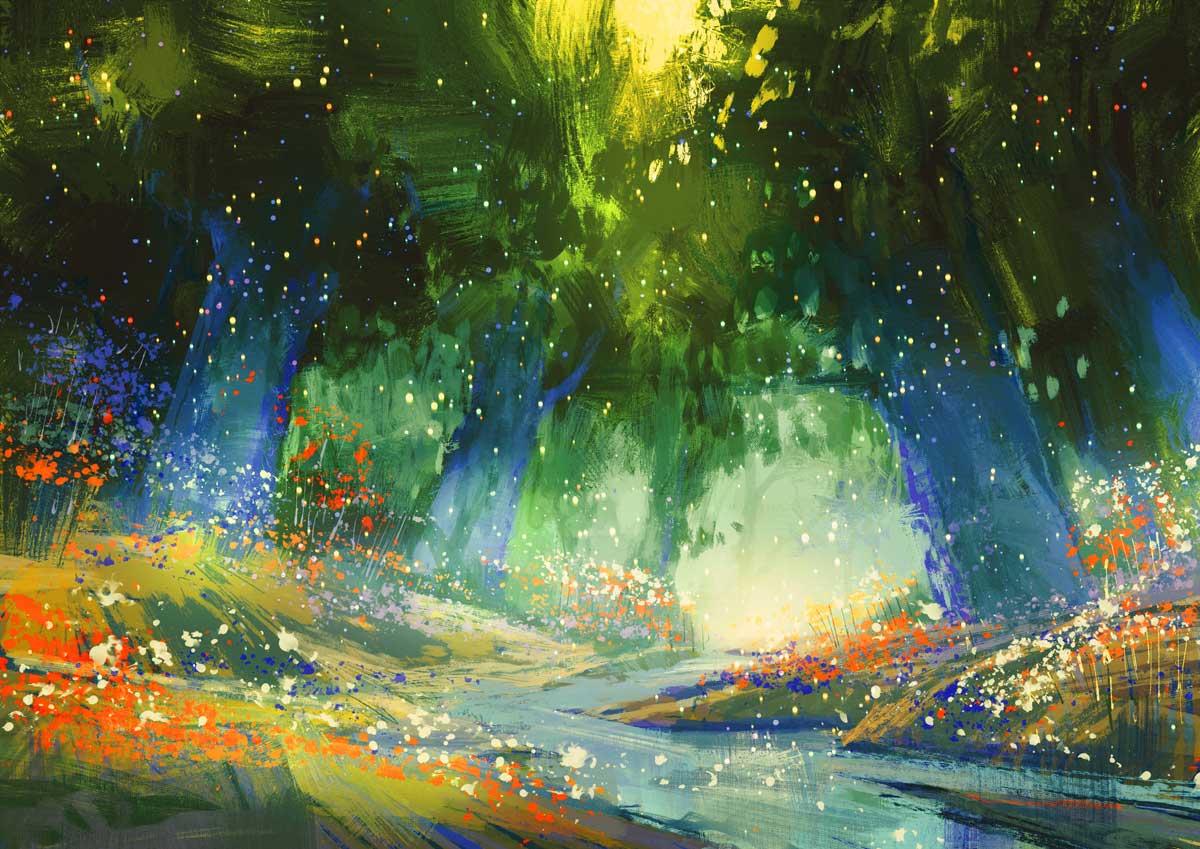
This is the beauty that the Bible and the theater of creation point to at every turn, if we only have eyes to see it. Creation points to the beauty of Jesus, because the Son was the craftsman at work in creation, the One in whom was all the Father's delight (Prov. 8:30). Nature is the creative expression of the Galilean carpenter's skillful workmanship. The artistic beauty of the tabernacle and the temple pointed the Israelites to the beauty of Jesus, who tabernacled among us in his incarnation. He said of himself, destroy this temple and I will raise it in three days (John 2:19).
Even the disfigurement of Jesus' crucifixion points us to his beauty, because in it we see the glory of our redemption and the depth of the Father's mercy for sinners. Jesus is beautiful in his resurrection and exaltation, and the beauty of his redemption is displayed to all the world through his Body, the Church, the Bride he himself is washing so he can present her "in splendor, without spot or wrinkle or any blemish" (Eph. 5:27). Finally, the vision we have of heaven, where the Lamb in his glory will be the source of light, is one of inexpressible delight (Rev. 21:23). So we can truly say of our Lord and Savior Jesus Christ: "If ever any beauty I did see, / Which I desired, and got, 'twas but a dream of thee" (John Donne, "The Good-Morrow").
Beauty Returned to God
My students are sometimes surprised by how many of the poems in our secular literature textbook are great works of art and also explicitly Christian in their content. But should this be surprising?
People who have become aware of the glory of Christ are inspired to create some astonishingly brilliant works. Think, for example of the polished gems encased in George Herbert's The Temple, John Donne's Holy Sonnets, or Gerard Manley Hopkins's devotional verse. Think of the rich, imaginative scope of Paradise Lost, The Pilgrim's Progress, The Lord of the Rings, and The Chronicles of Narnia, or the wild, grace-charged stories of Flannery O'Connor. They are all the creative work of Christians who understood that art was a good gift of the Creator, to be cultivated as a vocation and returned to God as a sacrifice of praise.
Steve Baarendse is an Associate Professor of English and Humanities at Columbia International University in Columbia, South Carolina. He and his wife Sara have three children and worship at Lexington Presbyterian Church (PCA).
A Journal of Mere Christianity—Delivered to Your Door
- Essays on theology, culture, and the Church
- Contributors from across the Christian traditions

Six print issues (one year) of Touchstone, plus full online access and PDF downloads for only $39.95.

Get a one-year full-access subscription to the Touchstone online archives for only $19.95.
bulk subscriptions
Order Touchstone subscriptions in bulk and save $10 per sub! Each subscription includes 6 issues of Touchstone plus full online access to touchstonemag.com—including archives, videos, and pdf downloads of recent issues for only $29.95 each! Great for churches or study groups.
Transactions will be processed on a secure server.
more on imagination from the online archives

more from the online archives
calling all readers
Please Donate
"There are magazines worth reading but few worth saving . . . Touchstone is just such a magazine."
—Alice von Hildebrand
"Here we do not concede one square millimeter of territory to falsehood, folly, contemporary sentimentality, or fashion. We speak the truth, and let God be our judge. . . . Touchstone is the one committedly Christian conservative journal."
—Anthony Esolen, Touchstone senior editor