





Book Review
Imperial Science
Where the Conflict Really Lies: Science, Religion, and Naturalism
by Alvin Plantinga
Oxford, 2011
(376 pages, $27.95, hardcover)
Increasingly over the last two decades, Christians have made great strides in taking back science from those who would misuse it as a tool for fostering a naturalistic view of the universe that renders God either non-existent or irrelevant to life on planet earth. Tired of meekly submitting to the oft-repeated but erroneous claim that unguided Darwinian macro-evolution has been "proven," a growing number of Christian academics have thrown down the gauntlet, calling upon materialist scientists to account for the Big Bang, the fine-tuning of the universe, the Cambrian explosion, the irreducible complexity of molecular machines, and the front-loaded, information-rich nature of DNA.
THIS ARTICLE ONLY AVAILABLE TO SUBSCRIBERS.
FOR QUICK ACCESS:
Louis Markos , Professor in English and Scholar in Residence at Houston Baptist University, holds the Robert H. Ray Chair in Humanities. His 19 books include Lewis Agonistes; Restoring Beauty: The Good, the True, and the Beautiful in the Writings of C. S. Lewis; On the Shoulders of Hobbits: The Road to Virtue with Tolkien and Lewis; and From A to Z to Narnia with C. S. Lewis.
subscription options
Order
Print/Online Subscription

Get six issues (one year) of Touchstone PLUS full online access including pdf downloads for only $39.95. That's only $3.34 per month!
Order
Online Only
Subscription

Get a one-year full-access subscription to the Touchstone online archives for only $19.95. That's only $1.66 per month!
bulk subscriptions
Order Touchstone subscriptions in bulk and save $10 per sub! Each subscription includes 6 issues of Touchstone plus full online access to touchstonemag.com—including archives, videos, and pdf downloads of recent issues for only $29.95 each! Great for churches or study groups.
Transactions will be processed on a secure server.
more on science from the online archives

17.6—July/August 2004
Old Science Confronts a Formidable Challenge in the Scientific ID Movement by Jay W. Richards

29.4—July/August 2016
on Noticing That Modern Science Has Rendered Atheism Irrational by Harry Biltz
more from the online archives

33.1—January/February 2020
Do You Know Your Child’s Doctor?
The Politicization of Pediatrics in America by Alexander F. C. Webster
33.4—July/August 2020
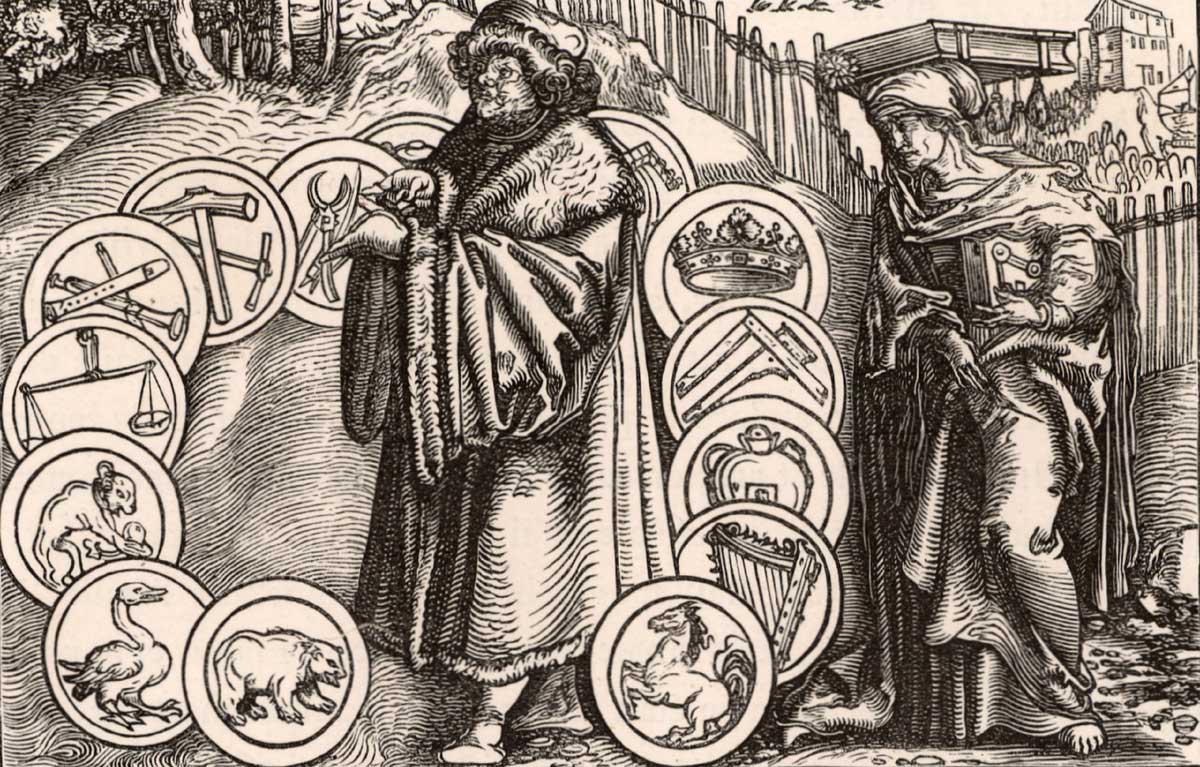
on Boethius's Consolation in a Time of Plague by Thomas Albert Howard

calling all readers
Please Donate
"There are magazines worth reading but few worth saving . . . Touchstone is just such a magazine."
—Alice von Hildebrand
"Here we do not concede one square millimeter of territory to falsehood, folly, contemporary sentimentality, or fashion. We speak the truth, and let God be our judge. . . . Touchstone is the one committedly Christian conservative journal."
—Anthony Esolen, Touchstone senior editor
