





View
Moynihan's Family Arc
Hunter Baker on the Missing Element in a Government Jobs Strategy
Daniel Patrick Moynihan (the longtime Democratic senator from New York) once suggested instituting twice-daily mail service as a way of providing good government jobs for African-American males. Moynihan's notion demonstrates that modern liberals do not always build up the number of government jobs because more employees are needed to accomplish some mission, but because they are trying to provide a quality lifestyle for large numbers of people. In other words, the job itself (the entry on the payroll) is the mission.
In his response to President Obama's 2012 State of the Union address, Indiana governor Mitch Daniels commented that the president appears to sincerely believe that a middle class can be created with government jobs paid for by government dollars. Perhaps such a position would not be so fantastic if there were a different spiritual core at the heart of modern left-liberalism.
Today, it appears that the U.S. Postal Service (USPS) is unnecessary. It loses large amounts of money, partly because email and digital imaging have made some of its former functions obsolete and partly because it has good competitors in the form of UPS and Federal Express. The old argument that the USPS must exist to serve rural areas has lost force because the nation is more thickly populated now. Besides, the government could simply subsidize private carriers to serve outlying areas at a much cheaper cost than that of sustaining current USPS operations.
But it is unlikely that the federal government will dissolve the postal service as a former necessity that has been bypassed by technology. The reason is that liberals are trying to accomplish something other than the delivery of the mail with the USPS. They are trying to create good livelihoods with solid salaries and benefits for a sizeable number of people. Such jobs, in theory, are to be protected from the creative destruction and dislocations of capitalism.
The question is whether the modern liberal approach to improving the quality of citizens' lives by sustaining mass numbers of government jobs is workable. The answer is that it can be done (though at the cost of significant economic efficiency), but not with the mix of values currently accepted by modern liberals.

The Benefits of a Government Job
I have some personal history and inside knowledge to bring to bear on the problem. My maternal grandfather grew up in Cullman, Alabama. His family was not well off, and he did not have much in the way of business assets or educational attainments to help him along. He married at a young age, found work in various factories, and began having children in Decatur, Alabama. The young family lived in a small home that he and his brothers built on a nice plot of land, right on the border of an industrial area and close to the Tennessee River.
Getting a job with the post office at about the age of 30 was a boon to him. Delivering the mail was a much cleaner, safer, and more comfortable job than working in factories, where he had once witnessed a tragic workplace accident resulting in the death of several men. It was the kind of accident that everyone present had realized was coming, and my grandmother recalled his having nightmares about it for a long time after the event. He was more than ready to leave the industrial environment.
I can still remember seeing him in his postal uniform, making his rounds about town. He left early in the morning and got home in the afternoon. He was happy in that job. It provided for his family and gave him enough leisure time to begin an extensive avocation in horticulture.
Hunter Baker , J.D., Ph.D., is the dean of arts and sciences at Union University, a fellow of the Ethics and Religious Liberty Commission, and an affiliate scholar of the Acton Institute.
A Journal of Mere Christianity—Delivered to Your Door
- Essays on theology, culture, and the Church
- Contributors from across the Christian traditions

Six print issues (one year) of Touchstone, plus full online access and PDF downloads for only $39.95.

Get a one-year full-access subscription to the Touchstone online archives for only $19.95.
bulk subscriptions
Order Touchstone subscriptions in bulk and save $10 per sub! Each subscription includes 6 issues of Touchstone plus full online access to touchstonemag.com—including archives, videos, and pdf downloads of recent issues for only $29.95 each! Great for churches or study groups.
Transactions will be processed on a secure server.
more on family from the online archives
34.1—January/February 2021
Jesus' Astonishing Other Teaching on Marriage by James Ware

32.4—July/August 2019
Today's Culture Wars Are Both Ancient & Modern by Allan C. Carlson
36.1—Jan/Feb 2023
A History of the Protestant Debate over Contraception by James A. Altena
more from the online archives

26.1—Jan/Feb 2013
The Alternate & Alternative Worlds of H. P. Lovecraft & C. S. Lewis by C. R. Wiley
17.4—May 2004
The Unhappy & Abusive Marriage of Liberalism & Modernism by James Hitchcock
24.2—March/April 2011
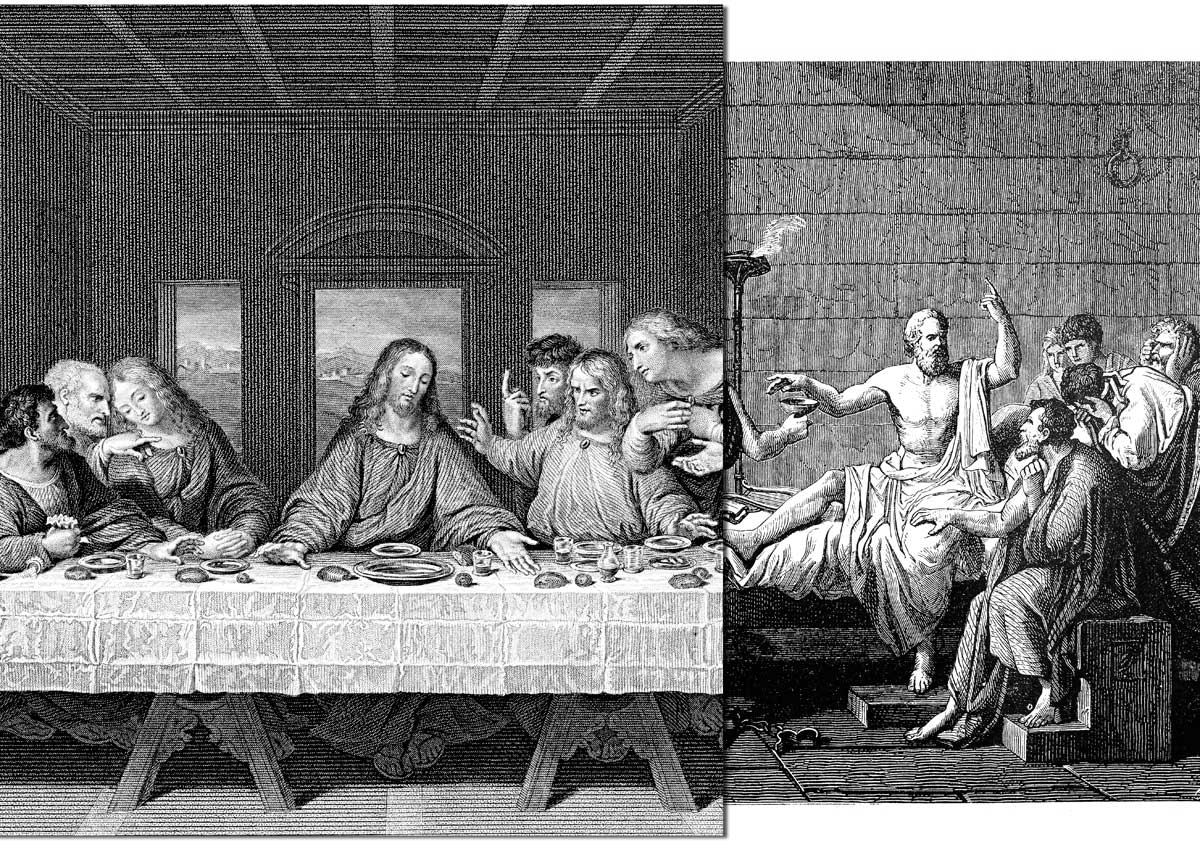
Certain Death & the Last Lectures of Socrates & Jesus by Randall B. Smith
calling all readers
Please Donate
"There are magazines worth reading but few worth saving . . . Touchstone is just such a magazine."
—Alice von Hildebrand
"Here we do not concede one square millimeter of territory to falsehood, folly, contemporary sentimentality, or fashion. We speak the truth, and let God be our judge. . . . Touchstone is the one committedly Christian conservative journal."
—Anthony Esolen, Touchstone senior editor
