





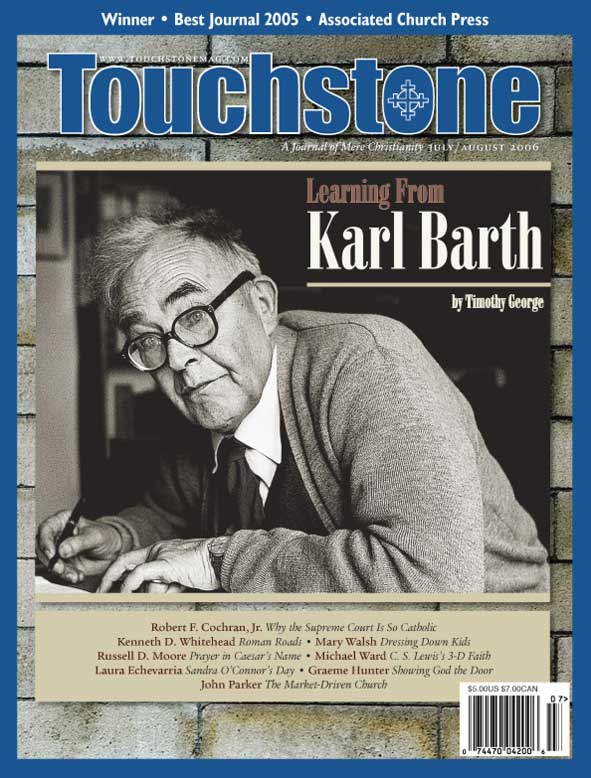
The Catholic Court Appeal
Why So Many Catholic Justices on the Supreme Court? Why Now?
by Robert F. Cochran, Jr.
The Supreme Court has been dominated since the founding of our country by mainline Protestants, but with Samuel Alito joining Antonin Scalia, Anthony Kennedy, Clarence Thomas, and John Roberts, five of the nine justices are now Catholics. All five have been appointed in the last 20 years. In the previous 200 years, only seven Catholics have served on the Court.
THIS ARTICLE ONLY AVAILABLE TO SUBSCRIBERS.
FOR QUICK ACCESS:
Robert F. Cochran, Jr. is the Louis D. Brandeis Professor of Law and Director of the Institute on Law, Religion, and Ethics at Pepperdine University of Law. He is the co-editor, with Michael McConnell and Angela Carmella, of Christian Perspectives on Legal Thought (Yale University Press, 2001). He, his wife Denise, and their three children are Evangelical Christians.
A Journal of Mere Christianity—Delivered to Your Door
- Essays on theology, culture, and the Church
- Contributors from across the Christian traditions

Six print issues (one year) of Touchstone, plus full online access and PDF downloads for only $39.95.

Get a one-year full-access subscription to the Touchstone online archives for only $19.95.
bulk subscriptions
Order Touchstone subscriptions in bulk and save $10 per sub! Each subscription includes 6 issues of Touchstone plus full online access to touchstonemag.com—including archives, videos, and pdf downloads of recent issues for only $29.95 each! Great for churches or study groups.
Transactions will be processed on a secure server.
more on Catholic from the online archives

24.5—Sept/Oct 2011
A Critical Memoir of Thomas Merton at Gethsemani Abbey by Patrick Henry Reardon
35.4—Jul/Aug 2022
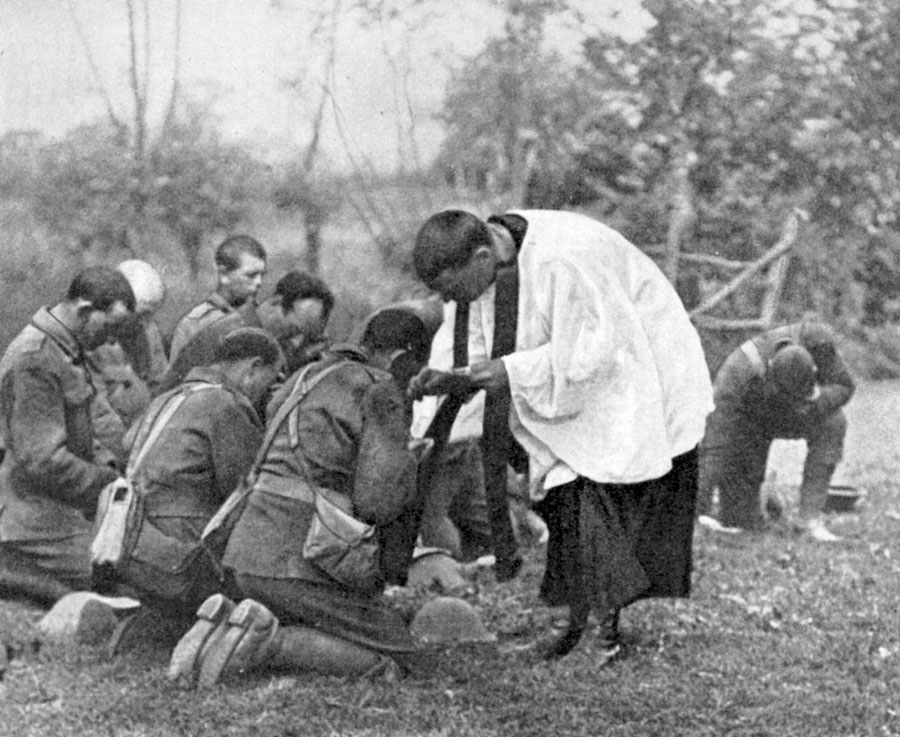
The Death Rattle of a Tradition
Contemporary Catholic Thinking on the Question of War by Andrew Latham
31.6—November/December 2018
The Slow Vindication of Leon Podles by S. M. Hutchens
more from the online archives

30.3—May/June 2017
on the Misuse of Property Rights to Justify Slavery & Abortion by Robert Hart
26.1—Jan/Feb 2013
on Abortion as a Matter of National Welfare by W. Ross Blackburn
21.10—December 2008
Early Christian Teaching on the Incarnation & Redemption by Patrick Henry Reardon
calling all readers
Please Donate
"There are magazines worth reading but few worth saving . . . Touchstone is just such a magazine."
—Alice von Hildebrand
"Here we do not concede one square millimeter of territory to falsehood, folly, contemporary sentimentality, or fashion. We speak the truth, and let God be our judge. . . . Touchstone is the one committedly Christian conservative journal."
—Anthony Esolen, Touchstone senior editor
