




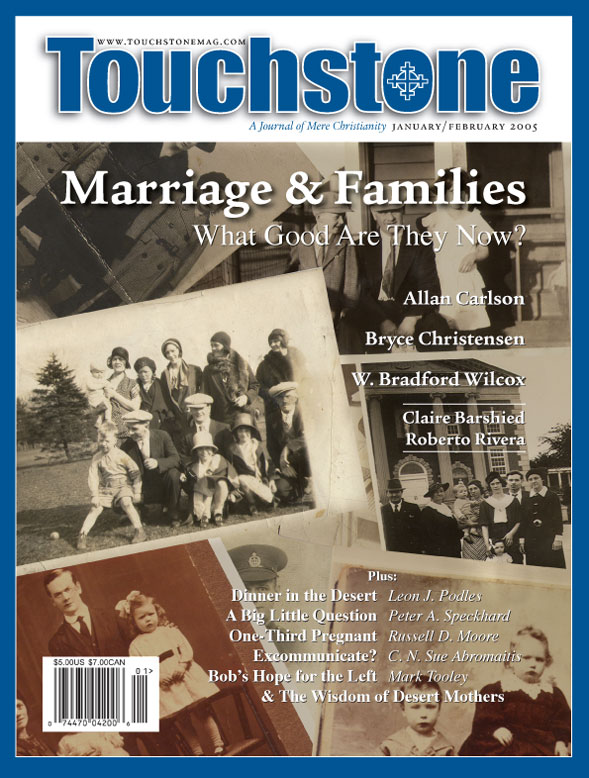
Five Rings & a Wedding
Marriage & the Concentric Communities That Surround It
by Allan Carlson
As one Massachusetts advocate of a pluralistic bent has phrased it, “The right to love and to celebrate our relationships, in whatever form they take, is a fundamental human right that should be protected.” As a Coloradoan of a more libertarian persuasion puts it, “To be licensed by a bunch of bureaucrats for the most private and sacred act of marriage—that’s demeaning. It’s simply none of the government’s business whom I marry.”
“The Marriage Resolution” put into effect in San Francisco last year reads: “Because marriage is a basic human right and an individual choice, Resolved, the State should not interfere with same-gender couples who choose to marry and share fully and equally in the rights, responsibilities, and commitment of civil marriage.”
Such challenges to the institution of marriage are nothing new. The Soviet Bolsheviks waged war on marriage and home for the first two decades of the Russian Revolution. A century and a quarter earlier, the Jacobins of the French Revolution also sought to tear down marriage laws resting on traditional principles. The proposed French Civil Code of 1801, for example, promised “freedom to marry” and easy divorce.
Ignoring both Christian thought and the evidence of all history, the radical authors of this measure argued that “what marriage itself is was previously unknown, and it is only in recent times that men have acquired precise ideas on marriage.” Building on the thought of Jean-Jacques Rousseau, they urged that marriage be made “natural,” by which they meant animalistic, subject to the ebb and flow of the passions. Marriage, as such, should be easy to enter and easy to leave.
Private Marriage?
Such is the idea of the freedom to marry. In this view, the government’s role is simply to register those couples freely entering civil marriage, so they might qualify for the benefits and public blessing involved.
This appeal to freedom is false and misleading. It is no expression of true liberty but an effectively libertine invitation to social disorder. The “freedom to marry” presupposes that marriage is a private event, an arrangement by and for the couple that exists only to recognize their love and promise of devotion to each other and to bless their companionship. The one promised public benefit, in this otherwise privatized and minimalist view of marriage, is the sexual and romantic pair’s reduced promiscuity.
And yet the very nature of the average wedding event belies such a narrow view of marriage. The gathering of kith and kin, of friends and neighbors, of former teachers and co-workers, the boisterous celebration, the feast spread out for them, all testify that the wedding is more than an end to promiscuity or the public recognition of a love affair. The wedding is a communal event, where various levels of community find their own renewal and hope. Focusing only on the desires of the couple ignores the communitarian nature of true marriage and the claims others have on each marriage.
In the traditional Christian wedding, the minister asks the congregation: “Does anyone here know a reason why this man and this woman should not be joined together? If so, speak now or forever hold your peace.” This acknowledges the community’s interest in the wedding, letting others assert themselves to prevent a marriage that threatens broader relationships. It also reminds the marrying couple that their vows are made not only between themselves, but with concentric rings of others, all of whom have a vested interest in the making and preservation of their marriage.
Allan C. Carlson is the author of numerous books, including Family Questions: Reflections on the American Social Crisis and The American Way: Family and Community in the Shaping of the American Identity. He attends St. Paul Lutheran Church in Rockford, Illinois. He is a senior editor of Touchstone.
A Journal of Mere Christianity—Delivered to Your Door
- Essays on theology, culture, and the Church
- Contributors from across the Christian traditions

Six print issues (one year) of Touchstone, plus full online access and PDF downloads for only $39.95.

Get a one-year full-access subscription to the Touchstone online archives for only $19.95.
bulk subscriptions
Order Touchstone subscriptions in bulk and save $10 per sub! Each subscription includes 6 issues of Touchstone plus full online access to touchstonemag.com—including archives, videos, and pdf downloads of recent issues for only $29.95 each! Great for churches or study groups.
Transactions will be processed on a secure server.
more on marriage from the online archives

28.1—January/February 2015
on State Impositions & Church Acquiescence by Stephen Baskerville
29.1—Jan/Feb 2016
on Marriage, Moral Corruption & the Christian Duty of Witness by Regis Nicoll
21.1—January/February 2008
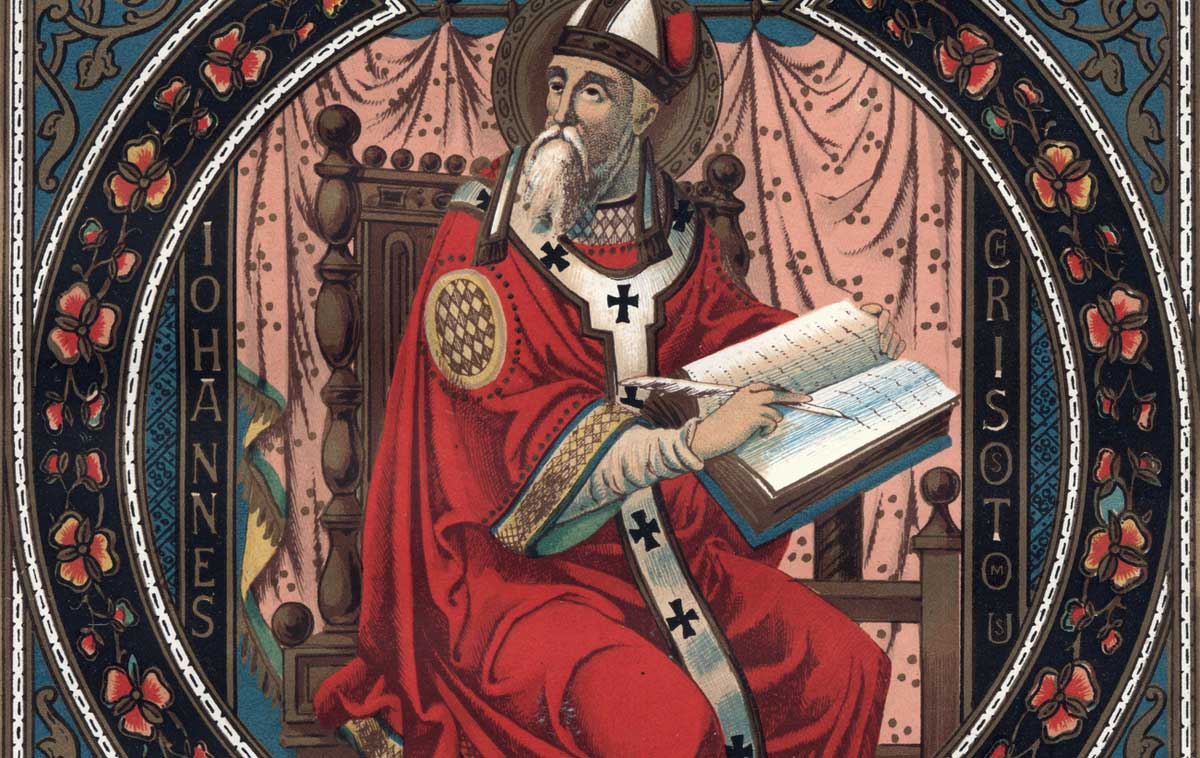
John Chrysostom’s Discovery of the Blessings & Mysteries of Marriage by Mike Aquilina
more from the online archives
33.3—May/June 2020
Human & Divine Societies Require Careful Thought & Discourse by Anthony Esolen
31.1—January/February 2018
The Wisdom of the Victorian Quest for Innocence by David Sandifer

30.2—March/April 2017
The Education of Children Takes Generations of Fidelity by W. Ross Blackburn
calling all readers
Please Donate
"There are magazines worth reading but few worth saving . . . Touchstone is just such a magazine."
—Alice von Hildebrand
"Here we do not concede one square millimeter of territory to falsehood, folly, contemporary sentimentality, or fashion. We speak the truth, and let God be our judge. . . . Touchstone is the one committedly Christian conservative journal."
—Anthony Esolen, Touchstone senior editor
