




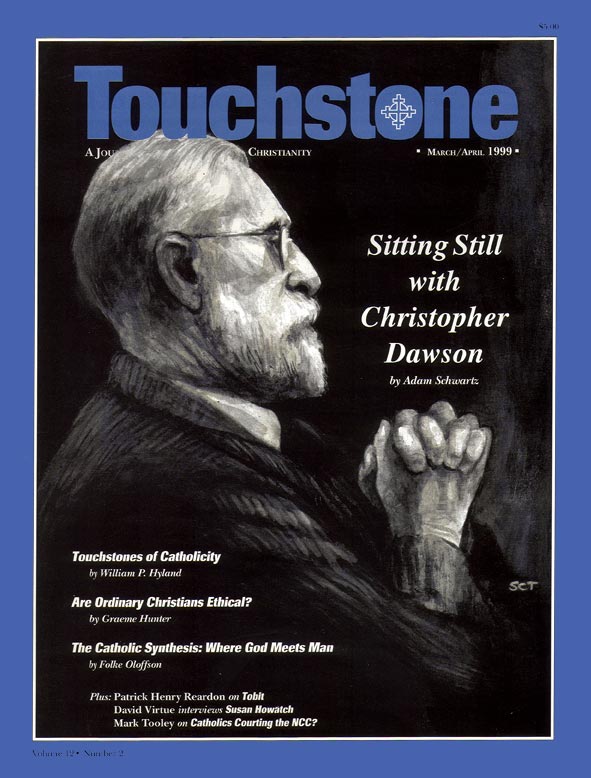
Are Ordinary Christians Ethical?
Socrates’ Ethical Dilemma & the Mere Christian
by Graeme Hunter
Are ordinary Christians ethical? It partly depends on whom you mean by ordinary Christians. And the way I use the term is growing less common, since I neither mean “Christian” as a term of abuse nor “ordinary” as a term of praise. By “ordinary Christians” I mean people who in earlier times would have described themselves as “God-fearing” or perhaps “Bible believing”; the term signifies men and women who identify right conduct with submission to the will of God. Whether or not such people are statistically ordinary is of no concern. They are ordinary in the sense of being theologically unremarkable; they are the ones the New Testament describes as “salt of the earth,” whom Dryden says “plod on to glory,” in contrast to theological highflyers, who so often wing toward self-destruction.
The ordinary Christians I have in mind would not typically theorize or debate about questions of right living, but they would nevertheless be highly principled in their lives. Their most fundamental concern is to please God and to be obedient to what he commands. Where they are able to discern God’s will, they feel no need of theorizing.
Many such people probably consider themselves ethical. But I shall disagree. I shall argue that when they are ethical it is only by accident. If correct, however, my argument will merely establish a fact; it will not be a reproach. If ordinary Christians are not ethical I shall try to show that it is because they are something else, which may be better.
The Dilemma of Divine Command Theory
But why should ordinary Christians not be ethical? Professors of ethics love to explain this, and they do so often and well. It is their particular joy to do it in freshman ethics courses where they feel duty-bound to deflect students from what they believe to be the myopic and dangerous path of ordinary Christianity. For these professors hold that ordinary Christians are not ethical, a point with which I shall agree. But they also assume, as I do not, that only immoral monsters could knowingly be unethical.
A fine example in print of this outlook is James Rachels’s popular introductory text The Elements of Moral Philosophy (1993). Rachels devotes a chapter to the question of whether or not ethics depends on religion and a subchapter deals with the outlook of what I have called ordinary Christianity.
Following a widespread practice Rachels calls the attempt of ordinary Christians to live in obedience to God “Divine Command Theory.” Now to elevate the behavior of ordinary Christians to the height of theory is something of an exaggeration since, as I already mentioned, they do not typically theorize about what they do. But for present purposes we may concede the term to Rachels.
Divine Command Theory, then, is the view that what is right depends on what God commands us to do. But according to Rachels, and to unnumbered professors of ethics across the continent, this submissive view is ethically untenable. Rachels explains with admirable patience and lucidity how Divine Command Theory inevitably founders on an ancient objection the philosopher Socrates once made to the seer Euthyphro. As was his way, Socrates asked his friend a hard question: “Tell me Euthyphro, he said, are actions good because God commands them or does God command them because they are good?”
The philosophically astute can see at once that Socrates is posing a dilemma. If actions are good merely because God commands them, then goodness becomes something arbitrary. Whatever God had commanded would have been just as good. Had he ordered us to steal, rather than to refrain from stealing, that would have been good. Had God bidden us to commit adultery, to commit murder or to dishonor our parents, it would have been good in the same way that it is now good to do the opposite. Arbitrariness is the inevitable result of saying that the good is simply whatever God commands. But this is a hard saying and few ordinary Christians can bring themselves to believe it.
Graeme Hunter is a contributing editor to Touchstone and Research Professor of Philosophy at Dominican University College in Ottawa. He is the author of Radical Protestantism in Spinoza's Thought (Ashgate).
A Journal of Mere Christianity—Delivered to Your Door
- Essays on theology, culture, and the Church
- Contributors from across the Christian traditions

Six print issues (one year) of Touchstone, plus full online access and PDF downloads for only $39.95.

Get a one-year full-access subscription to the Touchstone online archives for only $19.95.
bulk subscriptions
Order Touchstone subscriptions in bulk and save $10 per sub! Each subscription includes 6 issues of Touchstone plus full online access to touchstonemag.com—including archives, videos, and pdf downloads of recent issues for only $29.95 each! Great for churches or study groups.
Transactions will be processed on a secure server.
more on ecumenism from the online archives

31.4—July/August 2018
Labels & the Ecumenism of Discipleship by James M. Kushiner
more from the online archives
29.4—July/August 2016
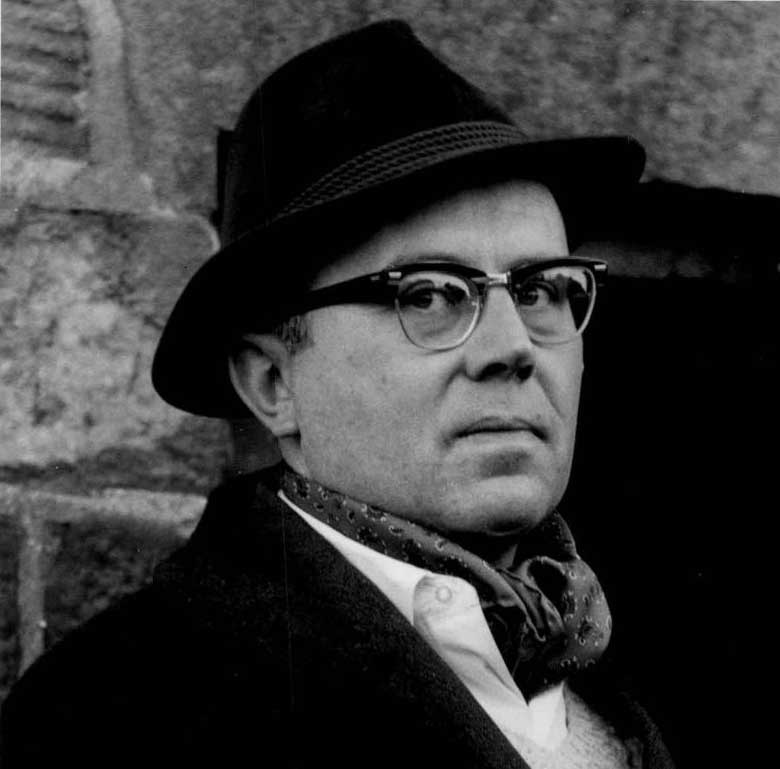
Russell Kirk: American Conservative by Bradley J. Birzer by Hunter Baker

37.5—Sept/Oct 2024
The Death of Conservatism & the Negative World by J. Douglas Johnson
35.6—Nov/Dec 2022
on the Divine Promise Fulfilled by the Child of Bethlehem by James M. Kushiner
calling all readers
Please Donate
"There are magazines worth reading but few worth saving . . . Touchstone is just such a magazine."
—Alice von Hildebrand
"Here we do not concede one square millimeter of territory to falsehood, folly, contemporary sentimentality, or fashion. We speak the truth, and let God be our judge. . . . Touchstone is the one committedly Christian conservative journal."
—Anthony Esolen, Touchstone senior editor
