




My Brother, Be He Ne’er So Vile?
The Difficulty & Promise of Catholic-Evangelical Rapprochement: An Address to an Evangelical Congregation
by S. M. Hutchens
The increasing friendliness of Evangelicals and Roman Catholics is often in the news these days, especially since the publication of “Evangelicals and Catholics Together.” This statement was advanced by a group of Catholic and Evangelical leaders repenting of mutual mistrust and traditional enmity, and looking forward to working together more closely.
I am convinced that Catholics and Evangelicals need to know each other better, but I am just as convinced that any real progress we make, barring extraordinary divine propulsion, will be hard and come slowly. Maybe we are getting another chance where we have failed before—failed because what has been needed to succeed are the hard virtues of maturity, self-control, patience, sober judgment, careful study, discernment, and perhaps above all, the willingness to be ill-spoken of by people who want easy answers, or who want no answers at all.
Indeed, we live in a time when everything we undertake has to be quick and easy, or not at all, including our religion. But we are not speaking here about something that lends itself to an easy answer or none at all. We are talking about understanding and loving one’s neighbor as one ought, which is neither easy nor impossible.
The Problem of Definition
I should say at the beginning that I am a Protestant. My experiences with Roman Catholicism and Eastern Orthodoxy, while they have been immensely enriching and have brought me very close to those communions (greater and wiser in many ways than our own), have also served to confirm my belief in the Protestant doctrine of the Church (as articulated in documents like the Articles of Religion or the Westminster Confession—less the condemnation of the pope as antichrist), so Protestant I must remain.
A Protestant, contrary to what some teach, is not made by his belief in the doctrine of justification by faith alone, for the Scriptures do not teach justification by faith apart from works. (I shall say more about this below.) What makes a Protestant at base is his inability to agree with Rome or Orthodoxy on the identity of the One, Holy, Catholic, and Apostolic Church, which both of these communions believe themselves to incarnate. Our other disagreements can be traced to this one. While we are able to recognize them both as parts of the Church, and perhaps even (as I do) far better images of the true Church than anything one finds in Protestantism, we are unable to see either as the Church—that is to say that all Christians are truly Christian only so far as they are in some way tributary to them. This conscientious inability to confess or believe what Rome or Orthodoxy require in these matters makes one a Protestant. Beyond that—and I am at frequent pains to stress this with my Catholic and Orthodox friends—it is very difficult indeed to make a firm statement about what Protestants believe.
This problem of definition is what I wish to concentrate on here, for in order to know how we should approach Roman Catholicism, we must first have some idea of what it is. This, too, is no easy matter, for Catholicism, a highly organized “juridical” body and so in a sense the most comprehensible division of Christendom, is still a large and complicated thing. Only when we have some grasp of what Catholicism is, however, can we determine what Scriptures are to control our conduct toward it, Scriptures like, “What fellowship hath light with darkness?”—the light being us and the darkness being them? Or Scriptures like,
I appeal to you, brethren, by the name of our Lord Jesus Christ, that all of you agree and there be no dissensions among you. . . . For it has been reported to me that there is quarrelling among you. Each one of you says, I belong to Paul, or, I belong to Apollos, or, I belong to Peter, or, I belong to Christ. Is Christ divided? (1 Cor. 1:10–13)
No, Christ is not divided, but that doesn’t give us easy answers to the problem of Catholic-Evangelical relations. This is a matter that requires prayer, labor, and discretion. What I hope to do here is give some perspective on the first question: Just what is Roman Catholicism? I do so from the viewpoint of someone who understands the concerns of Evangelicals. I hope this will help you work through the second question: Which Scriptures apply, and how, and when?
S. M. Hutchens is a senior editor and longtime writer for Touchstone.
A Journal of Mere Christianity—Delivered to Your Door
- Essays on theology, culture, and the Church
- Contributors from across the Christian traditions

Six print issues (one year) of Touchstone, plus full online access and PDF downloads for only $39.95.

Get a one-year full-access subscription to the Touchstone online archives for only $19.95.
bulk subscriptions
Order Touchstone subscriptions in bulk and save $10 per sub! Each subscription includes 6 issues of Touchstone plus full online access to touchstonemag.com—including archives, videos, and pdf downloads of recent issues for only $29.95 each! Great for churches or study groups.
Transactions will be processed on a secure server.
more on Catholic from the online archives
27.5—Sept/Oct 2014
The Culture of Death's Campaign Against the Catholic Church by Brantly Millegan
35.4—Jul/Aug 2022
The Death Rattle of a Tradition
Contemporary Catholic Thinking on the Question of War by Andrew Latham
32.6—November/December 2019
on Taking Heed of the Parallels Between the Crises of Yesterday & Today by Korey D. Maas
more from the online archives
29.2—March/April 2016
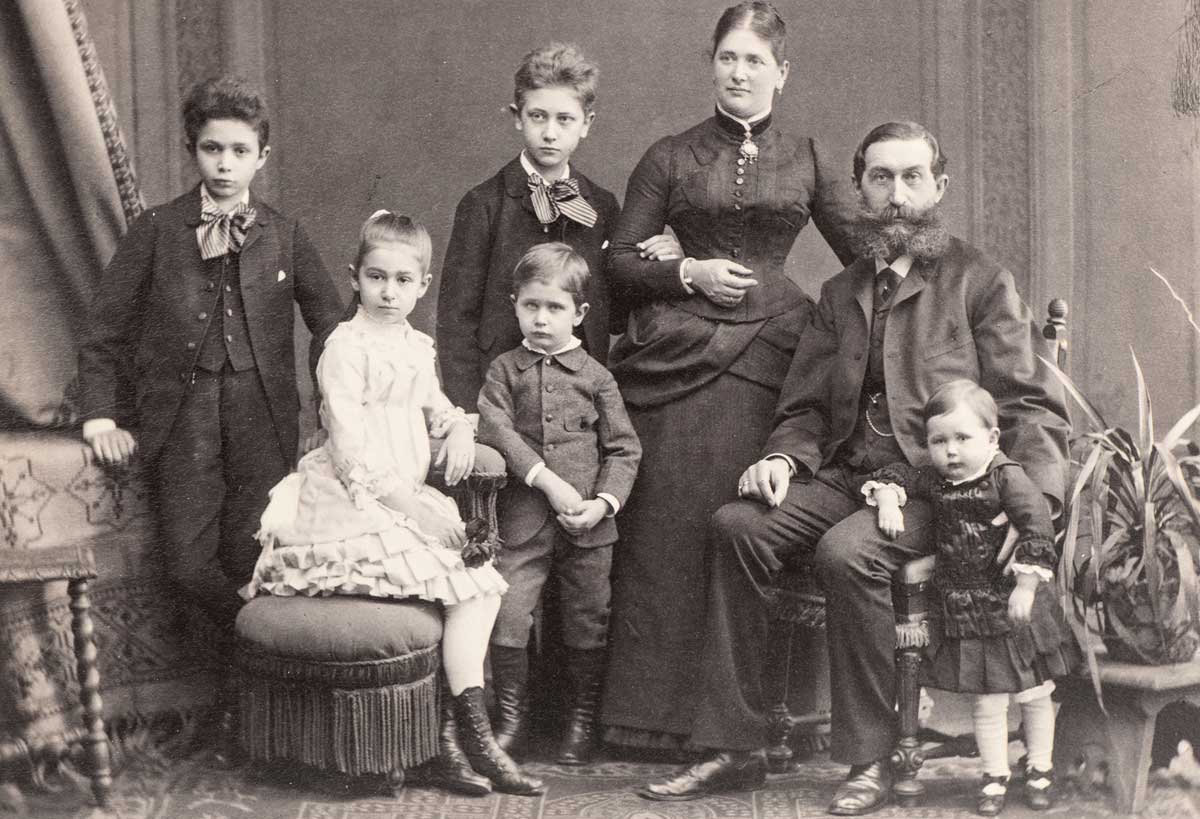
The History of Family Strength in America May Reveal Good News by Allan C. Carlson
31.1—January/February 2018
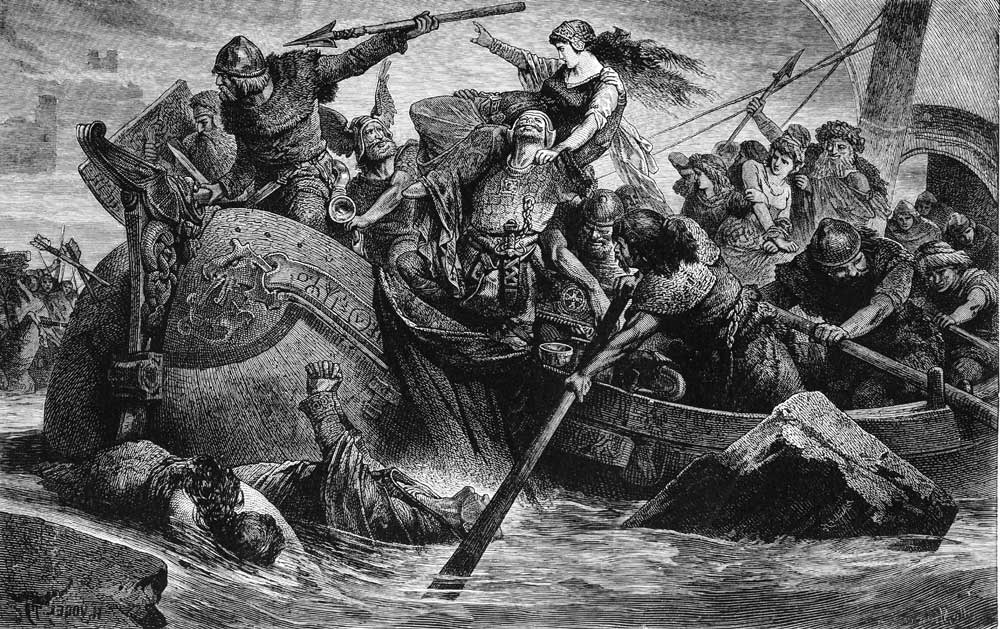
on Ragnarök, an Extreme Weather Event & the Paths to Conversion by Timothy J. Burbery

32.4—July/August 2019
Will Islamicization Become Its New Future by Peter Riddell
calling all readers
Please Donate
"There are magazines worth reading but few worth saving . . . Touchstone is just such a magazine."
—Alice von Hildebrand
"Here we do not concede one square millimeter of territory to falsehood, folly, contemporary sentimentality, or fashion. We speak the truth, and let God be our judge. . . . Touchstone is the one committedly Christian conservative journal."
—Anthony Esolen, Touchstone senior editor
