




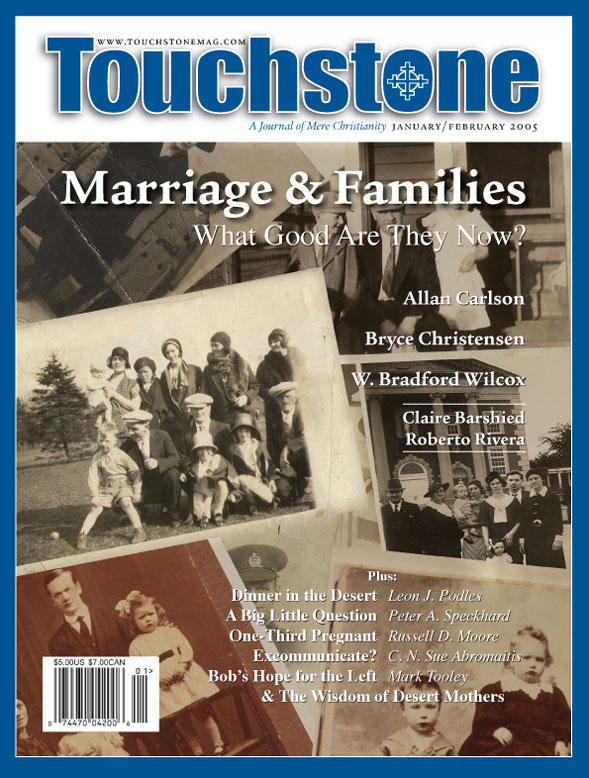
Abimelech in Love
Abimelech, the king of Gerar, had an appreciative eye for handsome women. True, this trait brought him briefly to grief on one occasion, but they say he learned from the experience.
The incident began when some newcomers, Abraham and Sarah, settled in the neighborhood. When Sarah was introduced as Abraham’s sister, poor Abimelech at one glance felt himself going all gooey inside. At the sight of this beautiful, apparently unmarried woman, the king’s ardently smitten heart started to flutter like a leaf in the breeze. With a single look at the lady (a look that sober minds judged, nonetheless, injudiciously long), Abimelech found his knees shaky and his throat dry. This lovely Sarah was surely meant for him, the king had no doubt.
And, being the king, Abimelech was accustomed to getting what he wanted. Indeed, royal courting and romancing were uncomplicated in those days; Abimelech simply sent over to Abraham’s place and had Sarah removed to the royal palace. It all happened very fast. In fact, the story so far is contained in just one Bible verse (Gen. 20:2).
THIS ARTICLE ONLY AVAILABLE TO SUBSCRIBERS.
FOR QUICK ACCESS:
Patrick Henry Reardon is pastor emeritus of All Saints Antiochian Orthodox Church in Chicago, Illinois, and the author of numerous books, including, most recently, Out of Step with God: Orthodox Christian Reflections on the Book of Numbers (Ancient Faith Publishing, 2019).
subscription options
Order
Print/Online Subscription

Get six issues (one year) of Touchstone PLUS full online access including pdf downloads for only $39.95. That's only $3.34 per month!
Order
Online Only
Subscription

Get a one-year full-access subscription to the Touchstone online archives for only $19.95. That's only $1.66 per month!
bulk subscriptions
Order Touchstone subscriptions in bulk and save $10 per sub! Each subscription includes 6 issues of Touchstone plus full online access to touchstonemag.com—including archives, videos, and pdf downloads of recent issues for only $29.95 each! Great for churches or study groups.
Transactions will be processed on a secure server.
more from the online archives
26.1—Jan/Feb 2013
on Abortion as a Matter of National Welfare by W. Ross Blackburn

33.1—January/February 2020
on the Consequences of One Birth Before Roe v. Wade by Craig Kellogg Galer
30.5—Sept/Oct 2017
The Critical History Before, During & After Martin Luther by James Hitchcock
calling all readers
Please Donate
"There are magazines worth reading but few worth saving . . . Touchstone is just such a magazine."
—Alice von Hildebrand
"Here we do not concede one square millimeter of territory to falsehood, folly, contemporary sentimentality, or fashion. We speak the truth, and let God be our judge. . . . Touchstone is the one committedly Christian conservative journal."
—Anthony Esolen, Touchstone senior editor
