




The Tragedy of Jephthah
By way of preparing us for the establishment of Israel’s monarchy near the end of the eleventh century B.C., the Book of Judges ends with a discouraging analysis of the moral climate of the period prior to that of the kings: “In those days there was no king in Israel; everyone did what was right in his own eyes” (21:25). Since the identical words appear earlier, at the beginning of the account of Micah and the Danites (17:6), we are likely correct in thinking that this melancholy assessment pertains especially to the wild and, frankly, disedifying stories that lie between those two verses: the migration of the Danites and their kidnapping of Micah, the gory account of Gibeah and the Levite’s concubine, Israel’s war with Benjamin, and the abduction of the virgins of Jabesh Gilead. Indeed, the startling similarity between this last narrative and the Roman legend of the rape of the Sabines tends to strengthen one’s impression of raw paganism in these stories. Truly, they are among the harshest and most disheartening pages in Holy Scripture.
Earlier accounts in the Book of Judges, however, also indicate a considerable lack of moral direction throughout Israel during that early period. The stories of Jephthah, for example. Did the Bible not explicitly tell us that “the Spirit of the Lord came upon Jephthah” (Judges 11:29), some of us might really wonder. Even so, quite a number of students of Holy Scripture, over the years, must have shaken their heads in bewilderment at the behavior of Jephthah.
Most conspicuous in this respect, surely, is the story of Jephthah’s sacrifice of his own daughter (11:29–40). Although various commentators have endeavored to “explain away” the obvious meaning of this story, such explanations will not stand up to literary and historical scrutiny. However uncomfortable it makes us, Jephthah really did offer his daughter in sacrifice.
THIS ARTICLE ONLY AVAILABLE TO SUBSCRIBERS.
FOR QUICK ACCESS:
Patrick Henry Reardon is pastor emeritus of All Saints Antiochian Orthodox Church in Chicago, Illinois, and the author of numerous books, including, most recently, Out of Step with God: Orthodox Christian Reflections on the Book of Numbers (Ancient Faith Publishing, 2019).

Get six issues (one year) of Touchstone PLUS full online access including pdf downloads for only $39.95. That's only $3.34 per month!

Get a one-year full-access subscription to the Touchstone online archives for only $19.95. That's only $1.66 per month!
bulk subscriptions
Order Touchstone subscriptions in bulk and save $10 per sub! Each subscription includes 6 issues of Touchstone plus full online access to touchstonemag.com—including archives, videos, and pdf downloads of recent issues for only $29.95 each! Great for churches or study groups.
Transactions will be processed on a secure server.
more from the online archives

31.2—March/April 2018
The Transmission of Christianity Is Not a New Task by Nathanael Devlin
33.4—July/August 2020
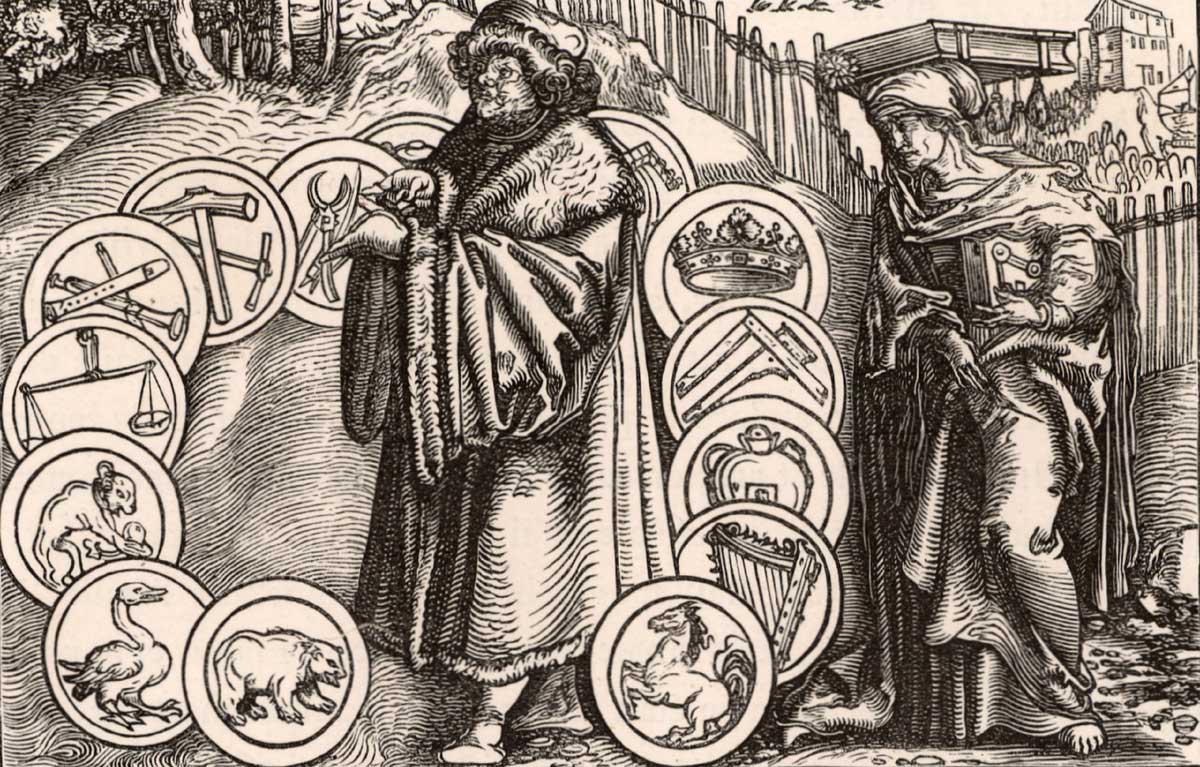
on Boethius's Consolation in a Time of Plague by Thomas Albert Howard

30.5—Sept/Oct 2017
The Christian Cure for What Ails Modern Politics by David Bradshaw
calling all readers
Please Donate
"There are magazines worth reading but few worth saving . . . Touchstone is just such a magazine."
—Alice von Hildebrand
"Here we do not concede one square millimeter of territory to falsehood, folly, contemporary sentimentality, or fashion. We speak the truth, and let God be our judge. . . . Touchstone is the one committedly Christian conservative journal."
—Anthony Esolen, Touchstone senior editor
