




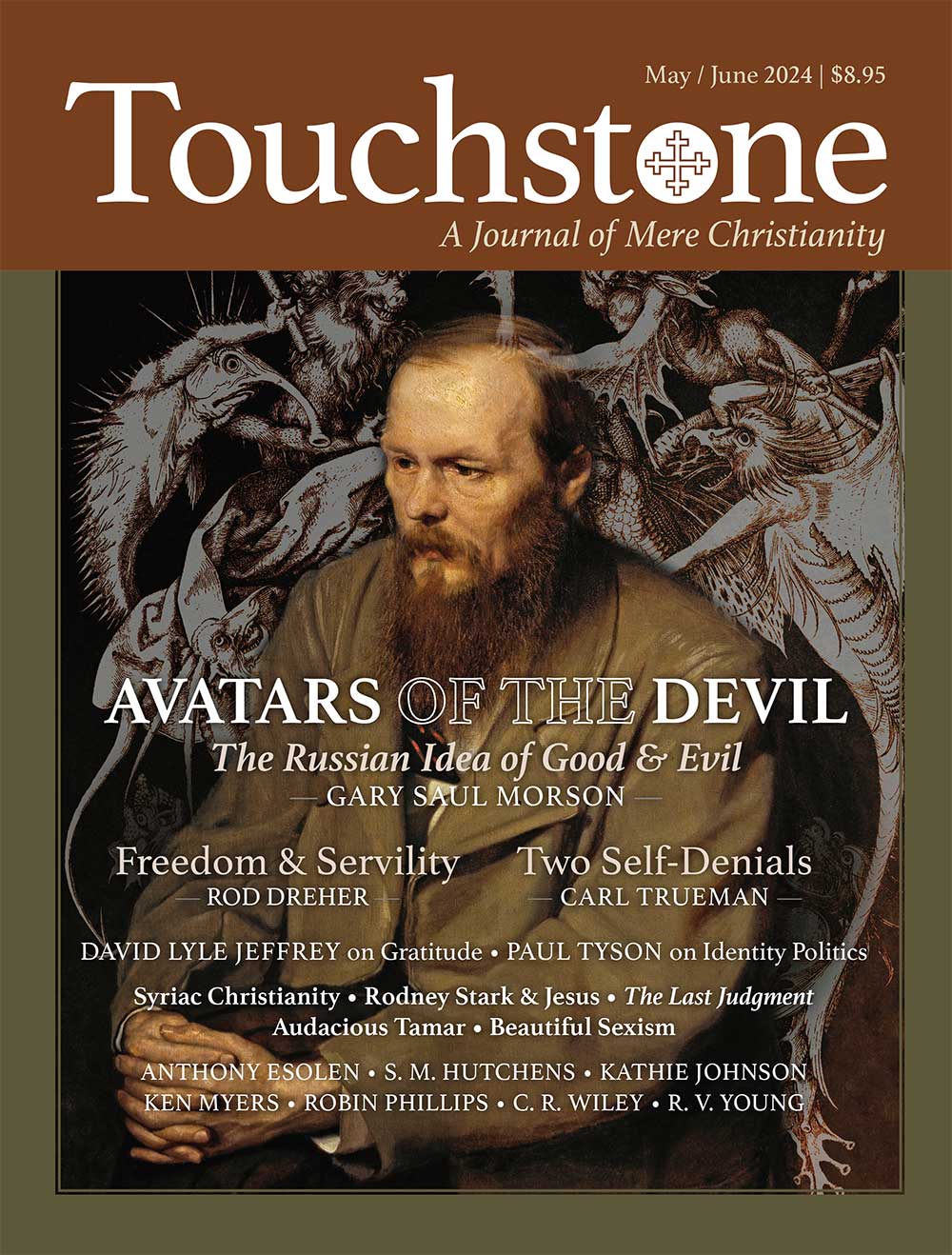
Rodney Stark
on a Progressive Sociologist’s Path to Christianity
Rodney Stark, the widely read sociologist turned historian, died on July 21, 2022, at age 88. His journey from progressivism to Christianity is reflected in his large body of work.
When I began reading Stark, about the year 2000, I discovered that his long-standing goal was to crush the dominant progressive narrative of the West, which he called “one of the most successful propaganda campaigns in Western history.” This tall tale, as narrated by Darwin, Marx, and Freud and perpetuated by the progressives, offers only material causes for the sublime success of the West, formerly Christendom.
When Stark reminisced about his background, he made it clear that he valued having been born and raised in a small town in North Dakota and having been in the military. After earning a journalism degree at the University of Denver, he worked as a journalist in Oakland, California. This work experience made him keyboard friendly—he eventually authored 40 books and over 160 articles—but it also made him experienced and confident enough to challenge his professors when he returned to school for advanced degrees.
Nevertheless, during his early academic career as a graduate student and then a fledgling professor at UC Berkeley, Stark was a promoter of progressive views. For example, he co-authored books on “police brutality” and the putative correlation between conservative Christians and racism.
His habit of taking surveys and drawing correlations from them turned him into a sociologist, and in 1971 he earned a doctorate at Berkeley in the sociology of religion. Afterwards, he took an appointment at the University of Washington, where he remained for 34 years. In 2004 he was appointed Distinguished Professor of the Social Sciences at Baylor, a university more aligned with his ripening conservativism, empiricism, and interest in history.
Following an Axiom
As his views matured, Stark found himself more and more opposed to the nineteenth-century positivist founders of social science, Auguste Comte, Emile Durkheim, Max Weber, and Karl Marx, who distrusted the explanations people offered for their behavior, especially as regards religion.
Comte, who coined the word sociology, aspired to make this field into a “positive science” like chemistry and physics. He saw sociology as “social physics” and predicted that it would replace religion, which he said was based on “hallucinations.” Durkheim, for his part, thought religion was “social camouflage,” behind which people hid their feelings of doubt. Marx famously wrote that people are chumps, drugged by the “opiate” of religion so that the bourgeoisie could fleece them.
In his penetrating 2001 book, One True God: Historical Consequences of Monotheism, Stark admitted that he, too, had once been skeptical of religious claims. But he later changed his mind and suggested that social scientists should “suspend their disbelief” about such claims so as to more fairly assess them. About a hundred years earlier, Durkheim had done likewise, saying that remaining mired in skepticism about religious claims is “like a blind man talking about color.” As Stark admitted, “Just as Durkheim came to a more mature outlook, so have I.”
Ironically, Stark was led to this mature view by, as he wrote, adhering to an “axiom of social science which posits that only if we know what people think they are doing can we evaluate why they are doing it.” And he followed this up by measuring his respondents’ statements against their actions.
Thus, Stark determined that when people explain why they follow a certain religion, it becomes apparent that they have made their choice based on a cost-benefit analysis, much as they do when making other choices. In Stark’s words: “People value religion on the basis of cost, and they don’t value the cheapest ones most. Religions that ask nothing get nothing.” His conclusion is supported by the increased growth of more demanding churches.
A Journal of Mere Christianity—Delivered to Your Door
- Essays on theology, culture, and the Church
- Contributors from across the Christian traditions

Six print issues (one year) of Touchstone, plus full online access and PDF downloads for only $39.95.

Get a one-year full-access subscription to the Touchstone online archives for only $19.95.
bulk subscriptions
Order Touchstone subscriptions in bulk and save $10 per sub! Each subscription includes 6 issues of Touchstone plus full online access to touchstonemag.com—including archives, videos, and pdf downloads of recent issues for only $29.95 each! Great for churches or study groups.
Transactions will be processed on a secure server.
more on biographical from the online archives
more from the online archives
29.4—July/August 2016
Russell Kirk: American Conservative by Bradley J. Birzer by Hunter Baker
14.6—July/August 2001
The Transformed Relics of the Fall
on the Fulfillment of History in Christ by Patrick Henry Reardon

16.5—June 2003
on the Importance of Fathers to Churchgoing by Robbie Low
calling all readers
Please Donate
"There are magazines worth reading but few worth saving . . . Touchstone is just such a magazine."
—Alice von Hildebrand
"Here we do not concede one square millimeter of territory to falsehood, folly, contemporary sentimentality, or fashion. We speak the truth, and let God be our judge. . . . Touchstone is the one committedly Christian conservative journal."
—Anthony Esolen, Touchstone senior editor
