


O Taste & See!
The Sweetness of Scripture Is Not Just for Beekeeping Monks
Lectio divina, or divine reading, is nothing out of the ordinary. We tend to think of its four steps—reading, meditation, prayer, and contemplation—as an esoteric practice, something monks engaged in long ago. The Latin term divina may intimidate us into thinking that lectio divina is something different from what we typically do in reading the Bible. But divina does not mean “esoteric”; it is more akin to our term holy. The Scriptures are holy—set aside for a unique purpose. For many centuries, believers referred deferentially to the Bible as the “divine Scriptures,” meaning that it has a special place or function. It’s a phrase we should retrieve. Scripture is divine in the sense that it has a special place within the church. And because Scripture is divine, our reading, too, should be divine.
True, for many centuries, monks engaged in lectio divina (and they do so, still). But that observation doesn’t render the practice esoteric or elitist. Monks embark upon meditative reading of Scripture (lectio divina) for the simple reason that they love the Scriptures—much as every true believer does. Love of Scripture naturally leads to fervent, repetitive reading and prayerful meditation upon its words, always in the hope of seeing the face of God (contemplation).
In the seminars I have taught on lectio divina, I ask people to read a selected psalm three or four times. First, we read it once or twice just to familiarize ourselves with the words and to come to a basic grasp of the content of the psalm. In our next reading, we turn to a key word or phrase to reflect or meditate upon (asking ourselves how it functions within the psalm overall and within the entire biblical canon, and what it may have to say about Christ, the church, my own life). Then we can read it once more as we commit the result of our meditation to God in prayer. Finally, we rest in silent contemplation before the face of God.
The process itself makes clear that the Scriptures are a means of grace: for through this encounter with the biblical text, God aims to pierce us with his love. As I have reflected on the history of lectio divina over the past several years, it struck me how often medieval authors used the language of piercing to describe what God does in and through our reading of the Scriptures. (That’s the reason why my recent book on lectio divina is titled Pierced by Love.) God intends to pierce us, often painfully so, in order to bring lovers of Scripture—not just monks—to him.
Divine reading, then, is experiential in character. God pierces us, and by piercing us transfigures us. Which means we should resist the modern preoccupation with a purely rational grasp of the one true meaning of the text. The words of the divine Scriptures cannot be mastered; they want to master us. God’s purpose with them—that which sets them apart as holy or divine—is that they would change or transfigure us. Divine things aim to divinize. The four steps of lectio divina arise naturally, therefore, when Christians wrestle with the biblical text. Lectio divina simply means reading the Bible the way it’s supposed to be read—as divine Scripture.
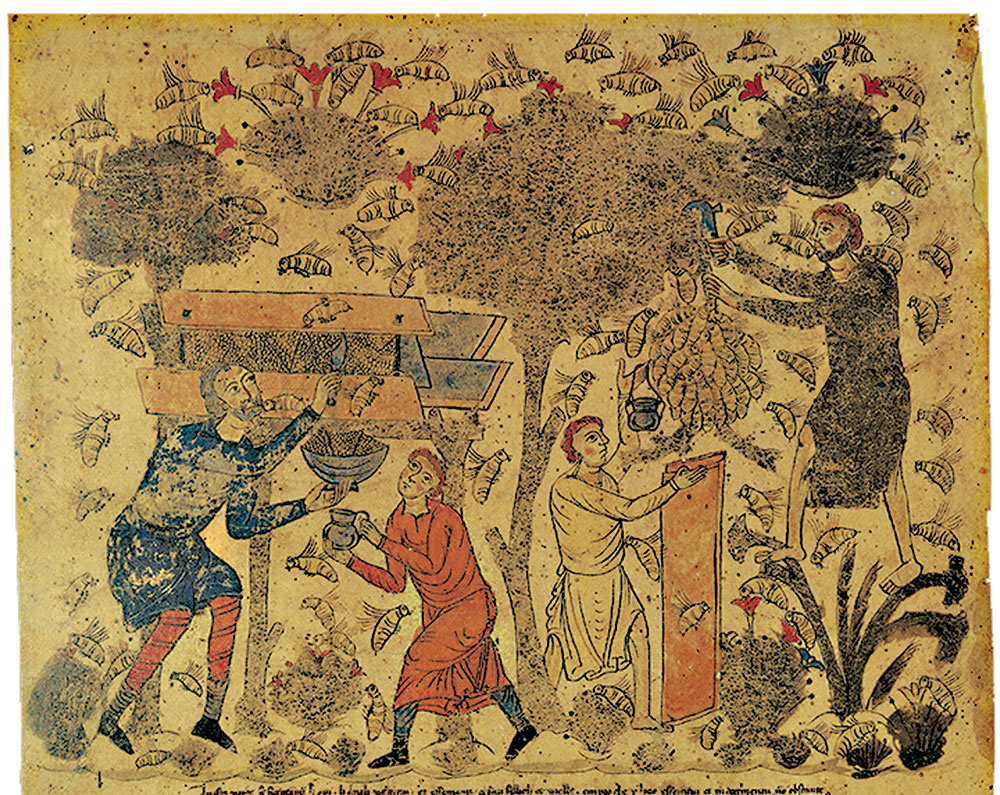
It should come as no surprise that the monastic tradition often turned to the biblical language of the Scriptures being “sweeter than honey” and ended up comparing the entire monastic enterprise to an exercise in beekeeping. Our reading of Scripture—or, at least, the attentive, meditative reading of Scripture I have in mind here—seemed to monks like eating honey. The twelfth-century Carthusian prior Guigo II, for example, explains the aim of lectio divina with the metaphor of sweetness. In The Ladder of Monks, a lovely exposition on the practice of divine reading, he explains that the final rung of the ladder, contemplatio, gives us an initial sense of the eschatological face-to-face vision of God. As Guigo puts it, “The mind is in some sort lifted up to God and held above itself, so that it tastes the joys of everlasting sweetness.” The theological reason for the metaphor of sweetness seems obvious: just as our experience of happiness participates in the happiness of God, so our experience of sweetness gives us a share in the sweetness that is God himself.
To be sure, when medieval monasteries turned to the practice of beekeeping, they did so for a variety of reasons: once it fermented, honey could be enjoyed also in the form of alcoholic mead, while the wax was used to make candles. In this article, however, I will restrict myself to the link between apiculture (or beekeeping) and the practice of lectio divina. As we will see, the metaphor of the sweetness of God’s words led to a constellation of themes all centered on the practice of beekeeping. Monastic writers, especially those within the Cistercian tradition, delighted in the sweetness of honey as the aim of divine reading. Trained in the practices both of beekeeping and of spiritual reading, medieval monks came to see the former as symbolic of the latter: bees offered instruction on how meditative reading deepens one’s participation in the sweetness and the wisdom of God himself. The ancients regarded lectio divina’s deliberative, ponderous reading of Scripture as akin to eating—specifically, the eating of honey from the comb.
Eating the Scroll
The identification of Scripture with a honeycomb was irresistible in part because the Psalms explicitly link the two. David praises God’s ordinances, saying they are “sweeter than honey and the honeycomb” (Ps. 19:10). (Throughout this article, I use the Douay-Rheims translation, though my numbering of the Psalms follows most contemporary translations.) Likewise, Psalm 119 exclaims, “How sweet are thy words to my palate! more than honey to my mouth” (verse 103). Christ is the rock (1 Cor. 10:4), and if God’s people sucked honey from the rock, then—so a mind trained by the practice of lectio divina would conclude—to suck honey must mean to internalize the teachings of Christ. For Christian readers, the theme of Scripture as honey was grounded directly in the biblical text.
Few biblical passages are as suggestive for exploring the metaphor of eating as God’s instruction to the prophet Ezekiel: “‘Son of man, thy belly shall eat, and thy bowels shall be filled with this book, which I give thee,’ and I did eat it: and it was sweet as honey in my mouth” (Ezek. 3:3). This passage gained prominence and depth through John the Seer’s evoking it in Revelation 10:9–10. The language of eating a scroll identifies God’s words as food, while the reference to honey invites exploration of the sweet character of the Scriptures.
Hans Boersma is the Saint Benedict Servants of Christ Professor in Ascetical Theology at Nashotah House Theological Seminary.
A Journal of Mere Christianity—Delivered to Your Door
- Essays on theology, culture, and the Church
- Contributors from across the Christian traditions
Six print issues (one year) of Touchstone, plus full online access and PDF downloads for only $39.95.

Get a one-year full-access subscription to the Touchstone online archives for only $19.95.
bulk subscriptions
Order Touchstone subscriptions in bulk and save $10 per sub! Each subscription includes 6 issues of Touchstone plus full online access to touchstonemag.com—including archives, videos, and pdf downloads of recent issues for only $29.95 each! Great for churches or study groups.
Transactions will be processed on a secure server.
more on bible from the online archives
27.4—July/August 2014
The Bible, Sacred Theology & the Mind of Christ by Patrick Henry Reardon
5.3—Summer 1992
Everything You Need to Know About Morality & the Bible by David Mills
more from the online archives

32.2—March/April 2019
on Preserving Physical & Spiritual Nourishment by Nathanael Devlin
27.3—May/June 2014
Facts versus Stereotypes About Love & Marriage in the Land of the Free by Allan C. Carlson

calling all readers
Please Donate
"There are magazines worth reading but few worth saving . . . Touchstone is just such a magazine."
—Alice von Hildebrand
"Here we do not concede one square millimeter of territory to falsehood, folly, contemporary sentimentality, or fashion. We speak the truth, and let God be our judge. . . . Touchstone is the one committedly Christian conservative journal."
—Anthony Esolen, Touchstone senior editor